







Dual Distance From Average indicator
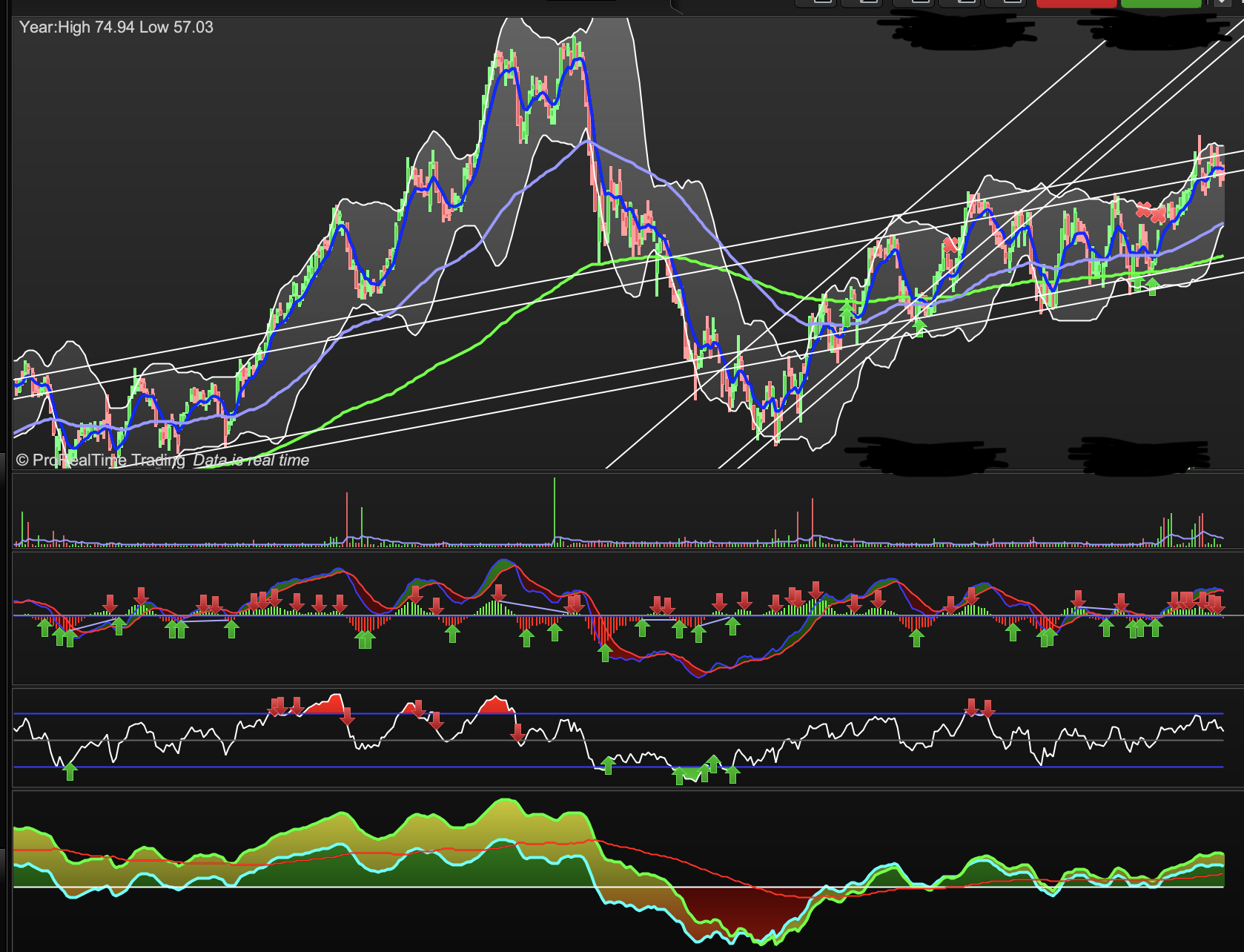
I still debate myself between indicators that try to predict the future and those that illustrate a simplified view of the obvious market moves. I think that indicators that are very clear help in 2 ways: 1) indicating trades that are conceptually simple, that everybody understands and where you visualise your edge and 2) not forgetting to look at the basics.
This indicator won’t predict any future: it aims to put in a clear way what the market does, and it is conceptually very simple.
I use it for trend following. It measures the distances between price (smooth version of price) and moving averages (exponential, default of 70 and 200 as I use for Spanish stocks). The behaviour that I look for are bounces with (or close to) the 0 line. Interpretation: a bounce in the 0 line simply is the moving average acting as a support (if the bounce is a local minima) or resistance (if the bounce is a local maxima).
I use a smoothed version of the price (exp moving average, default 15) for 2 reasons: 1) close price on itself it gives too spiky signals that become more complex to interpret, 2) it is very common for price to pierce a moving average, but it is far less likely that a smooth version of close (i.e. another moving average) pierces it.
Finally, I print (red line) the distance between the 2 moving averages (70 and 200). This is simply to bring in the longer term trend (bull > 0, bear < 0) as well as MA crossings.
You may likely see this as a redundant indicator if you print your moving averages in the chart, and you will be right. This is just a way to bring moving average interpretation to a simplified form.
I hope someone finds it useful. Any feedback or comments are welcome!
// By camporan
// last updated: 20/07/19
// This indicator is a stacked indicator, handy to flatten the moving averages (default are 70 and 200). Areas of interest: when any of the 2 stacked lines approaches 0: very often they tend to bounce in (or close to) the 0 mark.
// Interpretation: very simple: if the indicators bounce close to 0 it shows that the moving average acts as support or resistence for the price.
// Often price itself may pierce the moving average, but a smoothed close (exponenital moving average) is significantly more precise bouncing.

//settings
DisplaySignals=1
m=70
m2=200
smoothFactor=15
//end of settings

// SECURITY CONTROLS :)
IF m < 1 THEN
 m = 1
ENDIF
IF m2 < 1 THEN
 m2 = 1
ENDIF
IF smoothFactor < 1 THEN
 smoothFactor = 1
ENDIF

media = ExponentialAverage[m](close)
media2 = ExponentialAverage[m2](close)
smoothClose = ExponentialAverage[smoothFactor](close)

distance = 100*(smoothClose-media)/close
distance2 = 100*(smoothClose-media2)/close

// Z-Score normalization could be useful if we compute the rolling STD in a long enough period
//Z = (smoothClose-media)/STD[m](close)
//distance = distance/STD[m](smoothClose)


ismin = distance > distance[1] AND distance[1] < distance[2]
ismax = distance < distance[1] AND distance[1] > distance[2]
if ismin AND DisplaySignals THEN
 drawarrowup(barindex,distance) coloured(30, 160,30)
ENDIF
if ismax AND DisplaySignals THEN
 drawarrowdown(barindex,distance) coloured(160,30,30)
ENDIF
ismin2 = distance2 > distance2[1] AND distance2[1] < distance2[2]
ismax2 = distance2 < distance2[1] AND distance2[1] > distance2[2]
if ismin2 AND DisplaySignals THEN
 drawarrowup(barindex,distance2) coloured(30, 160,30)
ENDIF
if ismax2 AND DisplaySignals THEN
 drawarrowdown(barindex,distance2) coloured(160,30,30)
ENDIF

// Estos 2 calculos de largas son los mismos. Usamos el 2do porque ya tenemos parte calculada (i.e. mejor performance)
//largas = media-media2
//largas = 100 * largas / close
largas = distance2 - distance

return distance as "distance", distance2 as "distance2", 0 as "cero", largas as "largas"
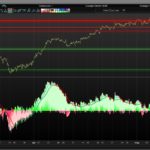
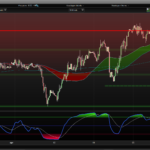
Comments
You must be logged in to post a comment.

can we have it in mql4 platform? or how or which platform do we use it?
You can use it 5M onwards, but the longer timeframe the more accurate it is. My preferred are 30M and daily. Also, use your judgement to see if the bounces do happen historically: the edge is just likelihood, and the best way to know how good your edge is, is by looking at the past :)

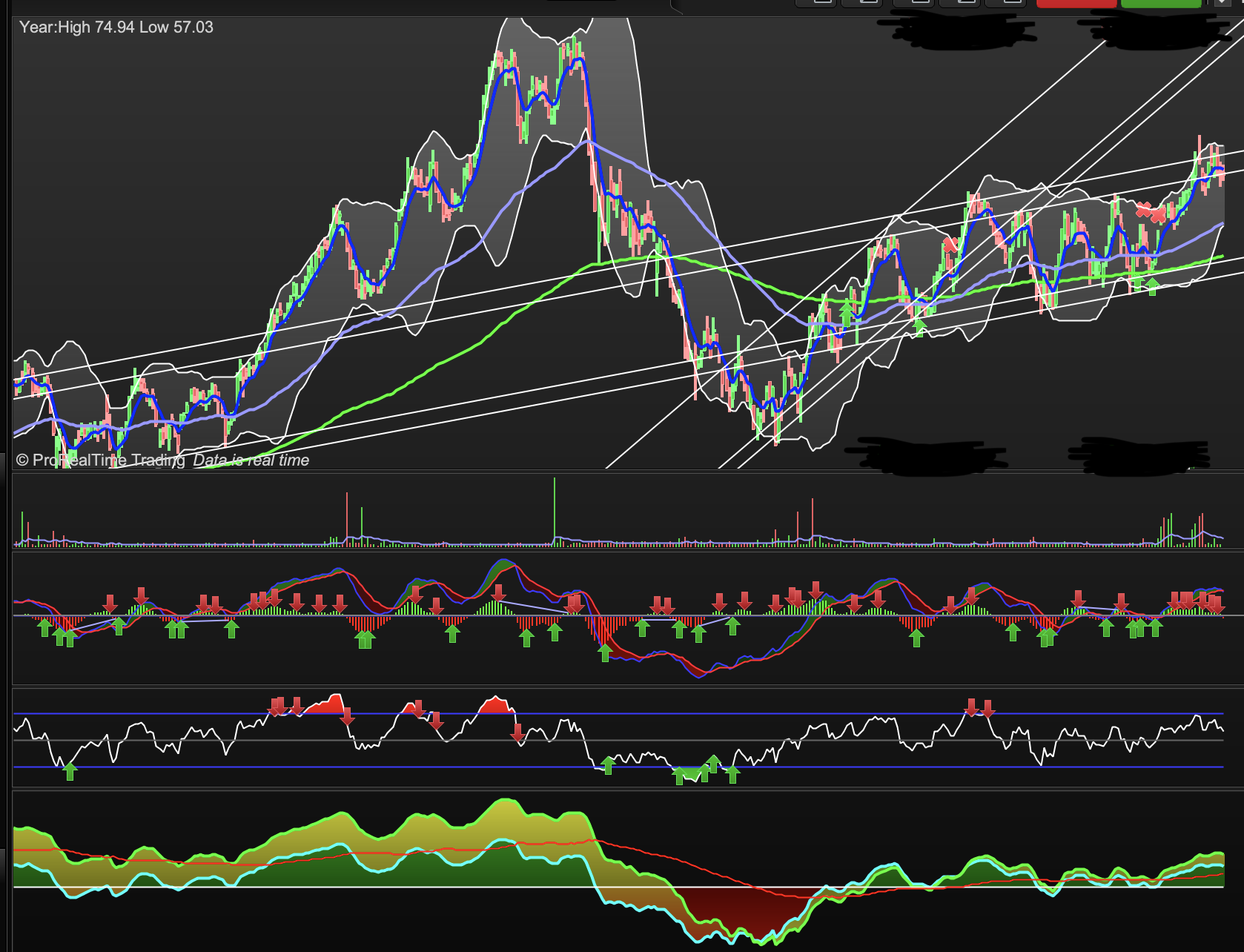
This can for amibroker ? . Thanks