Buongiorno,
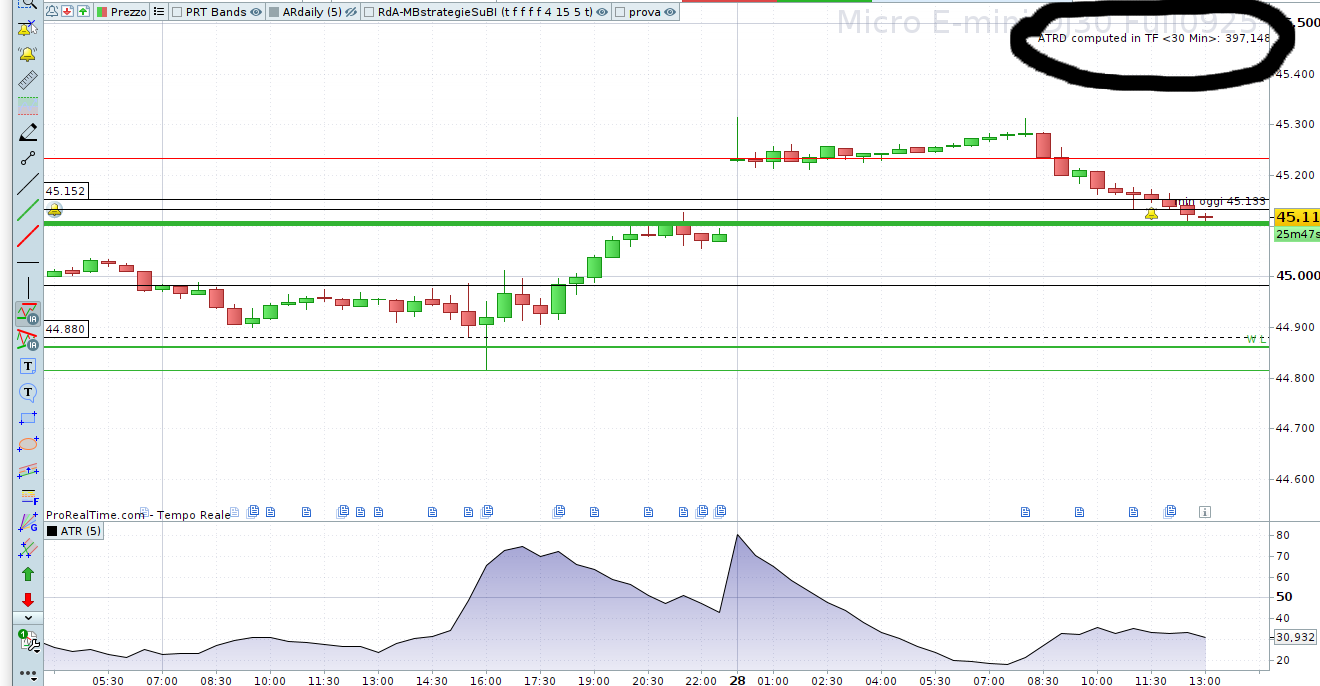
il mi primo indicatore, che calcola l’ATR daily quando ci si trova in un TF intraday, funziona quando è applicato
a un grafico, ma non se è chiamato da un altri indicatore (ritorna e stampa N/D), anche la semplice chiamata;
MyATR= CALL RdAATRDInIntraday [5]
return
Di seguito il codice dell’indicatore. In allegato il grafico dove si vede il valore calcolato.
Se un altro indicatore lo chiama, al posto del valore corretto restiuisce e stampa N/D
Grazie
// R. da Argile
//
// Compute TR daily in TF intraday
// A MINIMUM NUMBER OF BARS MAY BE REQUIRED TO BE ACCURATE
//
// DEFPARAM DRAWONLASTBARONLY = true      // for debug purpose

TFDailyInSeconds  = 3600 * 24          // various intraday time frames in seconds
TFMinInSeconds    = 60                 // ...
TF30MinInSeconds  = 60 * 30            // ...
TFWeeklyInSeconds = 3600 * 24 * 7      // ...
TFMaxIntradayInSeconds  = 3600 * 4     // max intraday considered is 4H

ONCE AlreadyDrawnInfo                     = 0
ONCE AlreadyComputedTodayNumOfMBbars      = 0

// get and shows current TF
IF AlreadyDrawnInfo = 0 THEN           // Stuff to be done only ONCE
TF = GetTimeFrame     // timeframe in seconds
TFinMin = TF / 60
//DRAWTEXT ("timeframe in seconds #TF# ", -100, -50) ANCHOR (TOPRIGHT, XSHIFT, YSHIFT)
TFintraday = 1
TFNumBarsInDay = 3600 / TF
IF TF >  TFMaxIntradayInSeconds THEN  // Computatin only TF intraday up to 4H
TFintraday = 0
TFNumBarsInDay = 1
ENDIF
//
AlreadyDrawnInfo = 1
ENDIF

//
// compute running ATR daiy
//
CurrentTRDaily    = max(DHIGH(0) - DLOW(0), MAX(abs(DHIGH(0) - DCLOSE(1)), abs(DLOW(0) - DCLOSE(1))))
// Get last day before yesterday bar
IF BarIndex < (ATRdailyPeriod * TFNumBarsInDay) THEN
PreviousDayClose = DCLOSE(2)       // previous day close
PreviousDayLow   = DLOW(2)         // previous day low
CurrentTRDaily   = MAX(DHIGH(1)-DLOW(1), MAX(abs(DHIGH(1) - PreviousDayClose), ABS(DLOW(1) - PreviousDayClose))) // current True Range Daily
MyATRDaily = CurrentTRDaily
ELSE
IF INTRADAYBARINDEX = 0 THEN // compute new atr daily only on first intraday bar
BarFDound = 0
iBar = 0
WHILE (BarFDound < 2) AND (iBar < (2 * TFNumBarsInDay))    // secon check is to avoid infiniteloop
IF OPENDAYOFWEEK[iBar] <> OPENDAYOFWEEK[iBar + 1] THEN
iLastYesterdayBar = iBar + 1
BarFound = BarFound + 1
ENDIF
iBar = iBar + 1
WEND

PreviousDayClose = DCLOSE(iLastYesterdayBar+1)       // previous day close
PreviousDayLow   = DLOW(iLastYesterdayBar+1)         // previous day low
CurrentTRDaily   = MAX(DHIGH(iLastYesterdayBar)-DLOW(iLastYesterdayBar), MAX(abs(DHIGH(iLastYesterdayBar) - PreviousDayClose), ABS(DLOW(iLastYesterdayBar) - PreviousDayClose))) // current True Range Daily
MyATRDaily = ((MyATRDaily[1] * (ATRdailyPeriod - 1)) + CurrentTRDaily) / ATRdailyPeriod
ELSE
MyATRDaily = MyATRDaily[1]
ENDIF
ENDIF


IF DATE = TODAY THEN
DRAWTEXT ("ATRD computed in TF <#TFinMin#Min>: #MyATRDaily# ", -100, -35) ANCHOR (TOPRIGHT, XSHIFT, YSHIFT)
ENDIF

// return al least 2 values otherwise indicator takes the name of the UNIQUE return value (sic!)
RETURN myATRdaily AS "ARdaily" COLOURED (0,0,0,0)
Comunque ho inserito il codice con il pulsante ma vedo che non lo ha indentato ….
Non lo indenta.
Posta il file ITF, oppure indica qual’è il dato che gli viene passato con la CALL.
 Wim
WimParticipant
Junior
PRT non consente la CALL di un indicatore contenente codice MultiTimeFrame (MTF). Sfortunatamente PRT non ti dà un messaggio di errore decente se provi questo. La mia ipotesi è che il colpevole sia il tuo gettimeframe nella riga 19. (autotranslate par DEEPL)
Forse si tratta di qualcosa nel tuo codice…
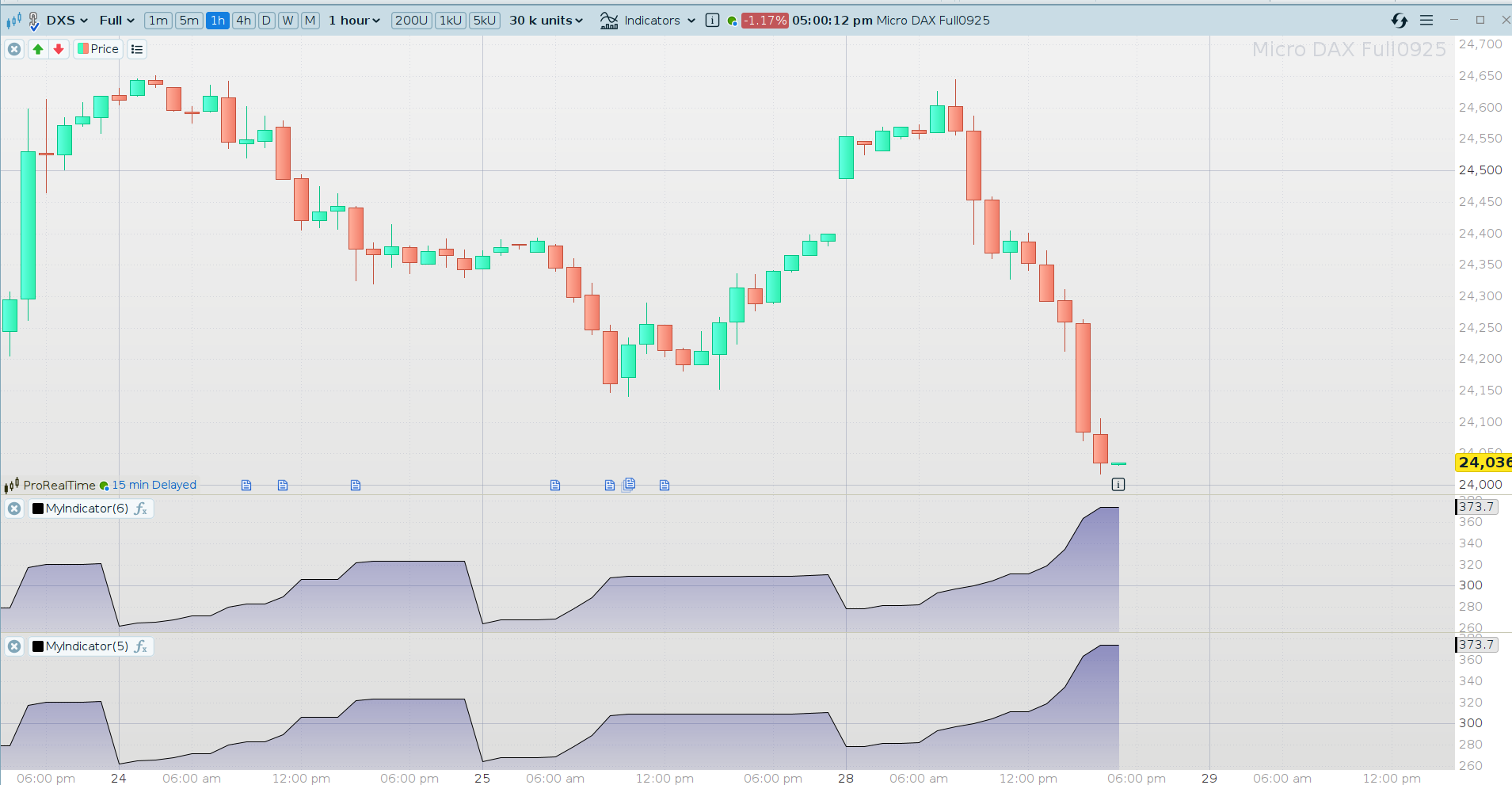
nel grafico seguente puoi vedere l’ATR calcolato direttamente nell’indicatore e richiamato con l’istruzione CALL.
timeframe(daily)
myATRdaily=averagetruerange[5](close)
RETURN myATRdaily
myatr=call "MyIndicator(5)"
return myatr
Grazie Wim,
non uso la funzione TIMEFRAME proprio per evitare guai di quel genere, credo il problema sia un altro, comunque molto frustrante
perdere tempo così….
Scusa roberto cosa è il file itf?
WimParticipant
Junior
//MyATR= CALL RdAATRDInIntraday [5]
//return

MyATR= CALL "RdAATRDInIntraday"[60]
return MyATR as "MyATR"
Scusa roberto cosa è il file itf?
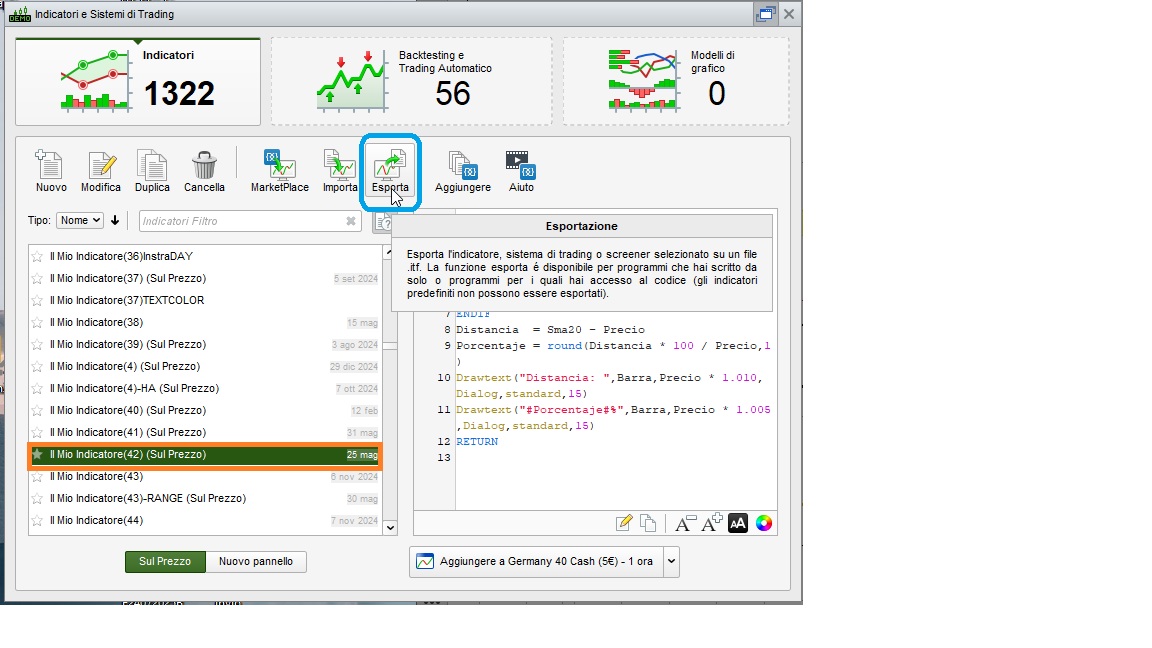
E’ il file creato dall’editor di ProRealTime. Quando vuoi salvare in locale sul tuo PC il codice, devi esportarlo mediante l’apposito pulsante (vedi foto, pressoché identica per indicatori, strategie e screener) e ti creerà il file crittografato ITF.
Il pulsante da usare è quello evidenziato in CELESTE, mentre il file è quello evidenziato in ARANCIO (ovviamente tu sceglierai uno dei tuoi codici), segui le indicazioni per dirgli dove andare a salvare il file con estenzione ITF (non è un testo visibile).