





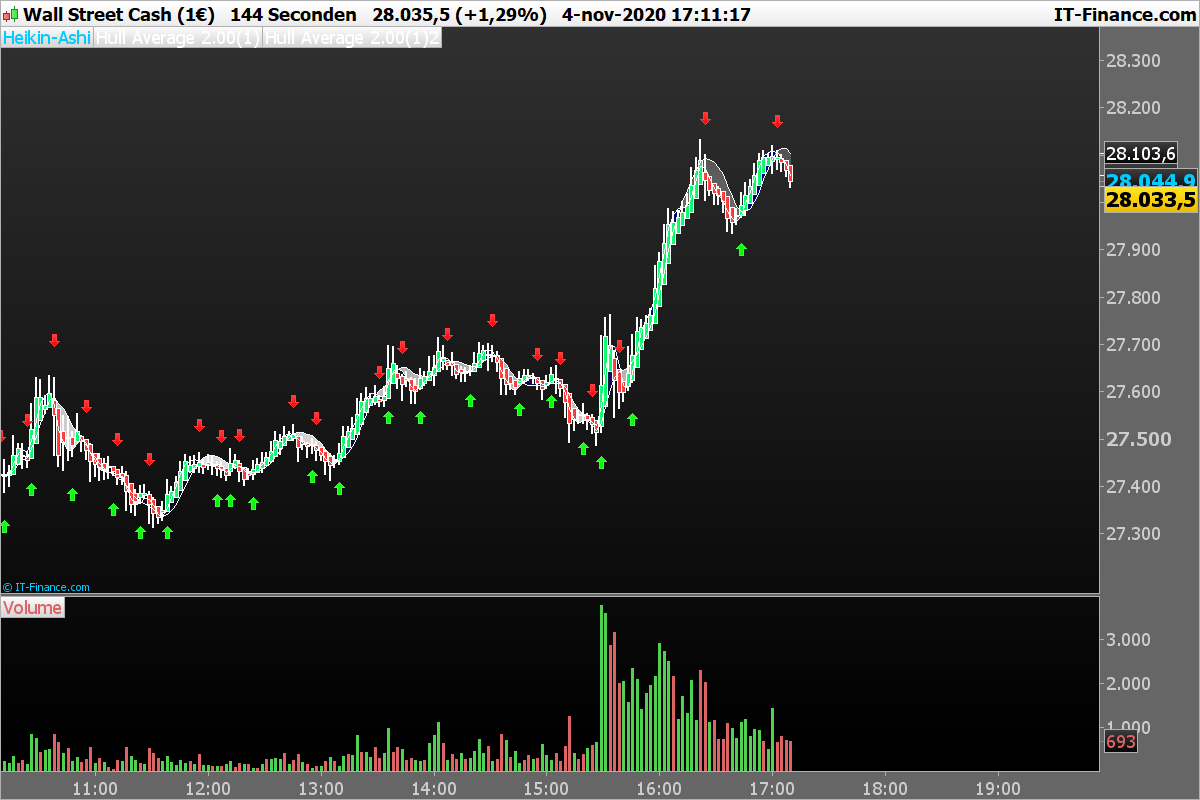

I have been day trading for about 10 years and in that time I have tried and dismissed countless systems, some of them ridiculously complicated. Since the beginning of this year I have settled on a system that is simplicity itself and, day after day, week after week, it literally never fails. I am posting it here with 2 purposes; one is to share it with anyone who might find it useful – but also to set a challenge to anyone who can successfully automate it.
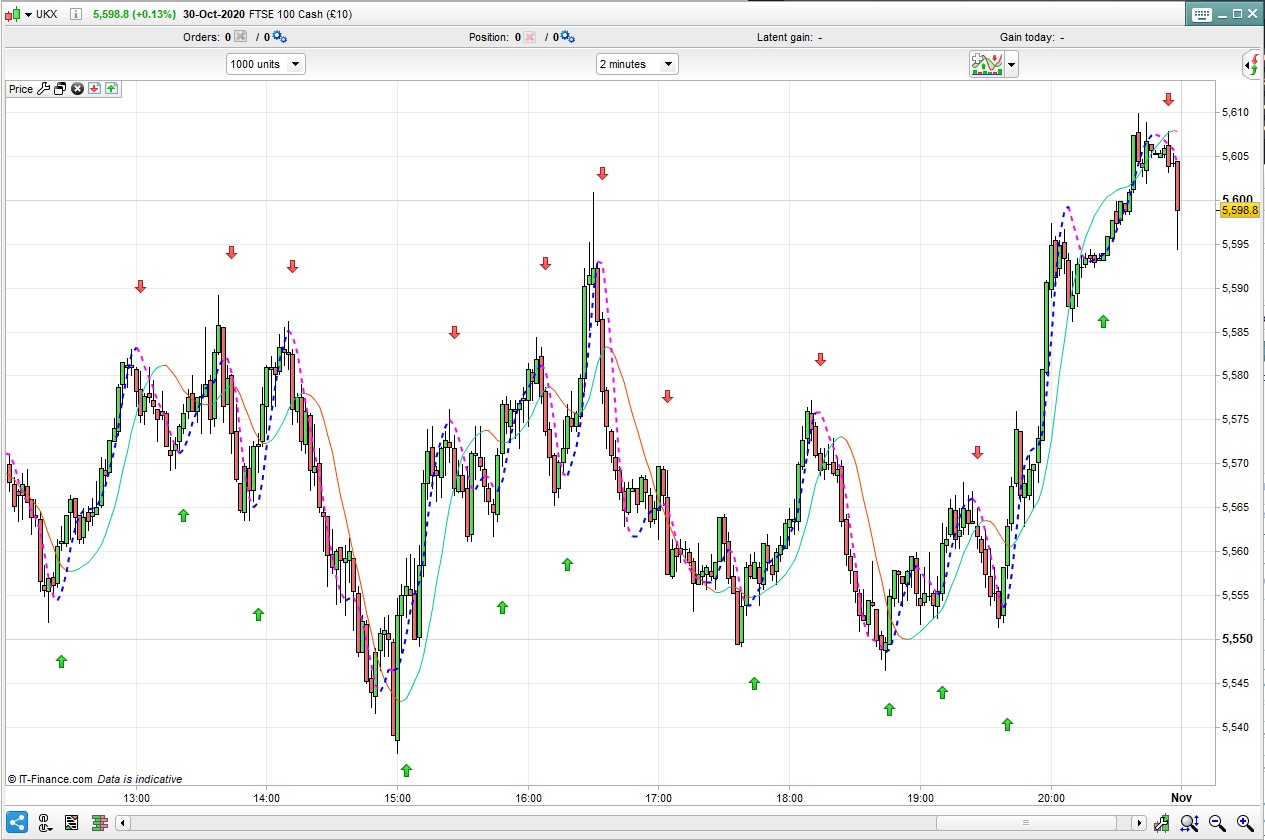
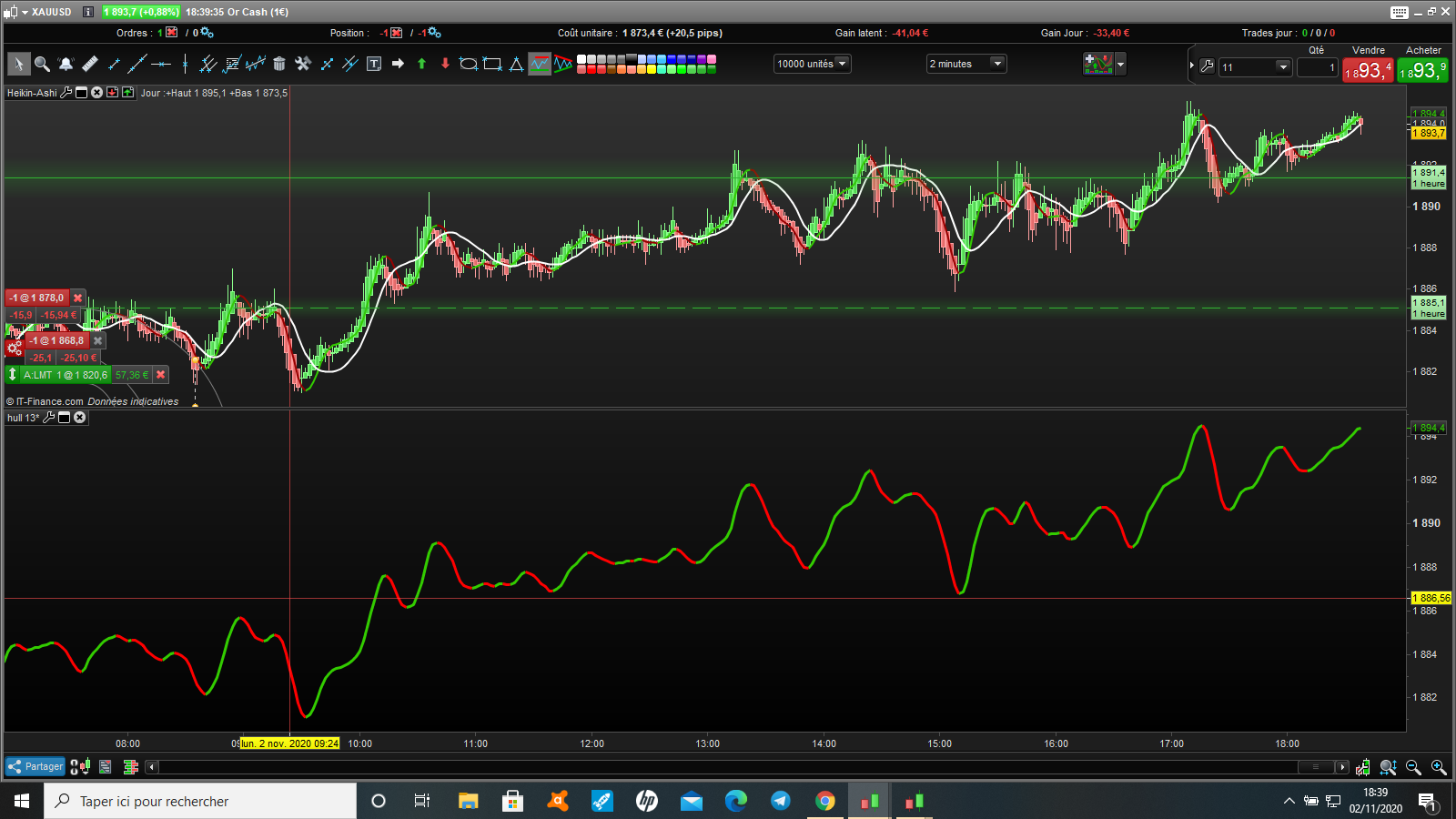
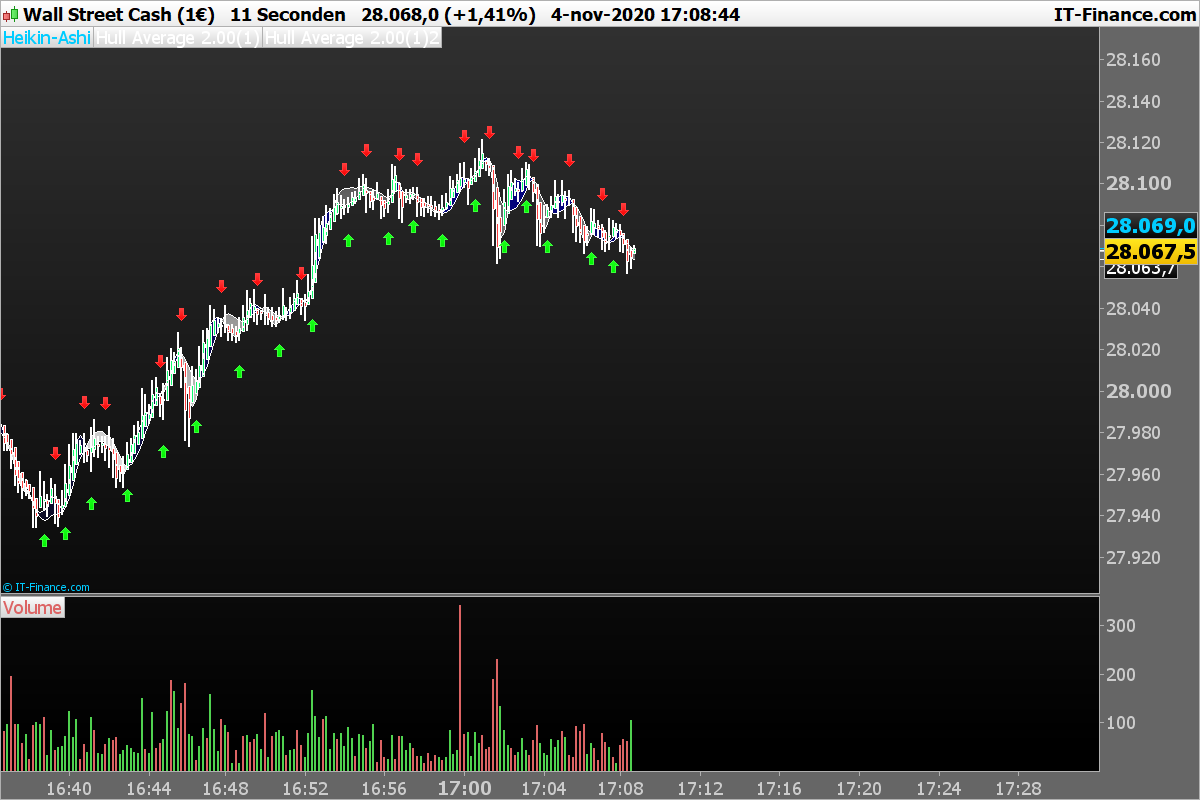
I live in London and trade the FTSE 100 but there’s no reason this shouldn’t work on other indices if you prefer. I use a 2 minute chart with 2 indicators: HULL 13 and HULL 34 (Fibonacci magic). In a nutshell, when the 13 turns up I go long, and short when it turns down. Simple as that.
The HULL 34 is there as an approximation of what is happening at the 5 minute level and it plays a much lesser role in my decision making. For example, if the 13 reversed but the 34 maintained a strong trend I would close but not reverse my position, just wait for them both to be moving the same way again. But if the 34 were still falling but gradually flattening out, and the 13 turned up, then I would enter long even if the 2 MAs were not in agreement. I think this ambiguity in how I interpret the HULL 34 is what makes it so hard to code.
I know that I also watch for how many bars close above or below the HULL 13 in anticipation of a change. This is also hard to specify in code.
So as a manual system there is some interpretation going on, but very little. Even if I ignored the HULL 34, the 13 on its own would make money. You can easily check this by counting the number of points to be gained by following this method on any given day. The key for me was developing the discipline to always do what the chart was telling me to do. We are not here to predict the future, so forget about what what you think it’s about to do – forget about trendlines, forget about support and resistance, forget about job reports or war in the middle east, the ECB or all that macro-economic stuff that makes your head hurt. The chart already knows everything, so don’t agonize about it, don’t even think – just look at what the MA is truly actually doing right now – and do that.
This is perhaps harder than it sounds and it takes some practice, but what you have in front of you is a graphic distillation of the collective opinions of thousands of traders from all over the world. If you just go with their consensus in real time then, by definition, you can never go wrong. I don’t mean that you will never place a losing trade, but the losses will be small. At the end of the day you will be well ahead, I promise.
I hope that people find this useful. If you can master it, it’s a license to print money (yes, it truly is). If it could be successfully automated, that would be even better. I’ve made a number of attempts and it baffles me how well it works manually and how poorly this on its own works as an algo:
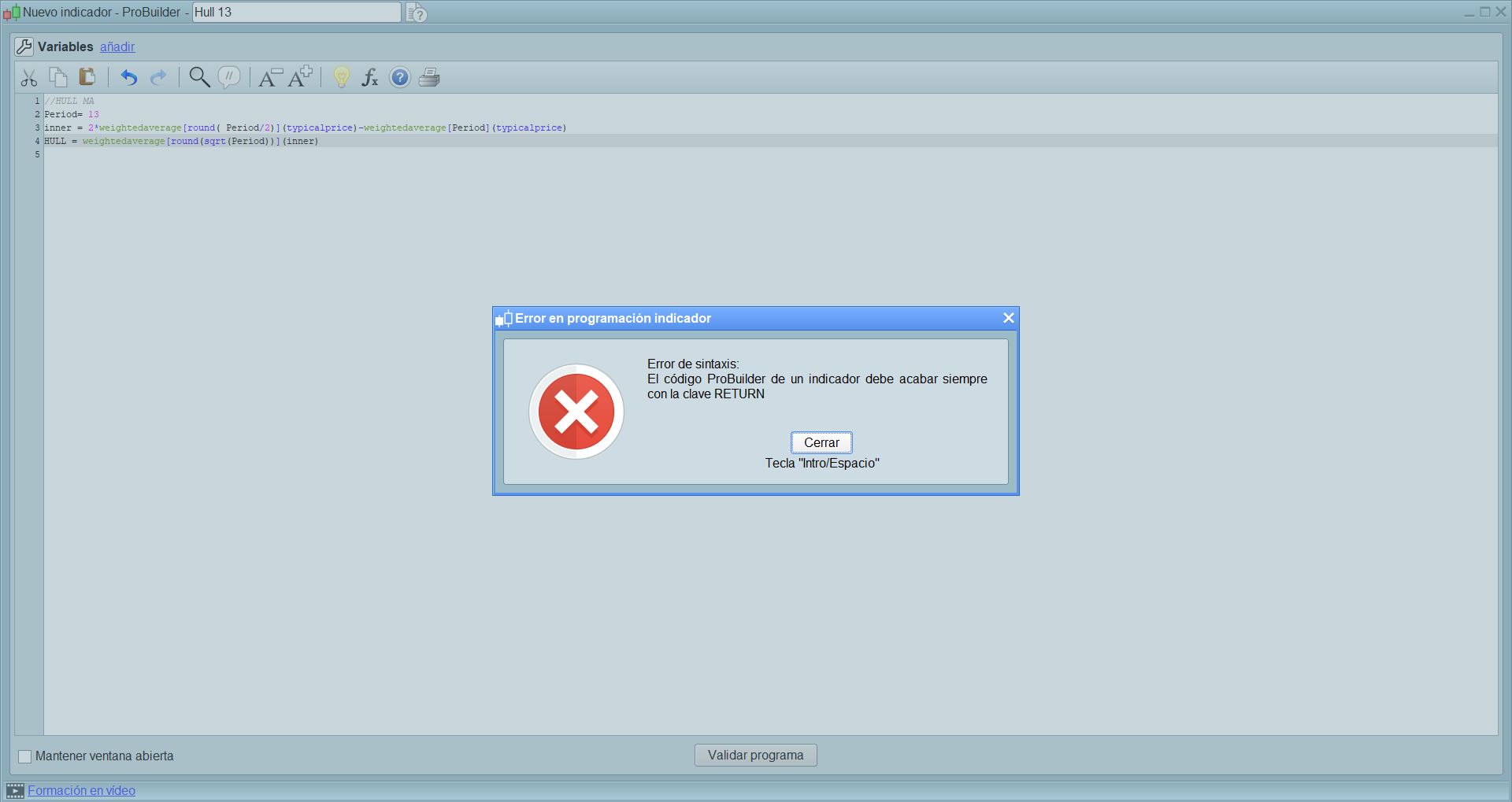
//HULL 13
Period= 13
inner = 2*weightedaverage[round( Period/2)](typicalprice)-weightedaverage[Period](typicalprice)
HULL = weightedaverage[round(sqrt(Period))](inner)
c1 = HULL > HULL[1] and HULL[1]<HULL[2]
c2 = HULL < HULL[1] and HULL[1]>HULL[2]
This I is what I think I am doing, but maybe there’s more interpretation going on than I am aware of ?? visual clues I’m picking up on from experience that lead me to click a bar or 2 in advance of what the algo would do ?? I honestly don’t know, but hey, there’s a challenge for you.
Best of luck! (although frankly, if you just do the above, luck is irrelevant)