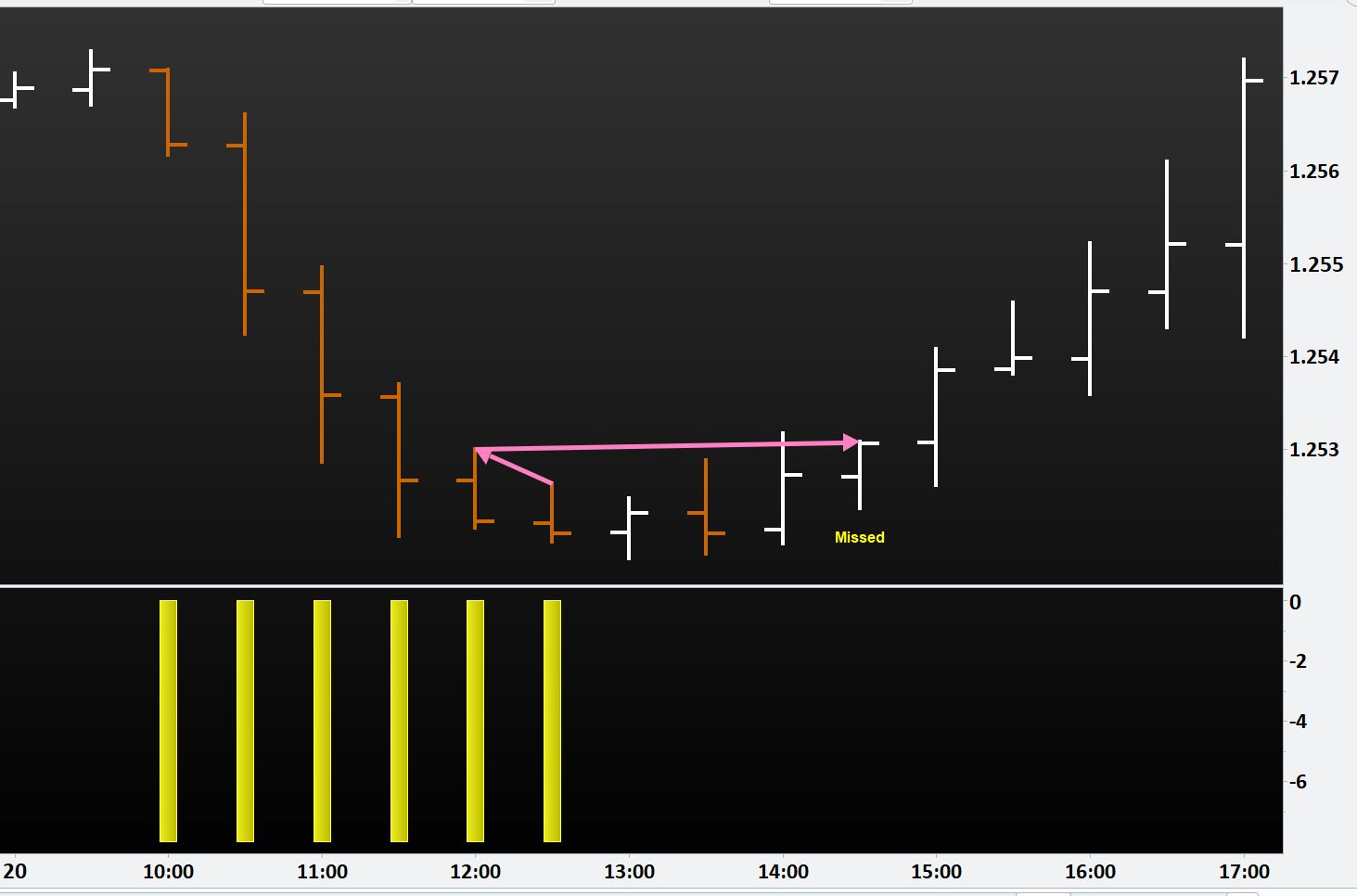
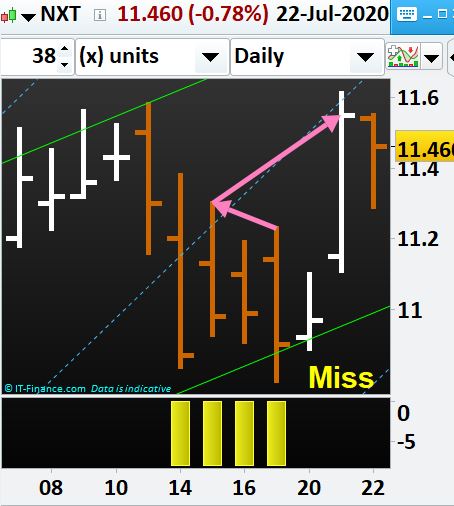
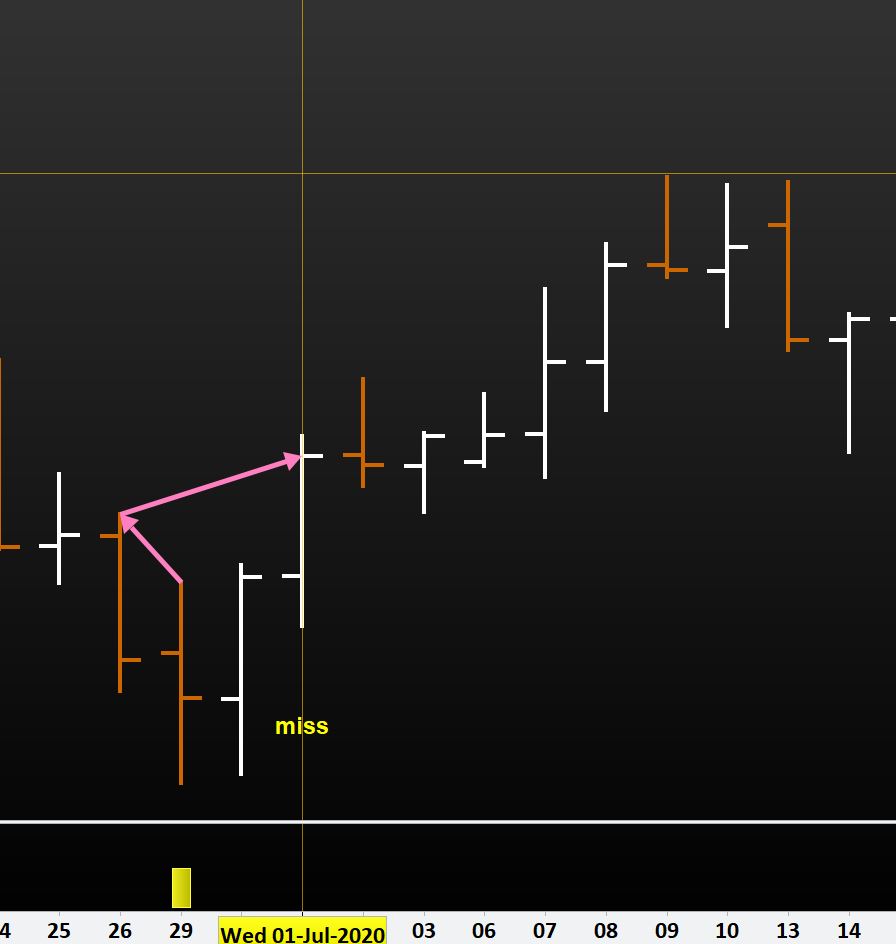
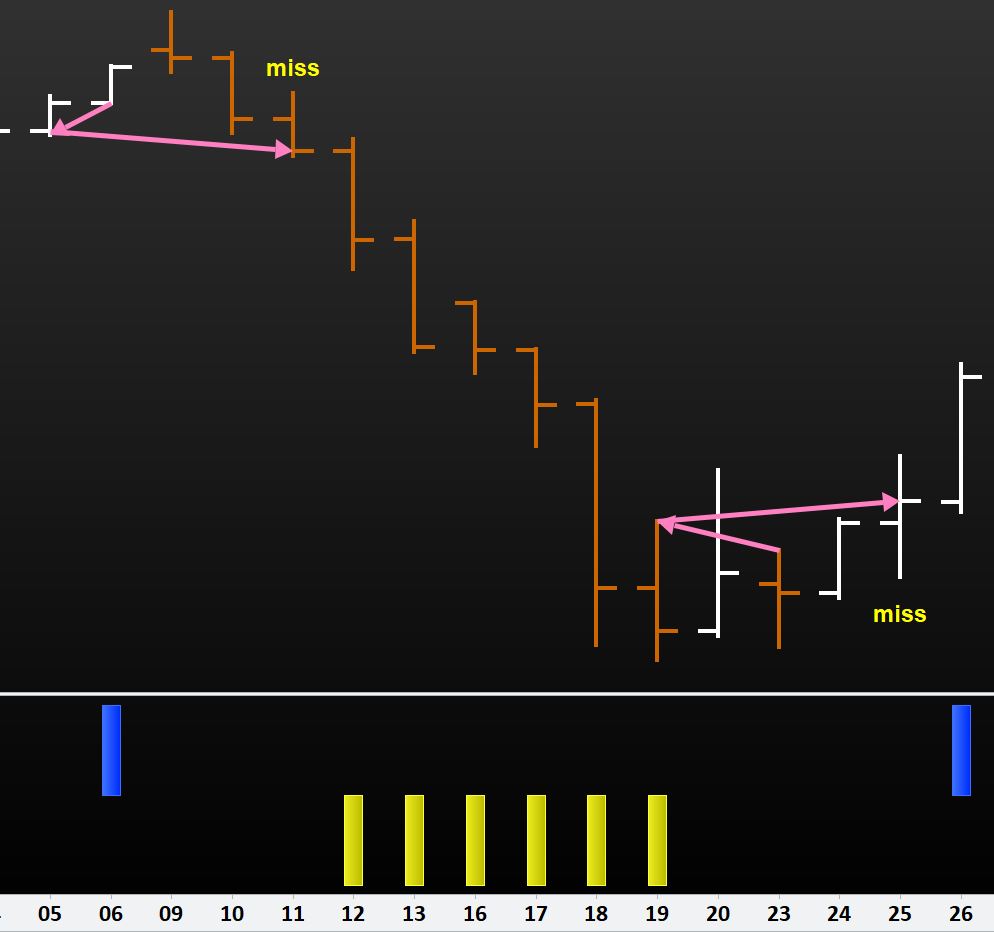
Many thanks Robert. However it is still missing some signals as enclosed.
Regards,
The bar you marked as MISSESD, because you asked “bullish bar should close above the highest high of the previous 2 bearish bars (they (bullish and/ or bearish) may not be consecutive and the last bearish bar’s high should be lower than the previous bearish bar’s high ignoring the inside bar in between is any)“.
Which isn’t. The last bearish bar’s HIGH was HIGHER than the previous one!
Hello Robert,
In that case the last bearish bar’s high when compared with the 3rd bearish bar (previous), it is low. Hence it should be considered for the signal. Similarly for the opposite.
Example for NEXTDC Ltd (ticker: NXT) the 17-Jul daily bar should be a signal as its close is higher than the high of the 3rd bearish bar as shown in the enclosed.
In that case the last bearish bar’s high when compared with the 3rd bearish bar (previous), it is low.
the last bearish bar’s high should be lower than the previous bearish bar’s high ignoring the inside bar in between is any
Which one of the two rules shall be applied?
This is the paradox dear. Market does not always print as per our codes. My only intention is to capture the entire move, as much as possible and that is why I tried it with if statements which is capable of capturing all the variations. You are also right, however it would be better, for the time being, to follow in addition to existing codes, “the last bearish bar’s high when compared with the 3rd bearish bar (previous), it is low. Hence it should be considered for the signal. Similarly for the opposite.”
There you go (not tested):
DEFPARAM CalculateOnLastBars = 1000
Bullish = close > open
Bearish = close < open
InsideBAR = (range < range[1]) AND (high <= high[1]) AND (low >= low[1])
//
// DOWN trend detection
//
Count1 = 0
i = 0
WHILE Count1 < 3 AND i < BarIndex
i = i + 1
IF Count1 = 0 THEN
IF Bullish[i] AND Not InsideBAR[i] THEN
Count1 = 1
MyLO1 = low[i]
ENDIF
ELSIF Count = 1 THEN
IF Bullish[i] AND Not InsideBAR[i] THEN
Count1 = 2
ENDIF
ELSE
IF Bullish[i] AND Not InsideBAR[i] THEN
Count2 = 3
MyLO2 = low[i]
d1 = MyLO1 > MyLO2
MyLO2 = min(MyLO1,MyLO2)
Break
ENDIF
ENDIF
WEND
d2 = Bearish
d3 = close < MyLO2
Dcond = d1 AND d2 AND d3
//
// UP trend detection
//
Count2 = 0
j = 0
WHILE Count2 < 3 AND j < BarIndex
j = j + 1
IF Count2 = 0 THEN
IF Bearish[j] AND Not InsideBAR[j] THEN
Count2 = 1
MyHI1 = high[j]
ENDIF
ELSIF Count2 = 1 THEN
IF Bearish[j] AND Not InsideBAR[j] THEN
Count2 = 2
ENDIF
ELSE
IF Bearish[j] AND Not InsideBAR[j] THEN
Count2 = 3
MyHI2 = high[j]
u1 = MyHI1 < MyHI2
MyHI2 = max(MyHI1,MyHI2)
Break
ENDIF
ENDIF
WEND
u2 = Bullish
u3 = close > MyHI2
Ucond = u1 AND u2 AND u3
//
Cond = 0
IF Ucond THEN
Cond = 1
ELSIF Dcond THEN
Cond = -1
ENDIF
RETURN Cond AS "Signal"
Many thanks Robert, however it is missing many signals as enclosed.
You asked me that you no longer check the last two bearish bars, but the last one and the second previous one (the last one and the thirs one).
When you want to check the last bars + the third one use the last version, if you want to use the last 2 bars (in both cases ignoring Inside bars) the use the previous version.