
Hi Paul,
In my experience (I work a lot on MAE and MFE), as you can see on the french forum, I didn’t find something interestring, but I could be wrong
Ok, let’s try with trailing/BE and not as promise
Well it’s on the run,
I use a simple crossing average strategy
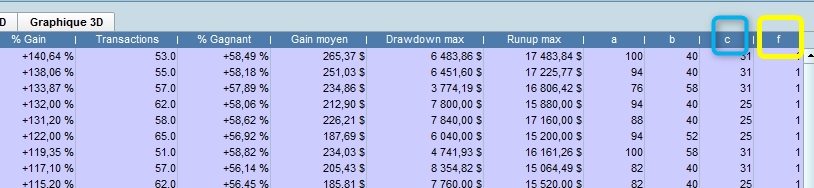
f is the number of step before closing the trade
f=1 then R/R=1
f>1 then we have a trailing stop and on the first step=BE R/R>1
c= the step in pip (EUR/USD 1 mn 100 000 units 3000 comb).
Of course no partial exist = only ONE exit
[attachment file=”138712″]
Done !
It confirms what I said previsously
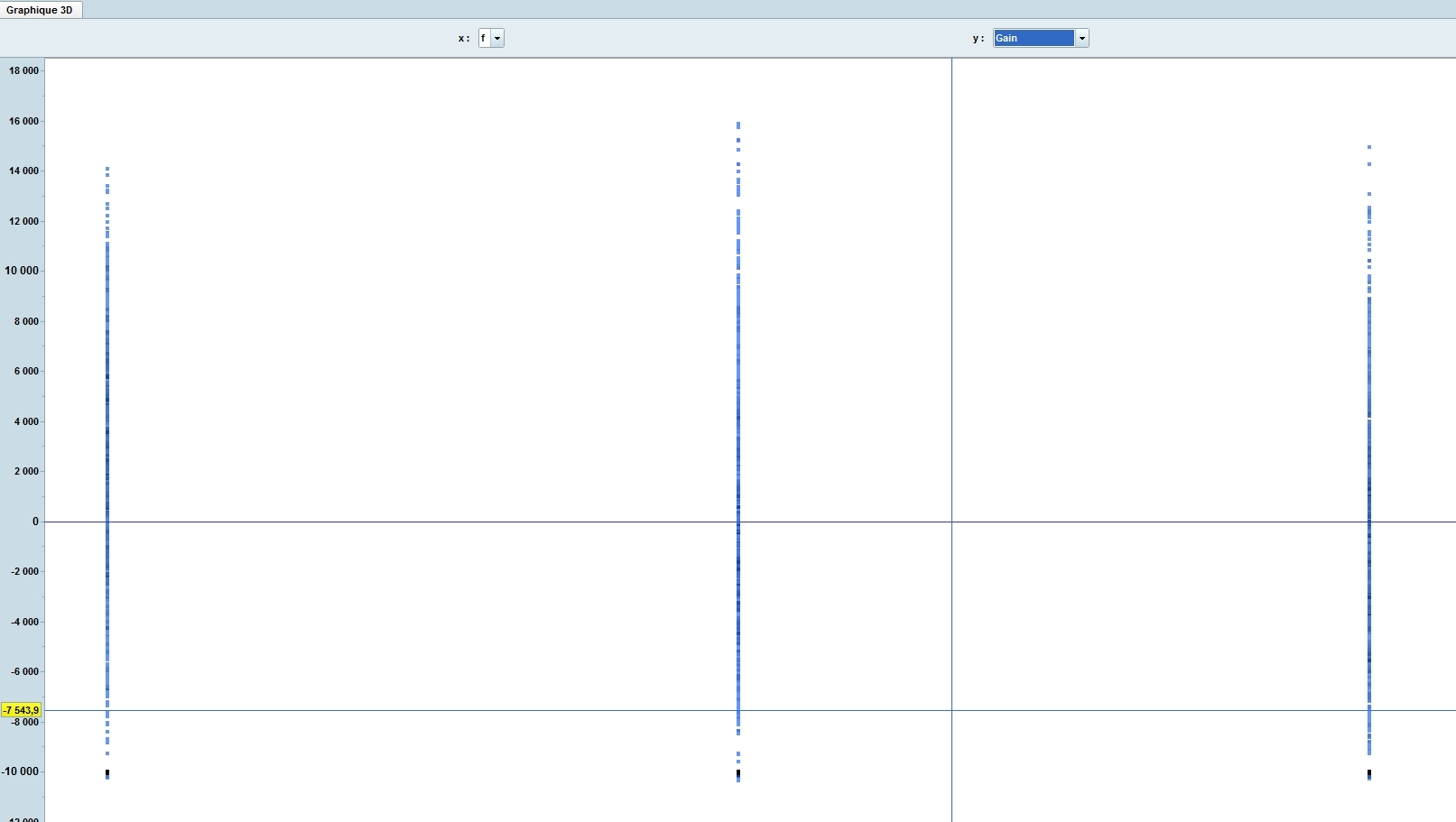
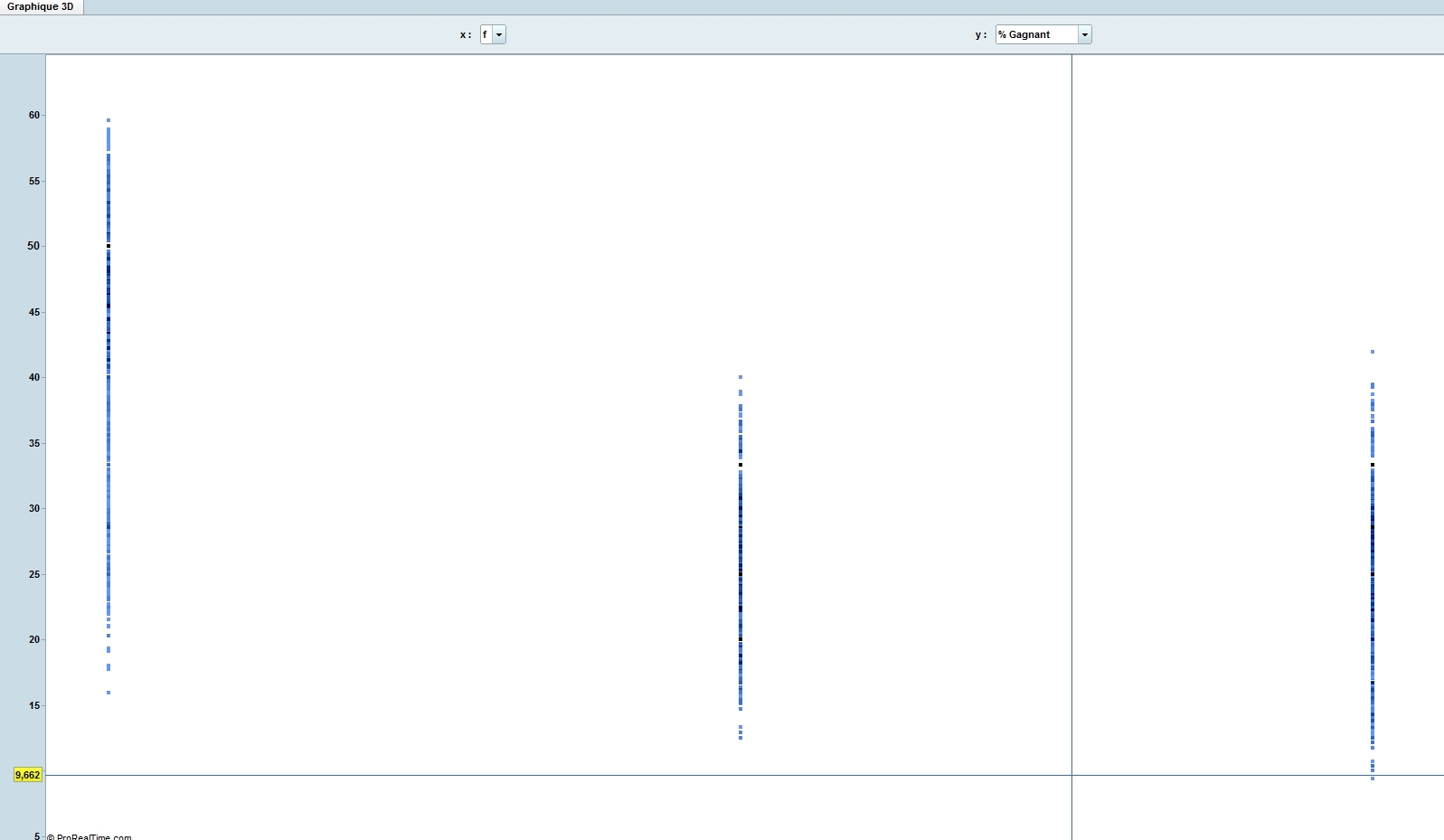
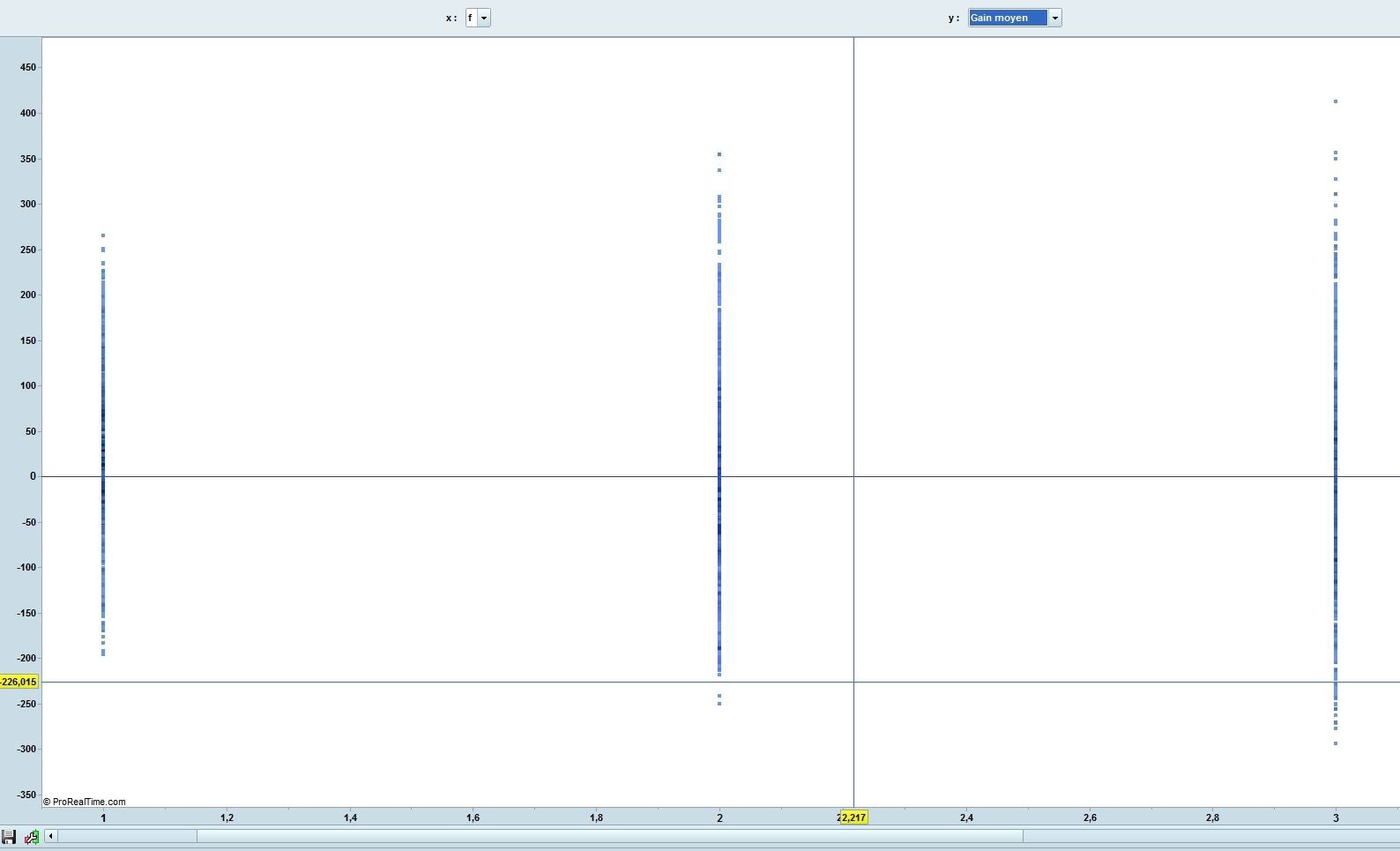
See the pictures
As you see : The total gain is quite the same between f=1=No BE or f>1 with Trailing stop and BE
When f=1 the % of winning trade is higher compare when f>1
But when f=1 the average gain is less important = you win more / trade when f>1 (but remember we have less winning trades)
In conclusion, as I said before and to reduce my stress notably…I use generally f=1 with No Trailing Stop and No Breakeven who seems to be unuseful
This is MY experience and MY tests, may be you can do yours to compare
Have a nice day
Zilliq
[attachment file=”138714″]
[attachment file=”138715″]
[attachment file=”138716″]
One another important thing @paul
The more f is high, less transaction you have, and for a better optimization we need a lot of transactions (The more is better)
One other reason for f=R/R=1
Bye
PaulParticipant
Master
hi zilliq
if you have 1% stoploss & 1% profittarget and being long, there’s no action on the same signals for long in that 2% range, which could be very poor.
it’s likely more curvefitted and less robust, but depends how the code is written.
With my little project I’ve made progress & is compleet, but it’s not good enough to use it.
I like the idea to use support & resistance in a strategy so that it being more dynamic with smaller losses & faster profits & reversals on tops or bottoms optional.
Have not used breakeven in my codes but a percentage trailingstop I do use atm.
Take care
Paul