
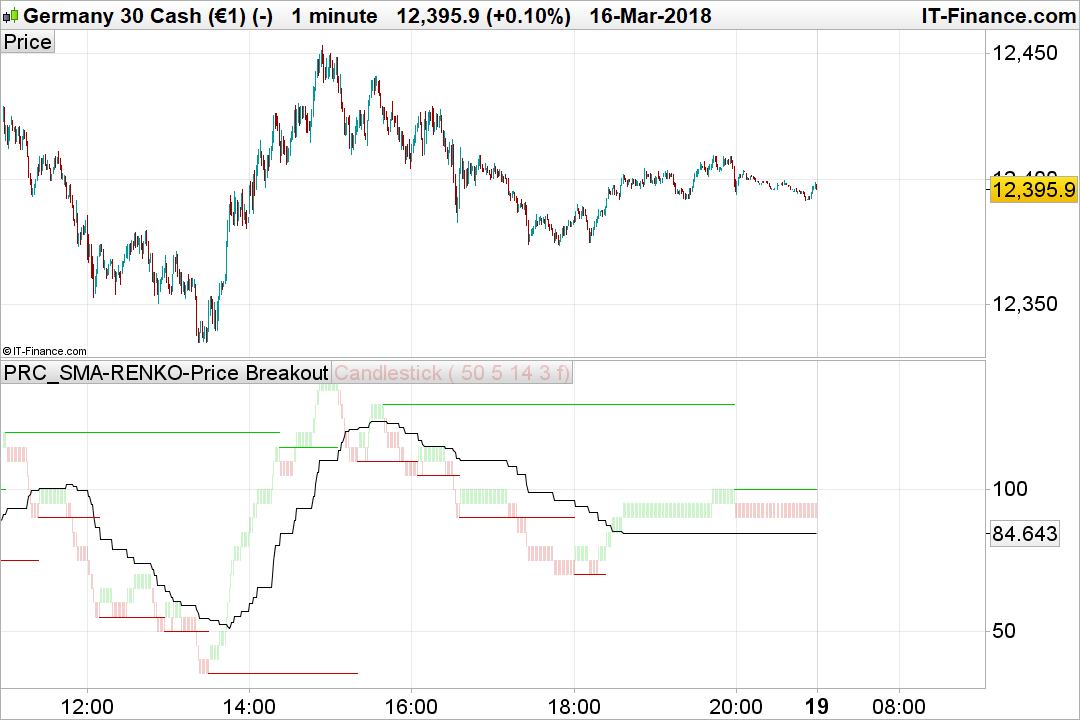



Renko bricks construction start at the first bar of the history, so indeed, the chart will never look the same if you start your data history 1 day or even 1 minute before the last time you opened it.. But that would not say that backtesting is not possible, it is only about the accuracy of backtests from one user to another one, from one day to another, etc.
This the main problem with Renko charts. In my eyes, it is only possible to evaluate them statistically : that is to vary first bricks and brick sizes systematically and then to determine an average result for the sum of these systems.
So, for example, you define the first Renko brick yourself by setting it at a precise time in the chart. For example, at TIME = 010000 on date = 20140801. The upper limit of the first Renko brick will then be the closing price at this time, for example 9330 in the DAX. Then you define additional entry points for the first Renko brick : 9330 + 2.5, 9330 + 5, 9330 + 7.5, 9330 + 10 and so on. Maybe up to 9330 + 20, this depends on the timeframe you are trading in.
Then you vary the brick sizes, for example from 15 to 25, step 1, when you trade the DAX in the 30 min chart.
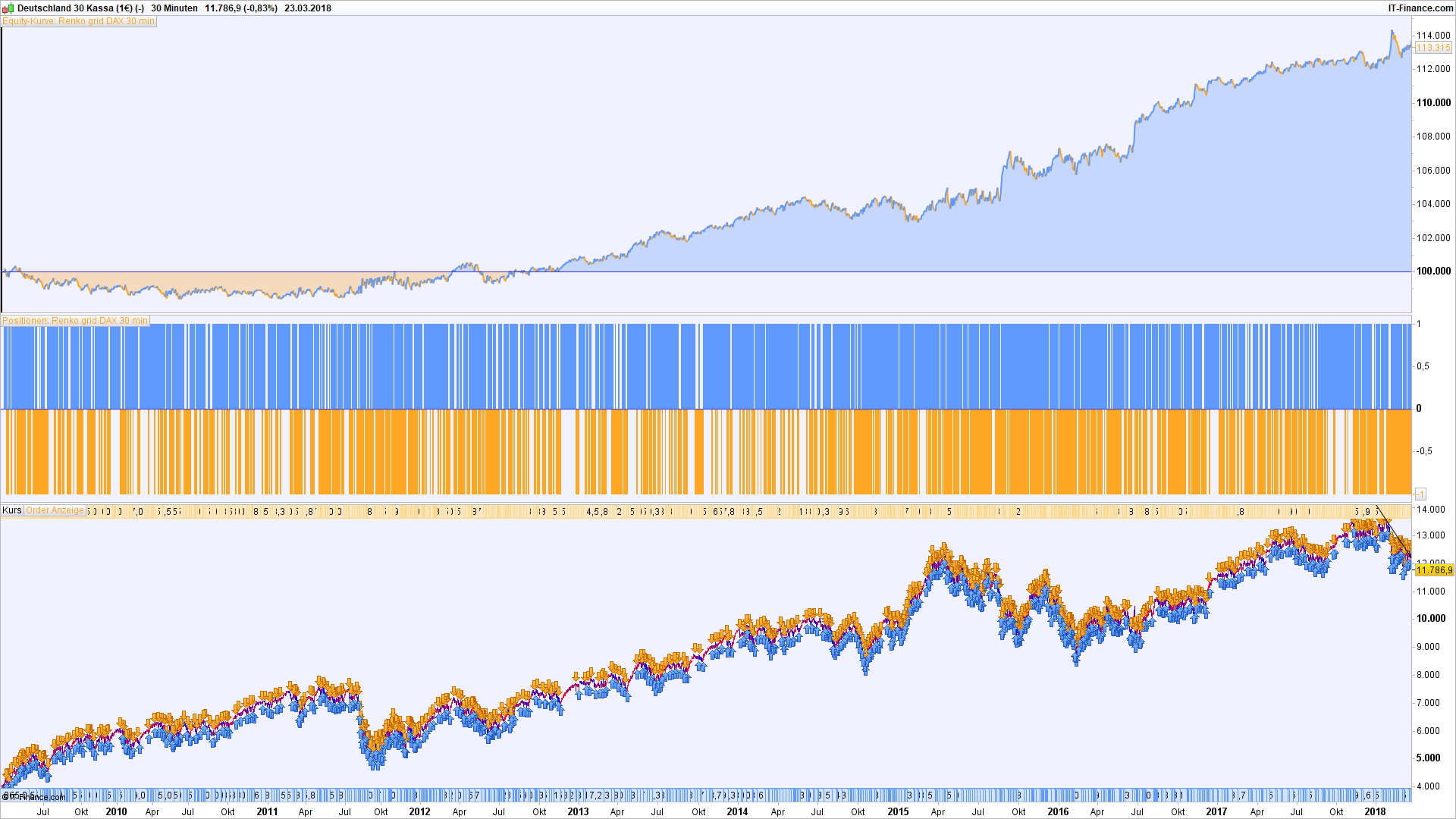
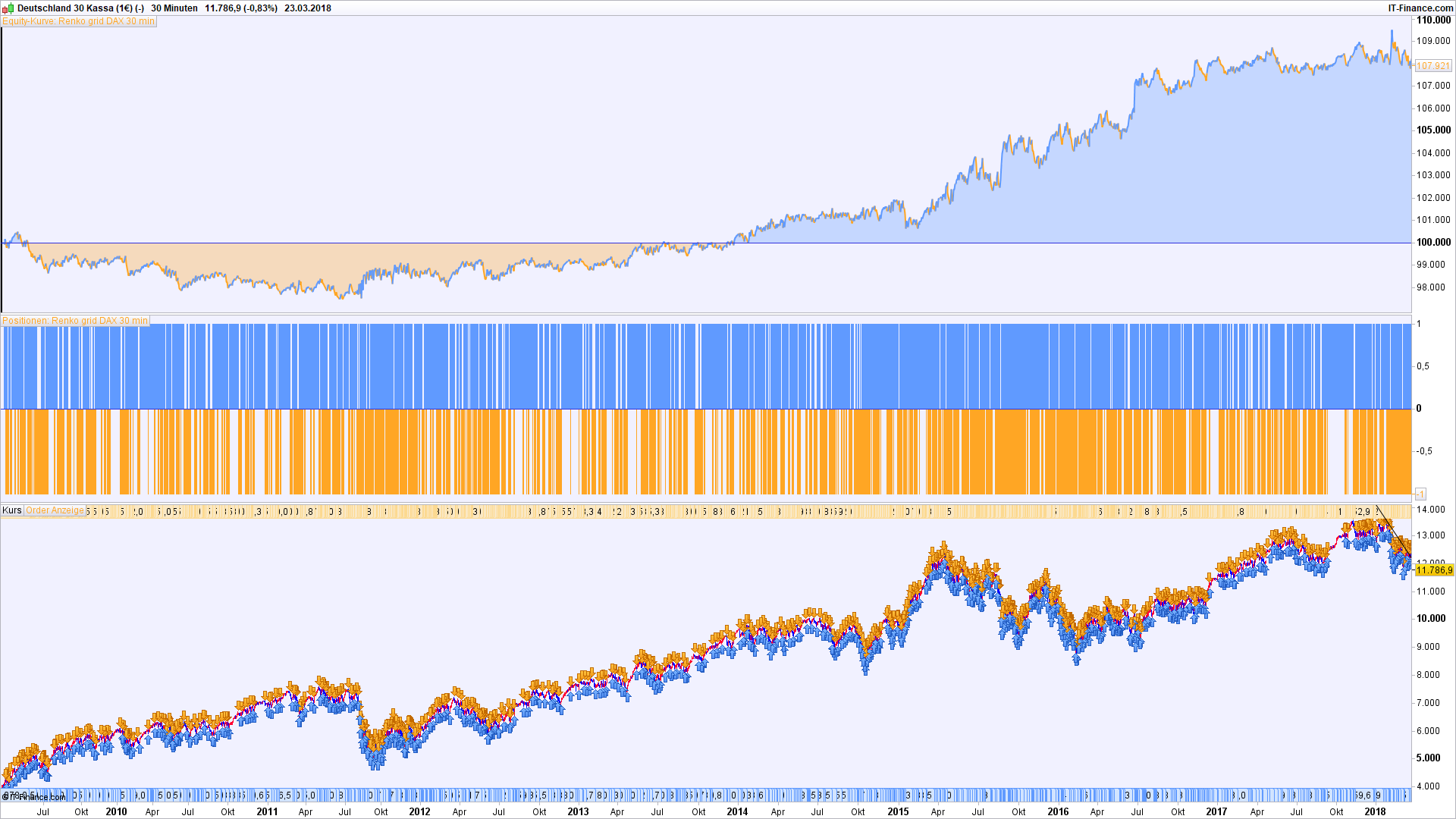
In total, you will have 9 different values for the start position of the first Renko brick, and 11 values for the brick size. Then you run a backtest on all of these 99 Renko systems with the different brick sizes and positions of the first brick as parameters. You will see that the final gain can vary by more than 50 %, seen from the best result down, only by varying the position of the first Renko brick.
In the end, you determine the average gain per system by transferring the backtest result into Excel. Then only you will get a statistically quite reliable evaluation of a Renko system that will not depend on the exact position of the first Renko brick and on the exact brick size.
In reality, you would also have to run a grid of several Renko systems at the same time, with different starting positions and brick sizes. Only this way you can average out the entirely random influence of the first Renko box and the brick size.