





Hi Nonetheless. Thanks for your comment!
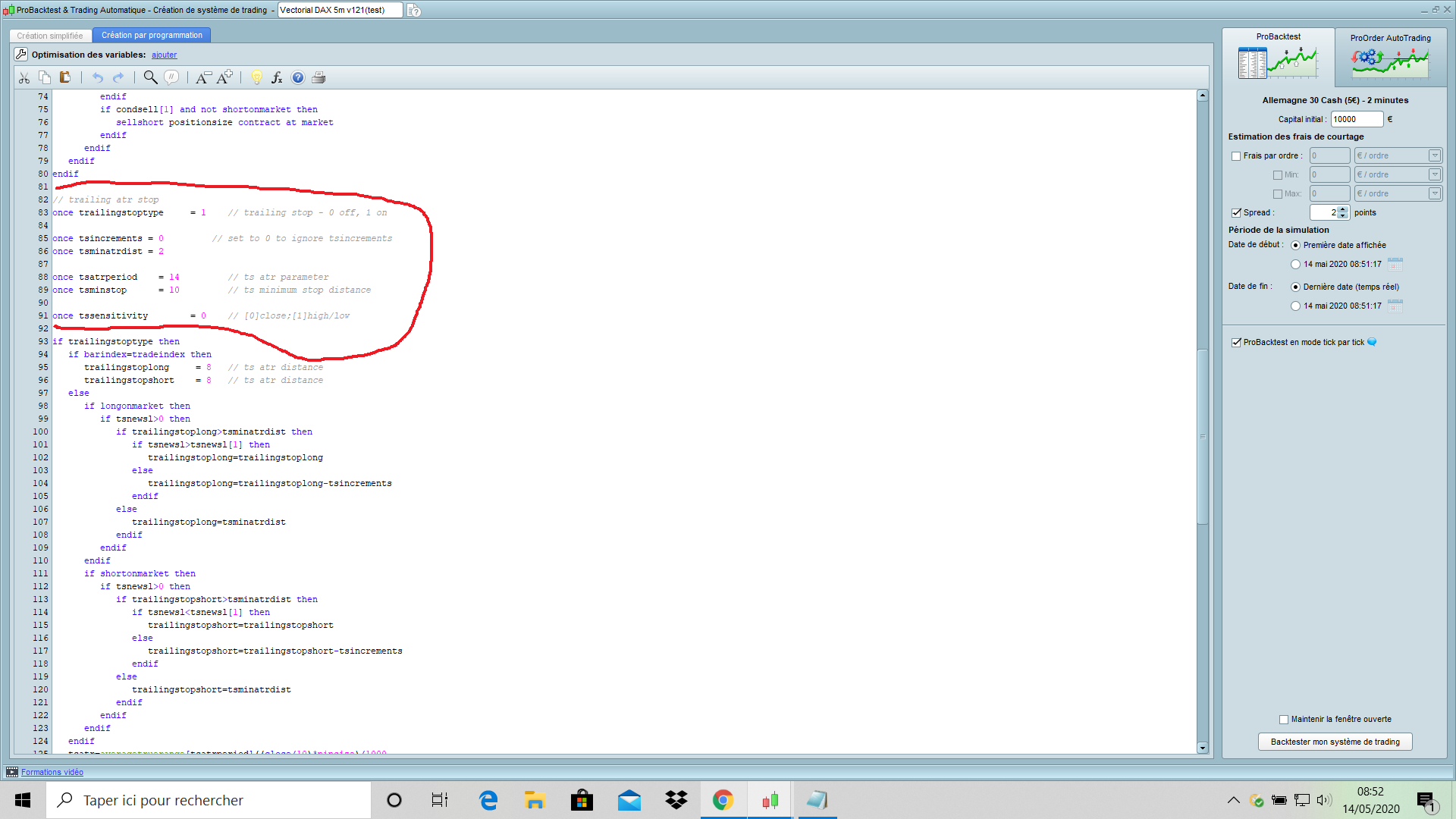
I do the same with the tsatrperiod, leaving it at 14 regardless instrument.
the tsminstop is different. For this it’s best to have the correct value from IG.
It means if the current price is too close to the ts exit stop price, it will reject the exit when using the wrong value. (not visible in a backtest)
Because of this I added an extra exit criteria, if index crosses over/under the tsnewsl it still exits next bar at open on market. My purpose was for fast timeframes, because if the stop is rejected, the next bar will be fast. On a hourly timeframe it doesn’t bring much.
Then there’s tssensitivity. If you have often a spike and a close considerably away from the new high/low, the system originally only use the close. With some algo’s I thought might be interesting to calculate from the real high/low instead of close.
The trailingstop long/short is used to set the atr distance when the gains are sufficient. I do not have a basic rule on this, but when the trailing stop starts working, it has to have gains which makes sense compared to a loss on stoploss or average losses.
In the old situation, with tsincrements at 0 and tssensitivity at 0, it means a fixed (besides the round difference) number of points for the trailing stop. Those points are calculated from the highest/lowest close.
In the other situation, it starts working when the atr distance trailingstoplong/short is reached.
From that moment on it starts reducing the atr distance to the tsminatrdist with he increments set. Values which make sense normally are 0-0.25 with increments of 0.05. At the vectorial dax I’ve put them even higher.
In other words, if the trailing stop value in points was originally +/- 80, it starts reducing it to +/- 40 points quickly once it kicks in (using values in vectorial dax)
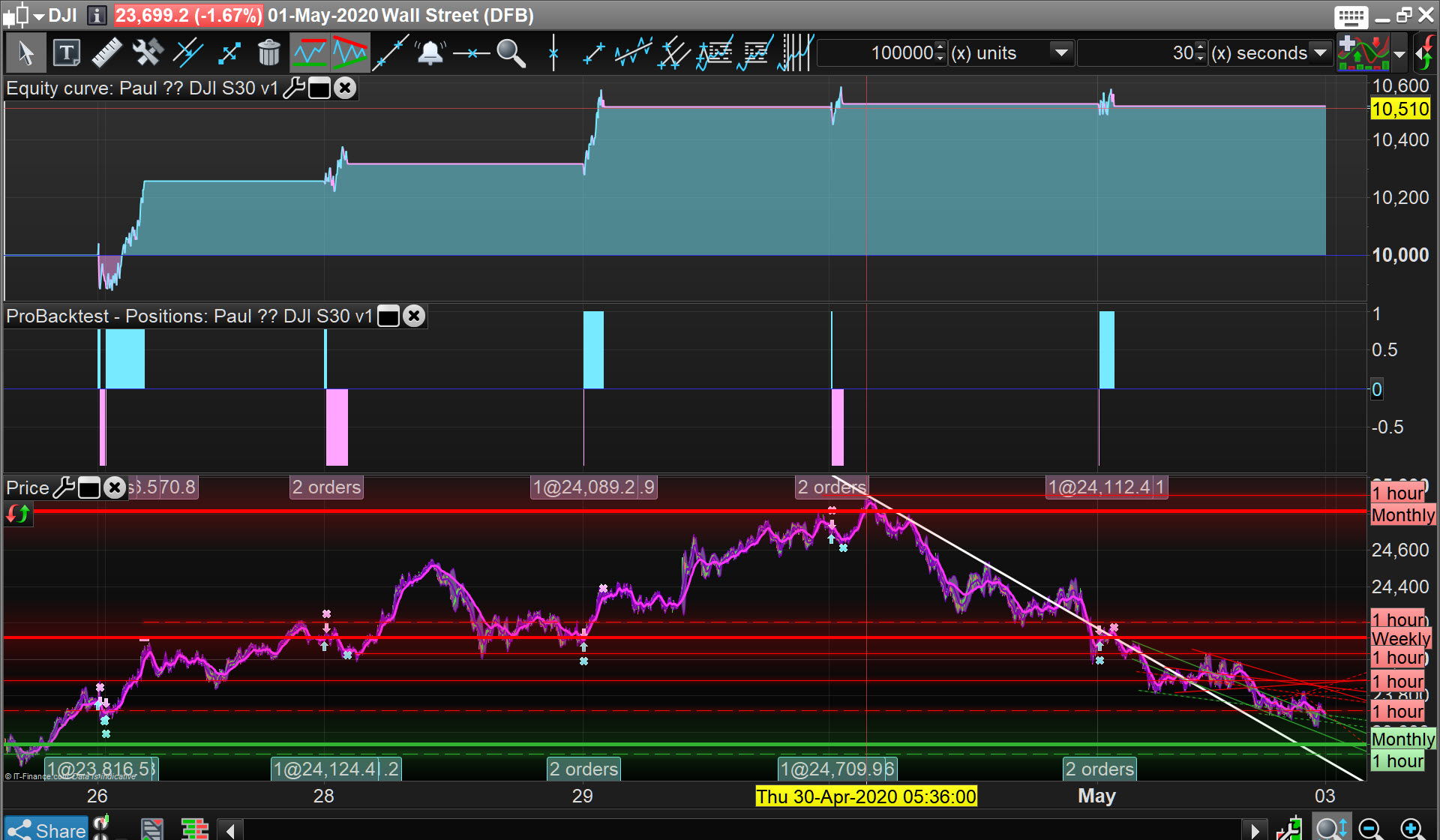
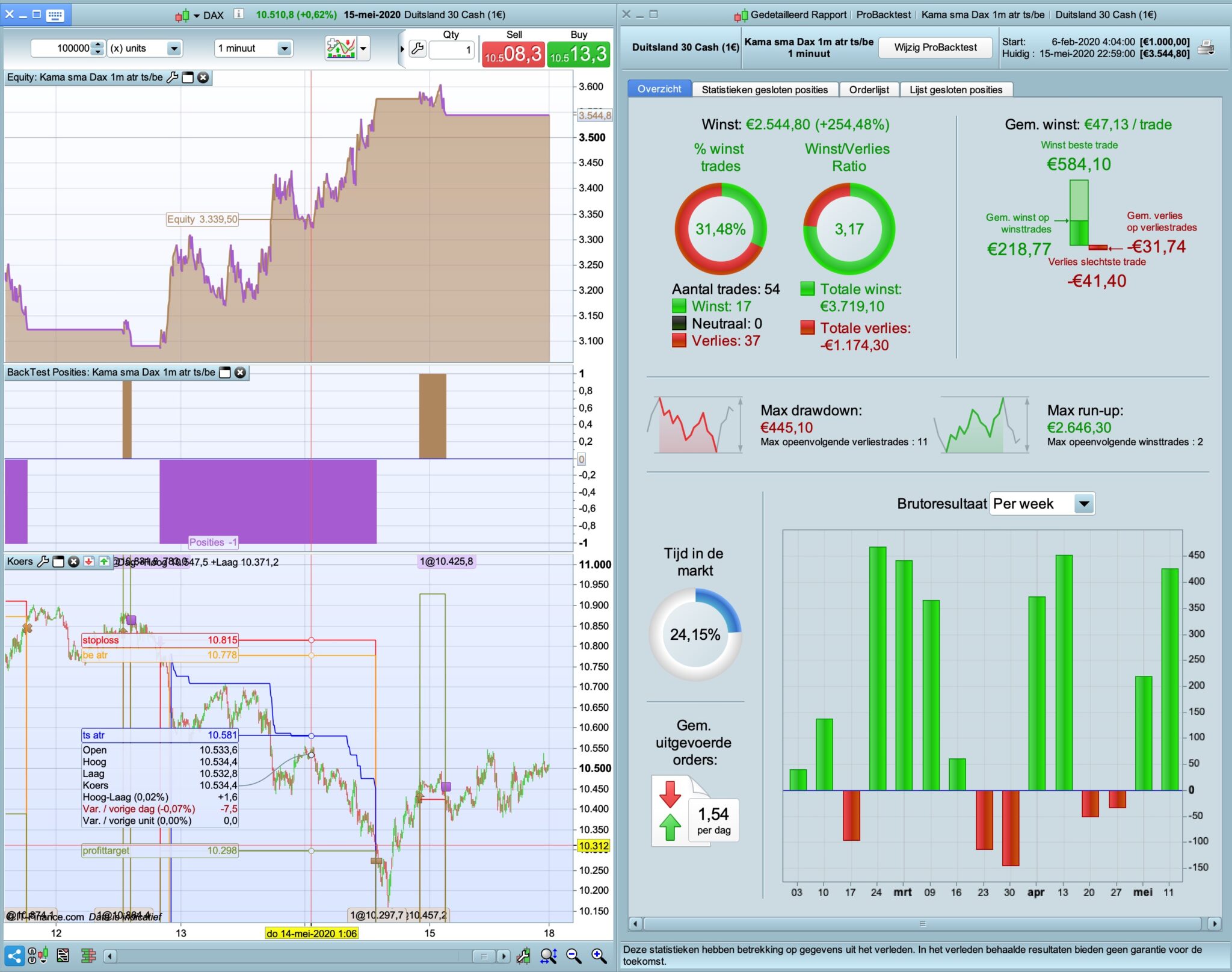
To have a better visual, try to use graph tgl/tgs and graphonprice tsnewsl and see the difference using increments at zero and higher.
The trailingstop doesn’t do completely what I had in mind though, but for me it’s good.