Hi
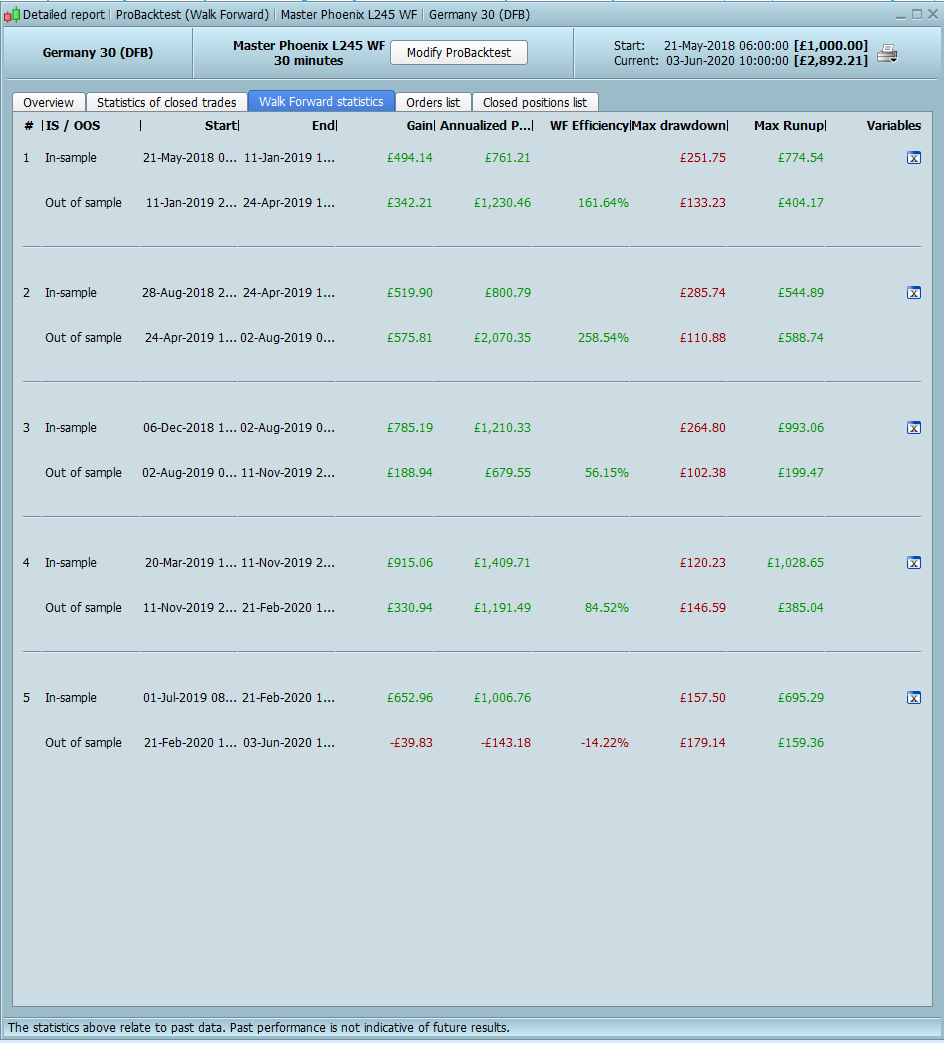
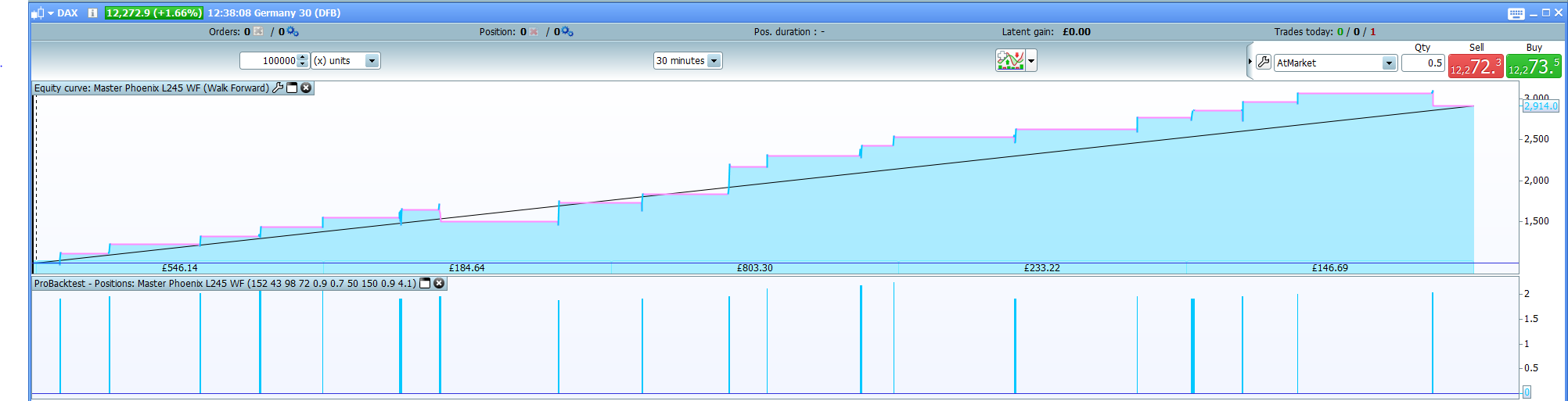
I have started to test a new V7 stop and have performed a walk forward test as the stop worked 3x better and I was wary of being over optimised
How do you think it looks?
Thanks
Ruark
Looks almost too good? 🙂
Did you do a variable optimise during WF or a dummy variable WF?
There are around 10 variables between the entry and the stops, I use 2 optimisations on the entry one for a rough area then one with narrower ranges and then a similar process with three optimisations to process the stops
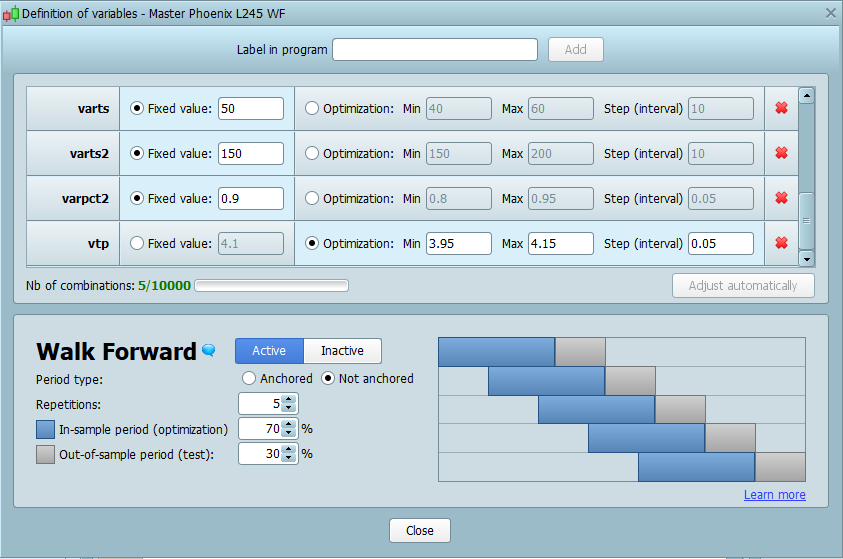
To get the test I took the take profit % value and added a 0.1% band either side with a 0.05% step
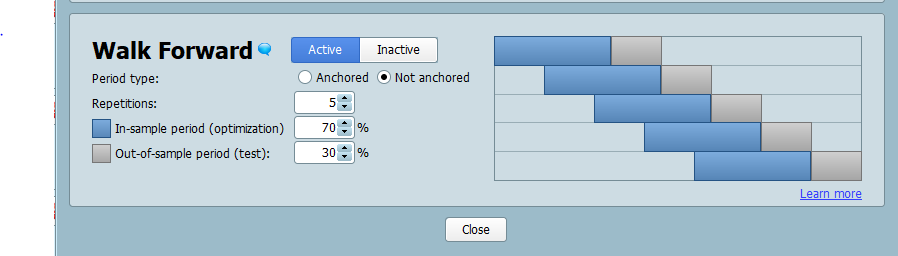
So you did a WF over the full period that you had already optimised variables over and then used 2 of those (previously optimised variables) across a narrow range to do a WF Test?
Yes
I wanted to look at the robustness of the final system, I hadn’t thought of the dummy variable method
It kinda doesn’t prove anything though as you are doing WF over an already optimised over IS period?
So no wonder the results are good?
I was going to ask … was there much variation in the profit % variable that you did optimise during the WF .. but I guess the answer would be … No not much variation … as you limited the range to 0.1%??
If you do try the Dummy Variable method then ALL the WF period needs to be OOS (data not run over that period previously) if the results are to mean anything?
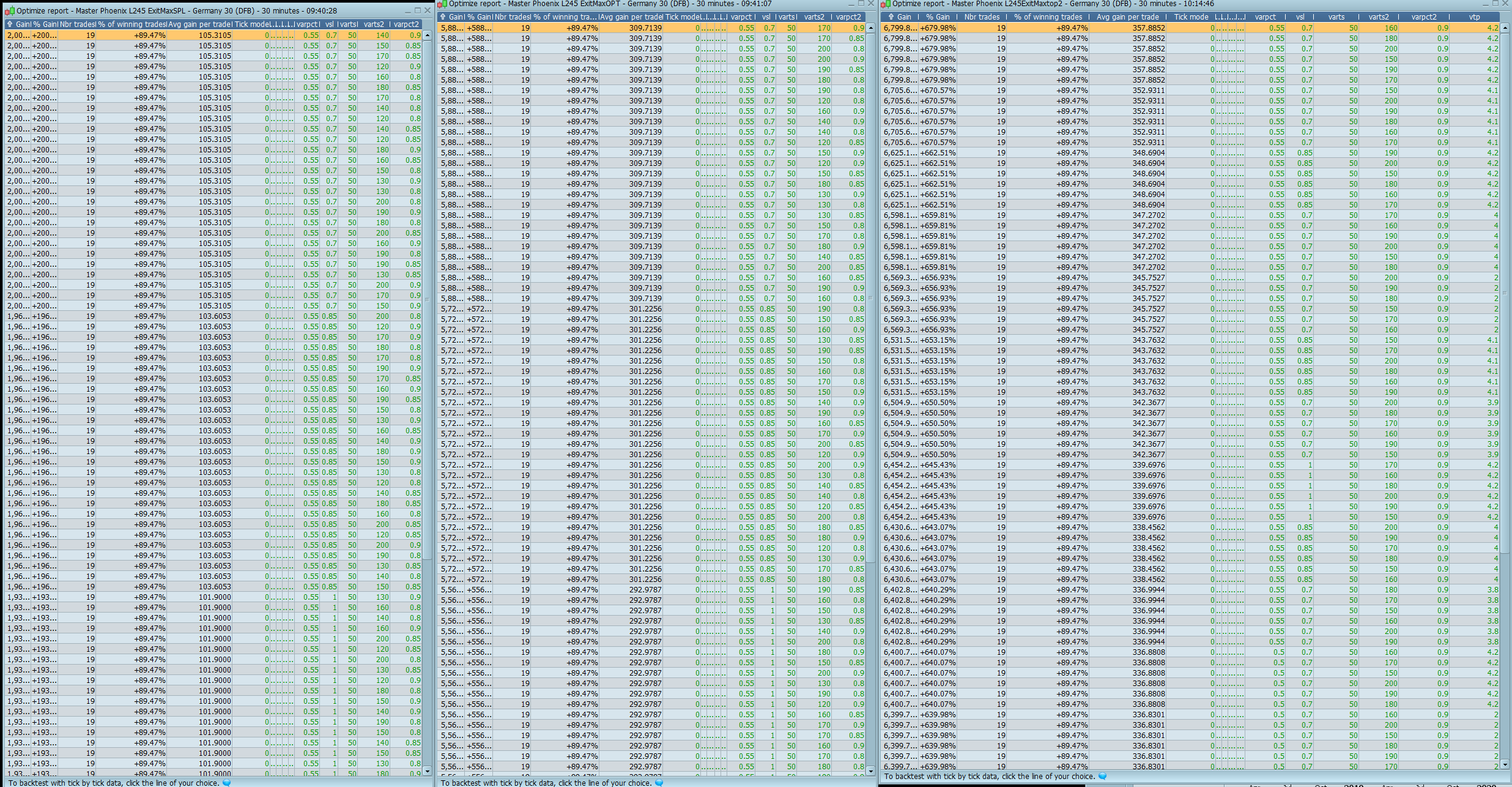
I have attached the first through third versions of the exit
The first (left is the original) is optimised based on a flat stake optimising the trailing stop but not take profit
the second optimises the trailing stops but not take profit and is based on a 50% compounding of profit within the system and the third is optimising the take profit only
All the the same entry signal
There does seem to be a range of values
I will set off a full out of sample test with a dummy variable
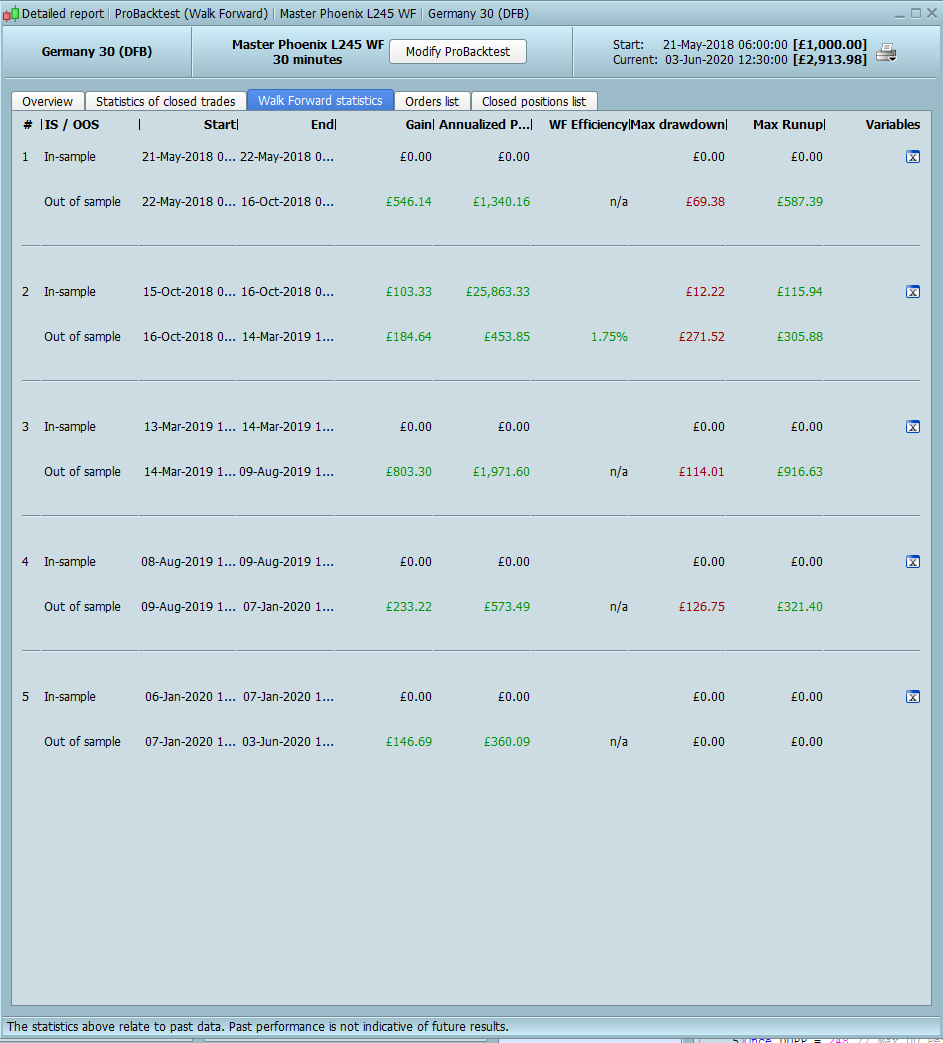
I have attached the 99% OOS
How have you managed to get the IS period as 1 day but the OOS as 5 months?
You must have IS as 1% and OOS as 99% … oh yeah that is what you are saying above! 🙂
When I say OOS I mean a virgin load of data never before used for anything to do with the Bot.
This is to simulate the results we might expect to get when we launch our Bot on Real Live virgin data never experienced by the Bot (I’d best change my terms else I’ll be getting told off!? 🙂 )
OOS periods are used to validate the IS optimized variables and to find a recursive period of when it should be good to re-optimize them, in order to continuously perform good enough (use the WFE to know that).
Robo has already optimised all the variables (without WF) over the full data period.
Give the data set available in IG, it sounds like your saying something like to optimise on say half the max amount of data available and then run the walk forward validation on the other half of the data. Because I optimised using all of the data available there is no virgin data to test against?