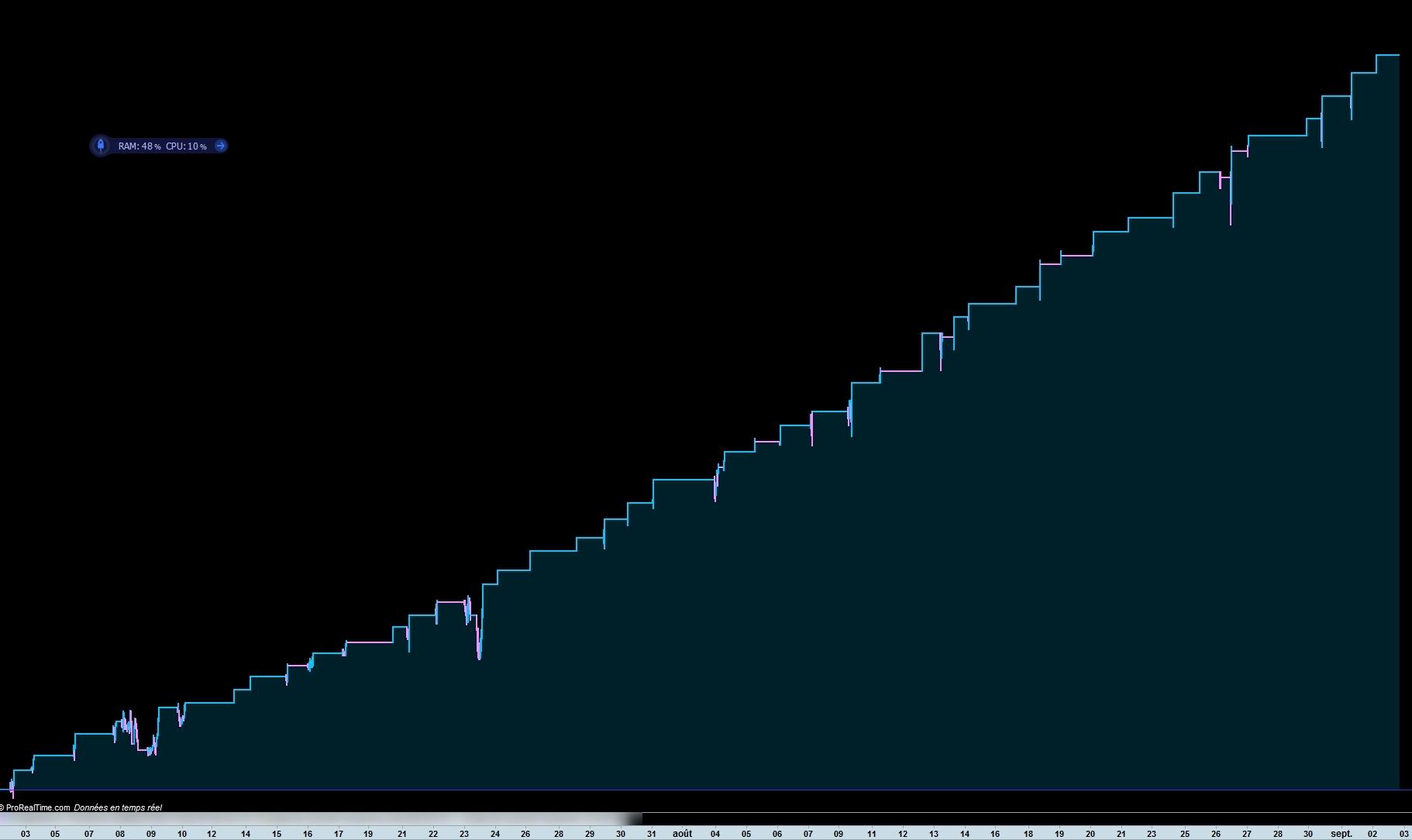
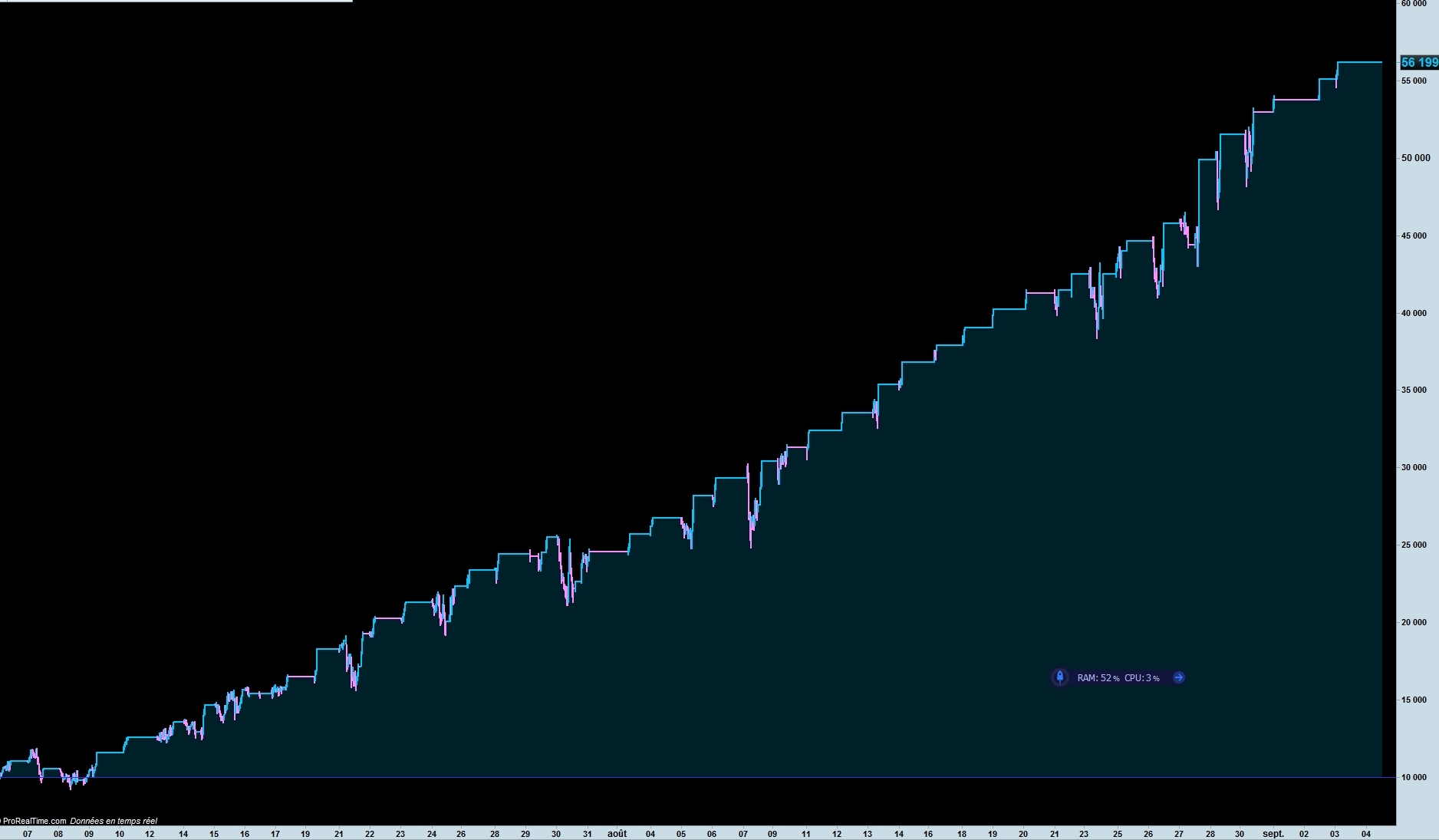
Always Keep It Simple (In code and strategy). 3 Variables only, 100 000 units.
Strategy without overfitting (or as little as possible) based on Stochastics I develop today, but no matter for the strategy on backtest. Need to test on OOS now
Have a nice evening
[attachment file=”143235″]
Your new strategy looks nice, @zilliq, thanks for the tips too.
Btw, recently I picked up a topic thanks to @vonasi, I think it is helpful on reducing the optimization time as well (which I believe everyone is so eager).
Control of yearly/monthly/weekly profit/loss => https://www.prorealcode.com/topic/annual-percentage-returns/#post-93664
The article is originally for yearly, but you can transform it to monthly/weekly (below I share example for monthly). The better is even set a range of highest profit and lowest loss allowed.
Since we added a quit once the bad month happened, thus the back test is faster, it will not continue to test for the rest of the months.
You can even add a condition check to not have consecutive month/weeks (even days) of loss, e.g. do a summation[3](monthlyreturn) <= 0 for no 3 months consecutive loss.
capital = 5000
once lastcapital = capital
runningperc = ((strategyprofit - laststrategyprofit) / lastcapital) * 100

if month <> month[1] then
monthlyreturn = runningperc[1]
laststrategyprofit = strategyprofit
lastcapital = capital + strategyprofit
total = total + monthlyreturn
count = count + 1
//monthlyaverage = total/count
endif

if monthlyreturn < -0.5 then
QUIT
endif
Since the optimization timing is faster (thanks to skip the bad parameters), you can have a bigger range of optimization.
I guess you are teasing us and you are not going to share your excellent looking Strategy??
@GraHal, you can subscribe when he put in market place, haha 🙂 But I’m sure you also have such strategy, right? Perhaps same for many people here as well…
No loosers?
Of course there is losers;- 87 % winners
100 % winners on 100 000 units = Overfitting for me
@dow jones LOL not even.
I consider to sell an algo is a scam because it need always some work and retesting
 Paul
PaulParticipant
Master
Zilliq, pure a simple risk/reward strategy with a certain ratio or other exit methods included?
Classical exit based on ATR @Paul
Of course there is losers;- 87 % winners
Good! Any chance to share the same screenshot with position size window below the equity curve?
Of course Nicolas, I just need to do another backtest. I will tomorrow
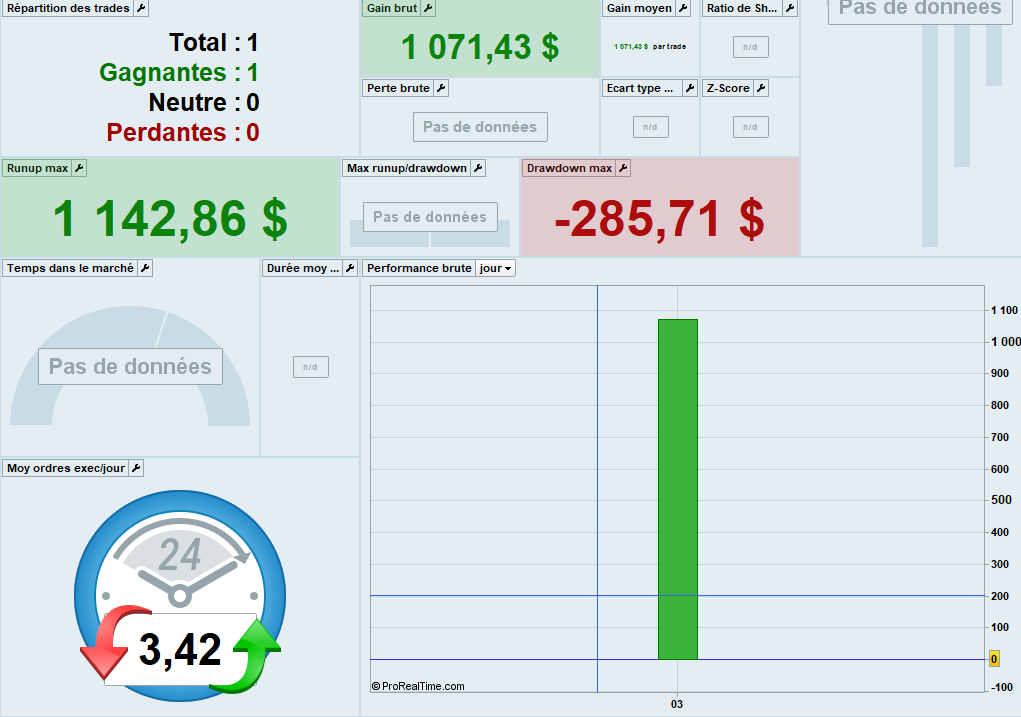
First OOS day for this Algos (Mean nothing as you now, but good start).
Always a 1000 USD/day strategy (I don’t need more 🙂 )
To continue to minimize the overfitting, today I begin an OOS demo test with a strategy on SAR to have only 2 variables
58,99 % winners on the backtest but on 556 trades ! 100 000 units EUR/USD 1 mn Sharpe Ratio 1.1.
We will see if it was a good idea 🙂
Have a nice day
Zilliq
@zilliq you should open a fresh new topic for your OOS forward test about this specific strategy, we are a bit off-topic now here, if you don’t mind.
Control of yearly/monthly/weekly profit/loss
An update to this one, below is an example to control on the consecutive monthly and weekly loss.
You can probably extend it to maximum win for monthly/weekly too (I didn’t do it as it is already difficult to achieve no monthly and weekly loss over long period).
I kind of think that a stable strategy should have stable income, so no huge spike or huge drawdown on certain period that resulted good total gain only.
Adding this means the back test will stop for the combination if you will anyway don’t like it, e.g. if you won’t accept strategy that loss 2 consecutive months, then no point to continue the back test for whole period.
So making the back test a bit faster. Hope you guys like it and suggestion welcome.
//1. Check monthly not lower than expected profit and no consecutive month loss
capital = 5000
monthlymingain = -10
maxconsecutivemonthlyloss = 1
maxconsecutiveweeklyloss = 2
once lastmonthlycapital = capital
once lastweeklycapital = capital
once consecutiveweeklyloss = 0
once consecutivemonthlyloss = 0
runningmonthlyperc = ((strategyprofit - lastmonthstrategyprofit) / lastmonthlycapital) * 100
runningweeklyperc = ((strategyprofit - lastweekstrategyprofit) / lastweeklycapital) * 100

//Ensure none of the month less than expected gain
if month <> month[1] then
monthlyreturn = runningmonthlyperc[1]
lastmonthstrategyprofit = strategyprofit
lastmonthlycapital = capital + strategyprofit
if monthlyreturn < 0 then
consecutivemonthlyloss = consecutivemonthlyloss + 1
else
consecutivemonthlyloss = 0
endif
endif
if monthlyreturn < monthlymingain or consecutivemonthlyloss > maxconsecutivemonthlyloss then
QUIT
endif

//2. Check consecutive week of loss is acceptable
if opendayofweek < opendayofweek[1] then
weeklyreturn = runningweeklyperc[1]
lastweekstrategyprofit = strategyprofit
lastweeklycapital = capital + strategyprofit
if weeklyreturn < 0 then
consecutiveweeklyloss = consecutiveweeklyloss + 1
else
consecutiveweeklyloss = 0
endif
endif
if consecutiveweeklyloss > maxconsecutiveweeklyloss then
QUIT
endif
Very good idea and thank you for that great snippet DowJones. But, while it should improve backtest time, you will also introduce a form of over-fitting by avoiding bad months, yeah i know nothing’s perfect 😉
you will also introduce a form of over-fitting by avoiding bad months, yeah i know nothing’s perfect 😉
Nicolas is right (as always!) Also remember that a strategy cares nothing about things like when the name/number of the current month changes.
You could have a bad second half of a month and a bad first half of the next month and that back test is included in the results because both months are average results whereas if they same results had just happened a couple of weeks earlier and occurred all in the same month then that test would be excluded. Surely it is better just to have a rolling period or rolling quantity of trades and if the results are below what you would be happy to trade then quit the back test to save optimising time?