





Hi @zilliq,
A first quick response and what I notice :
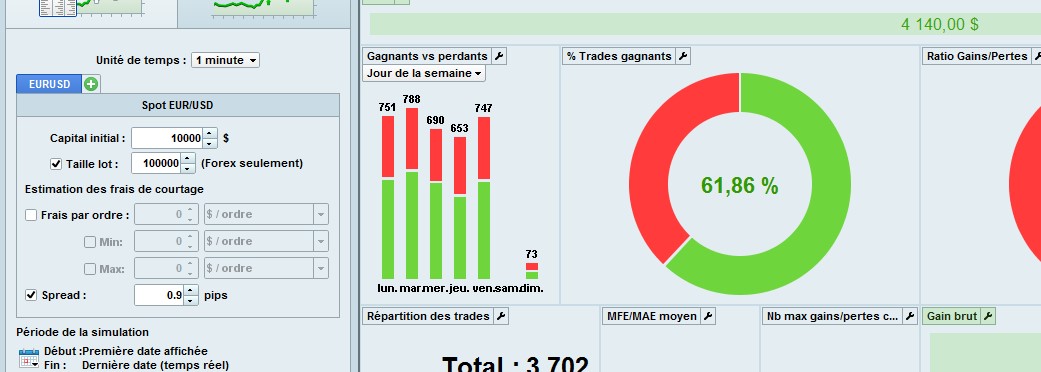
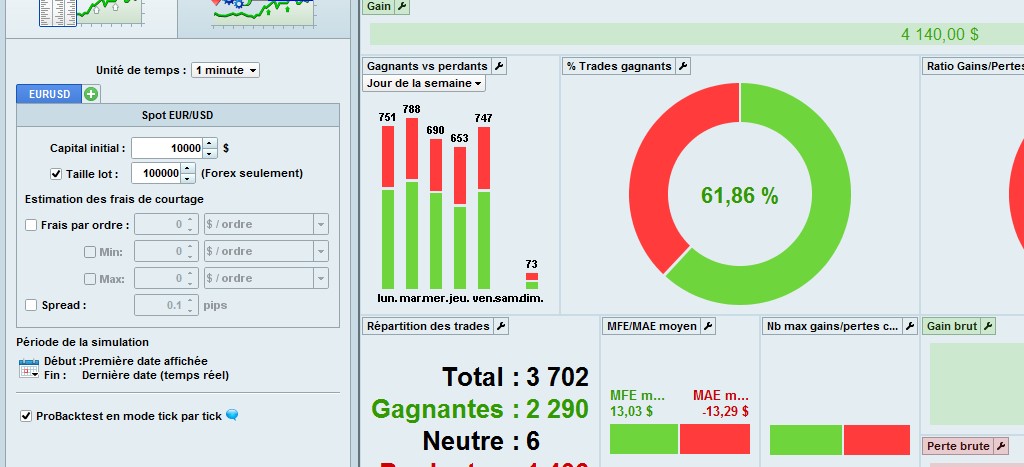
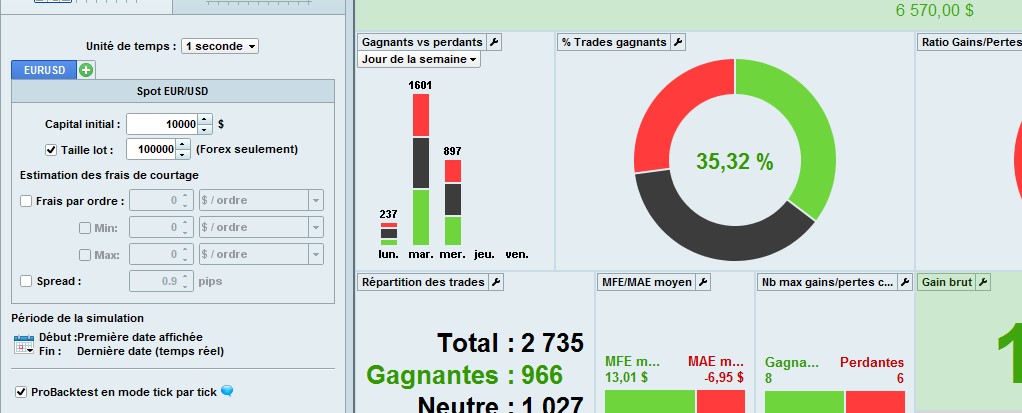
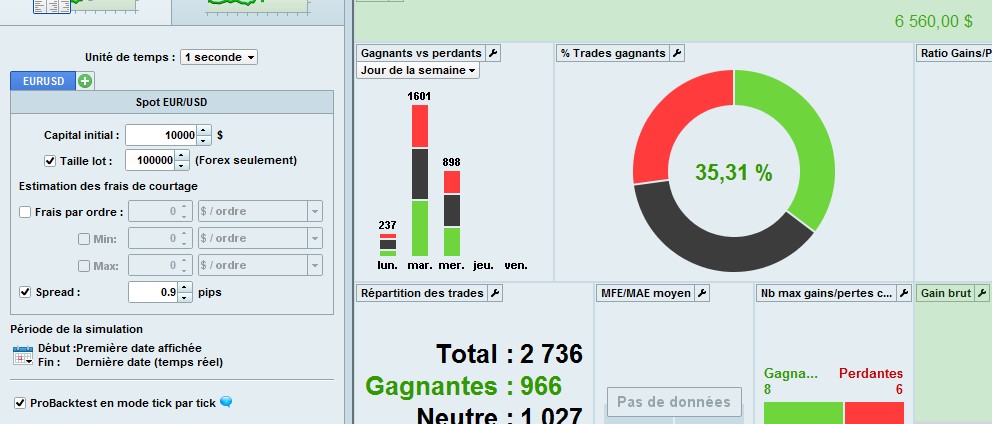
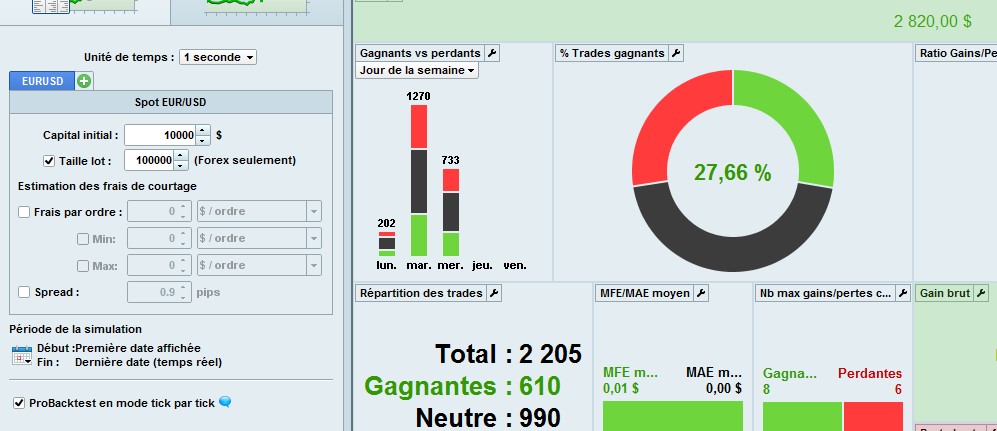
- You use Tick by Tick there, while I don’t;
- I use 1 second bars, you 1 minute;
- You kind of formed the strategy around the trade, while I set a time-period boundary on existing trades (on an existing system);
- It looks like you set a profit target (in percentage ?) which I don’t.
Ad 4.:
This is, I think, the most important. With each of your fractional spreads under 1, that target can be met within the period you give it (which will be on a number of bars for the backtest – like 1K or less, as it seems to me). Once the spread becomes too high, the target can’t be reached in that time. Thus (IMO !) give it more time, and it ($10) will be reached after all. But see the below which kind of undermines this thinking.
The way I work (with my given examples) is not a specific target, but a moment when the profit is taken. This is somewhat more difficult to explain by me, but it allows for the profit to be less and less with the spread being higher and higher. At least I showed (or try to) that this is perfectly linear (each time 8,50 less), no matter it jumps because of rounding (it should be 4,25 from fraction of 0,1 to the next).
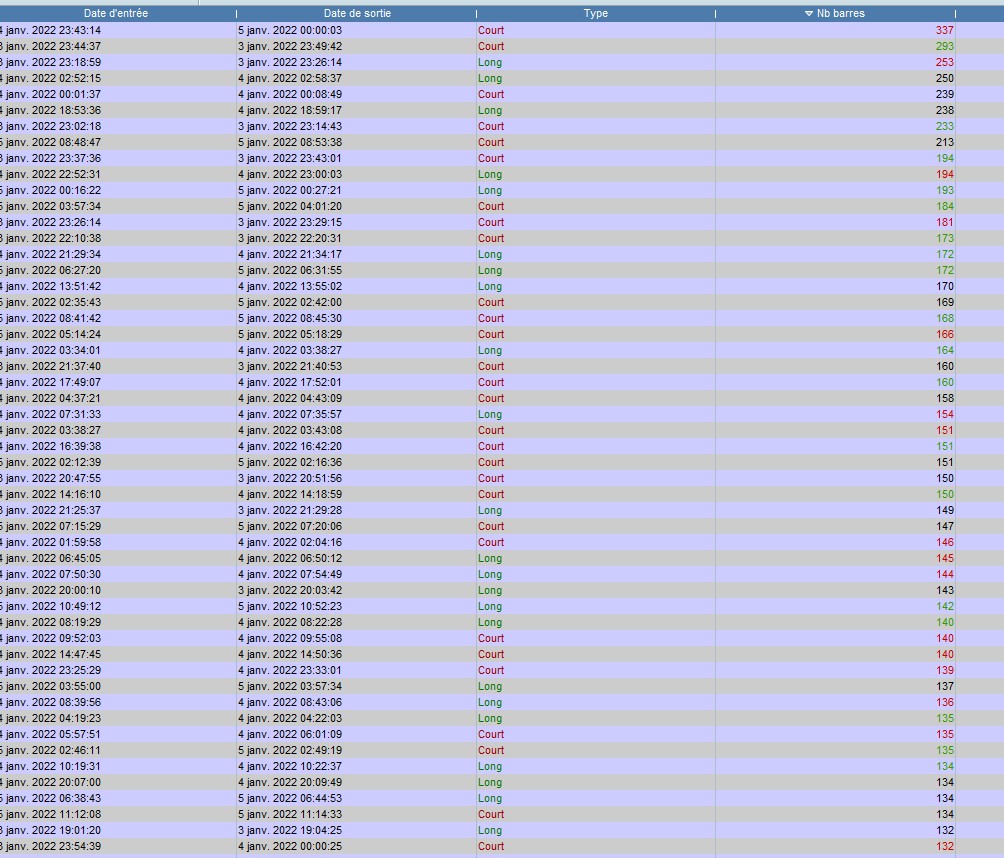
Of course it will be so that the issue (??) manifests with your way of working anyway, however, to me this tells that this way of working is not one which suits reality (??). Although I must say, maybe it does suit or match reality, but you can’t control which spread your strategy should use. I too could set the target to $10 and it will just do it, with one difference per other fraction of spread : the trade will take longer to get there (if at all). Thus in your case you could look at the number of minutes each trade has ran, and you should see a difference, UNLESS the difference in spread can be covered for within one minute …
Ad2.:
Do you see the cruciality of this too now ? My difference in spread will be caught only over more bars (2 bars) and thus my trades will run longer (seonds-wise) more easily. You have one minute for covering the difference in spread, while I hade one second only. It should mean that your position quantity should be 60 times what I used in my example (480K) to see the same as I do ?
Who knows the conclusion should be that for the 1 second timeframe the Spread setting in the Editor of 1 decimal is not sufficient and 2 decimals is, but with 0,5 second timeframe it is okay with 1 decimal ?? (my situation)
In the end my #1 (above) plus #4 in combination are also crucial. Your target can be taken within that bar. I only look at close boundaries of bars, which for me does not make a difference (not setting a target as such). For you it will !
We will nail it …