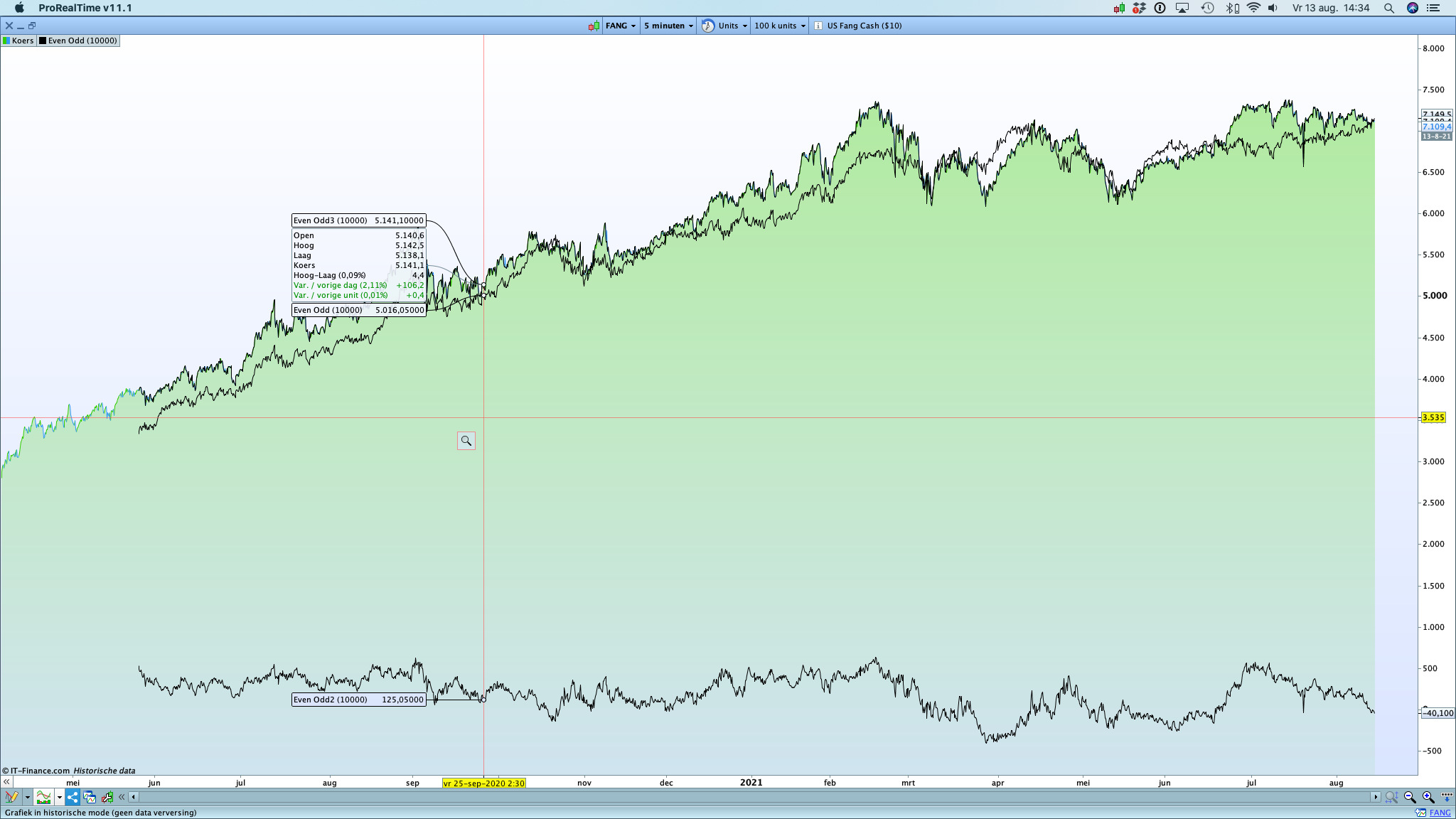
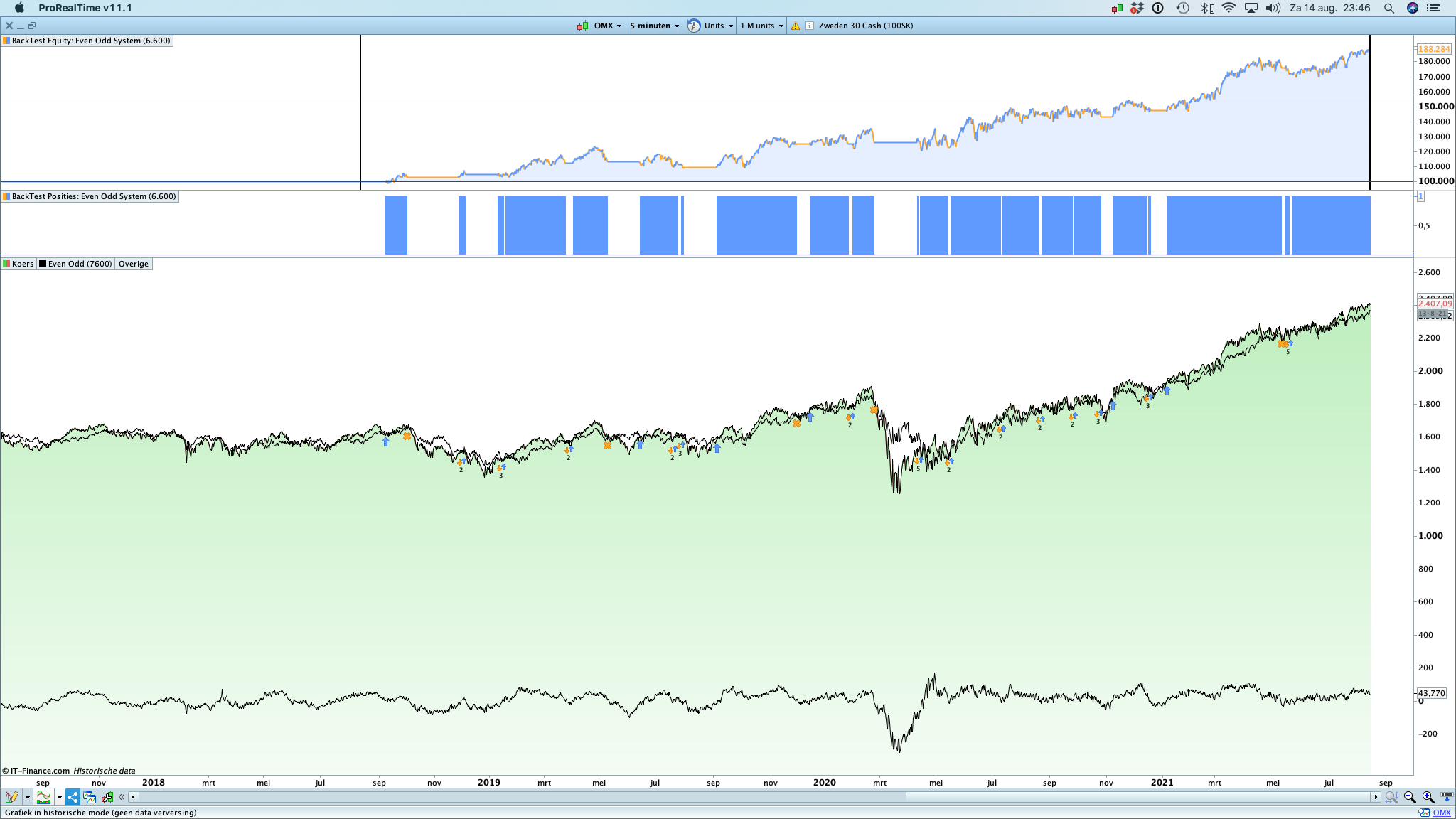
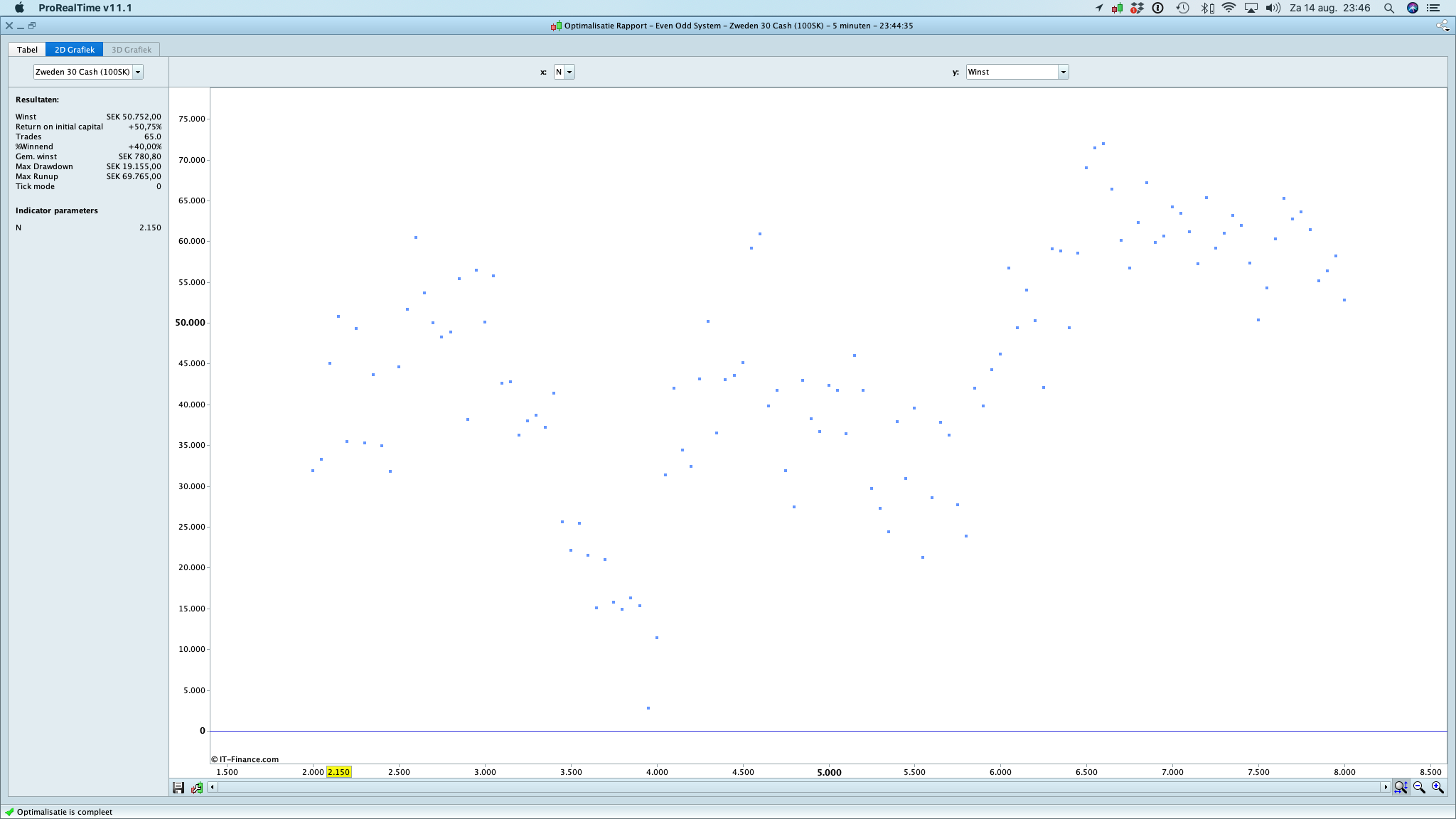
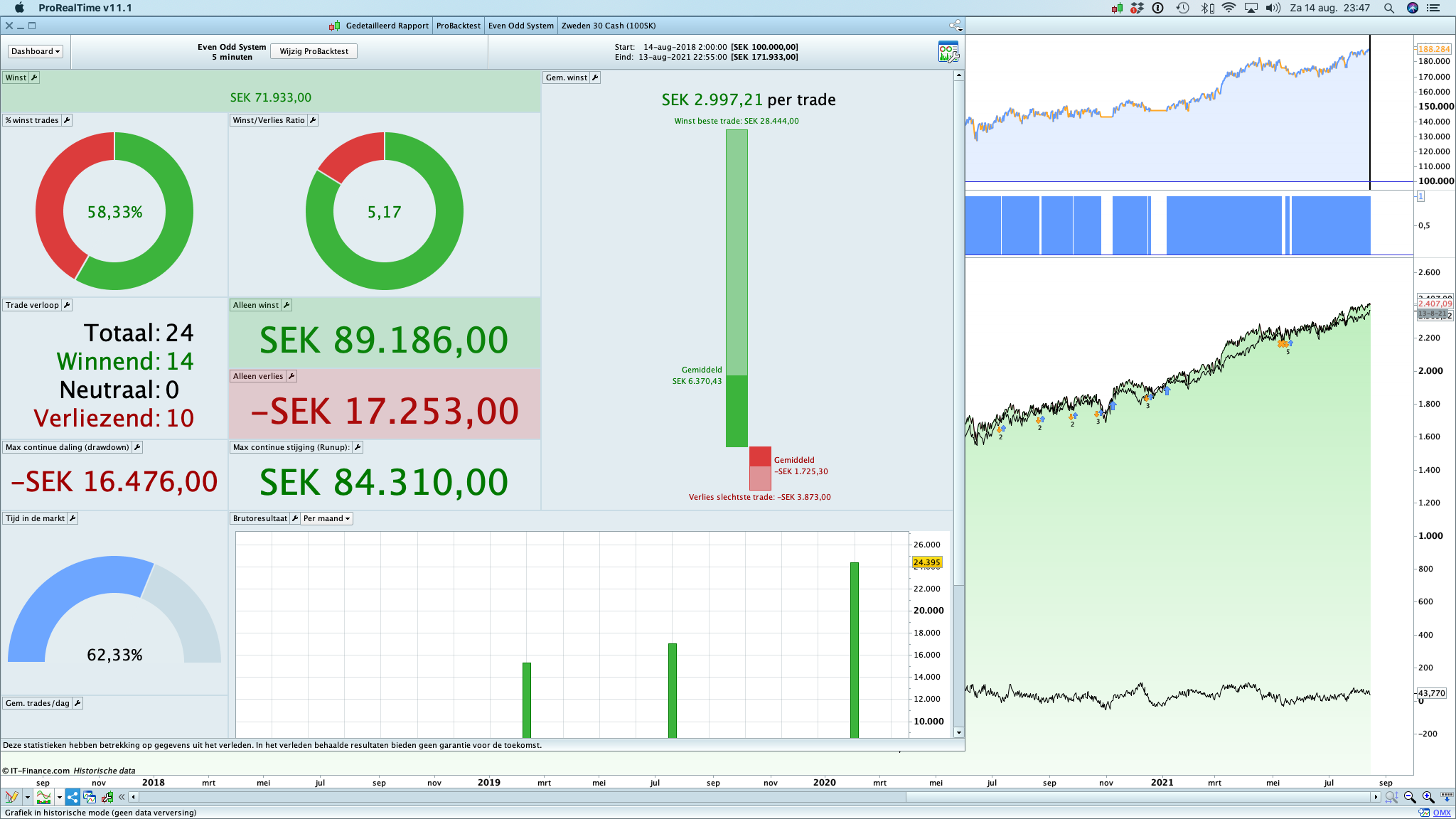
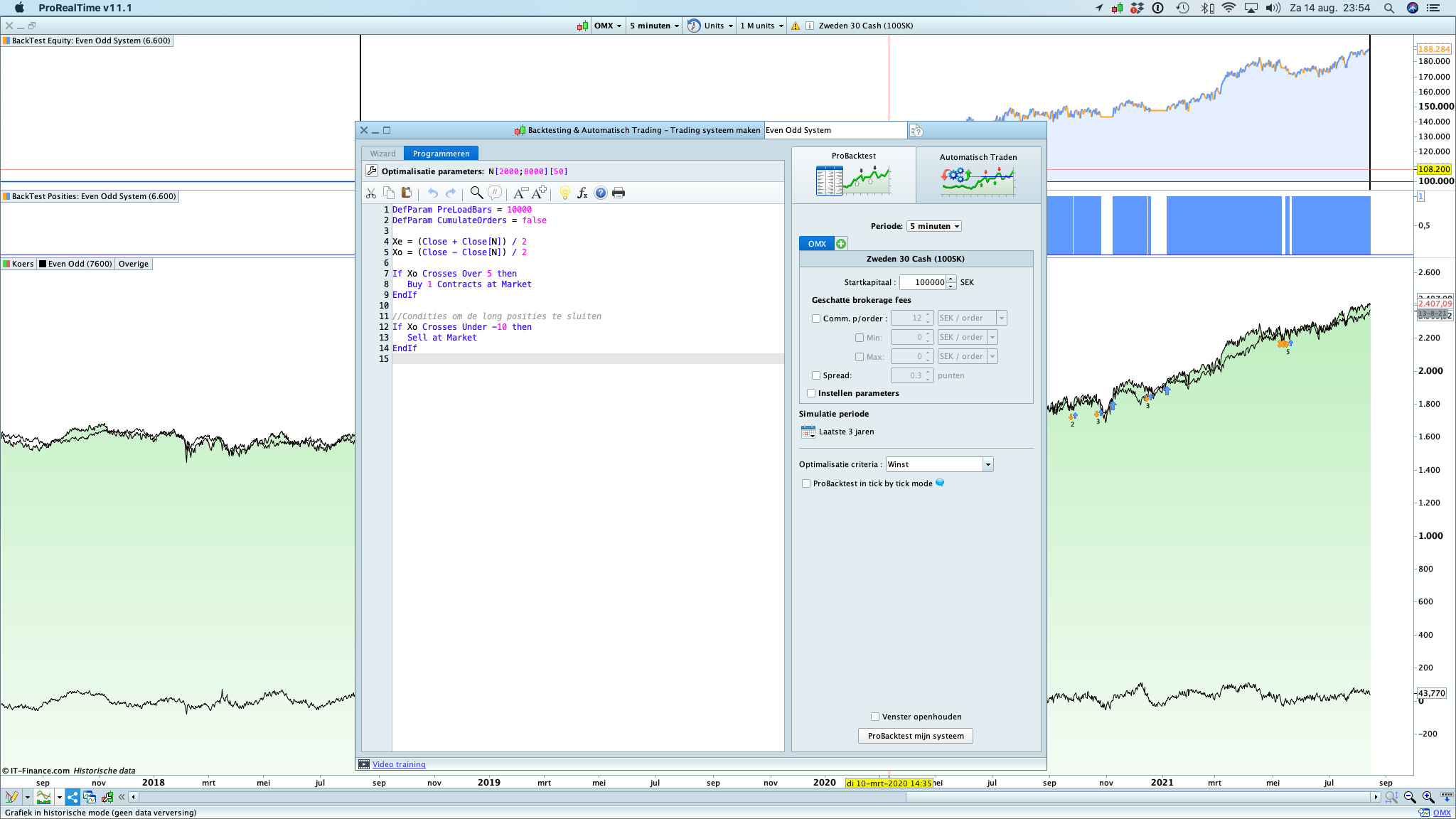
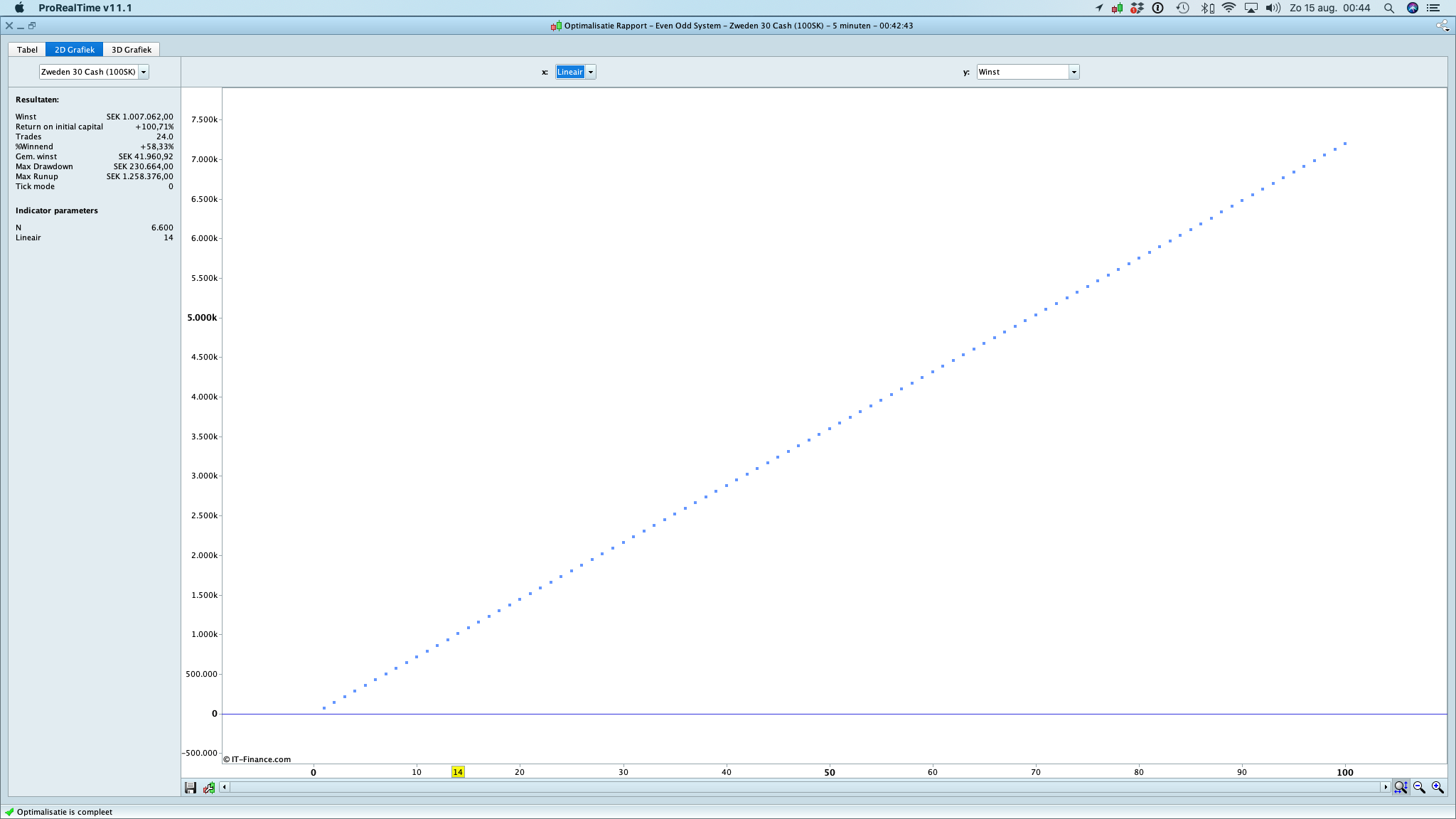
I continue to promote Digital Signal Processing (DSP) on this forum because I think it has a lot to offer us…
DSP is all about signals, in our case the (input)signal is the share price or the price of the Dow Jones Index, etc.
An important part of DSP is the decomposition of the input signal.
Decomposition is to decompose the input signal into two or more components.
The purpose of decomposition is to break up a complicated input signal into several simpler components.
The opposite of decomposition is superposition, where you add the different components back together and thus get the original input signal back.
A decomposition is valid when the components form the original signal after the superposition (summation).
There are several strategies to dissect signals (the most important are the impulse decomposition and the Fourier decomposition) and Even-Odd decomposition is one of them.
When we look in the x-y plane, a signal has an “Even symmetry” when it can be mirrored around the y-axis and an “odd symmetry” when it can be mirrored around the y-axis AND its values is opposite to the original signal.
You can also view this as a rotation around point zero (decomposition is part of the concept of circular symmetry).
Of course most signals neither have a even- or odd symmetry but the beauty of it is that it works for all signals.
Equations (discreet):
Xe[n] = (x[n] + x[N-n]) / 2 (even signal)
Xo[n] = (x[n] – x[N-n]) / 2 (odd signal)
Xsp[n] = Xe[n] + Xo[n] (Superpositie)
The most important point here is that you can dissect a signal into components and this decomposition is valid when the addition (superposition) of the components forms the original signal.
N = 10000
Xe = (Close + Close[N]) / 2
Xo = (Close - Close[N]) / 2
Xsp = Xe + Xo
Return Xe as "Even", Xo as "Odd", Xsp as "Superposition"