

Hi!
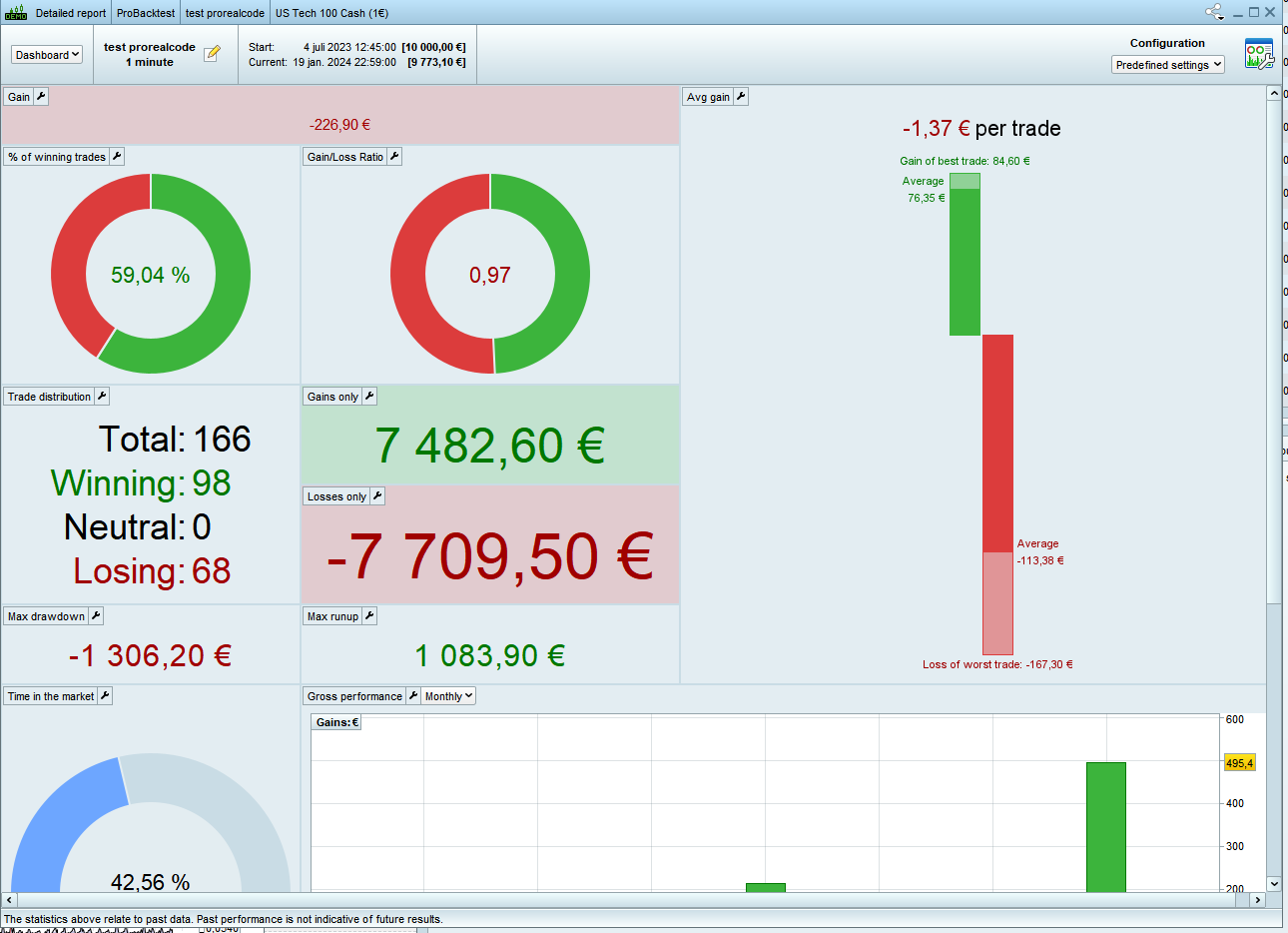
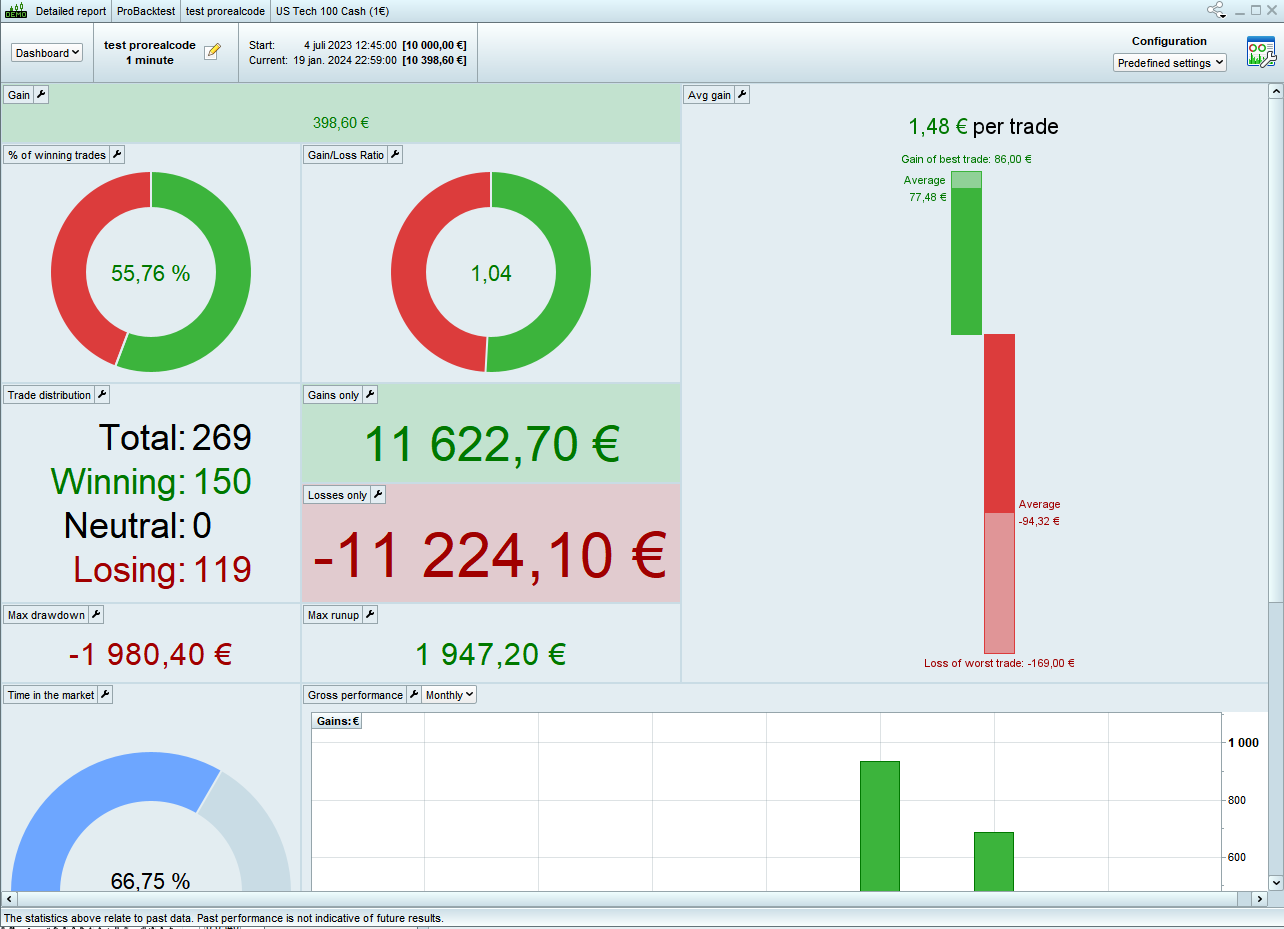
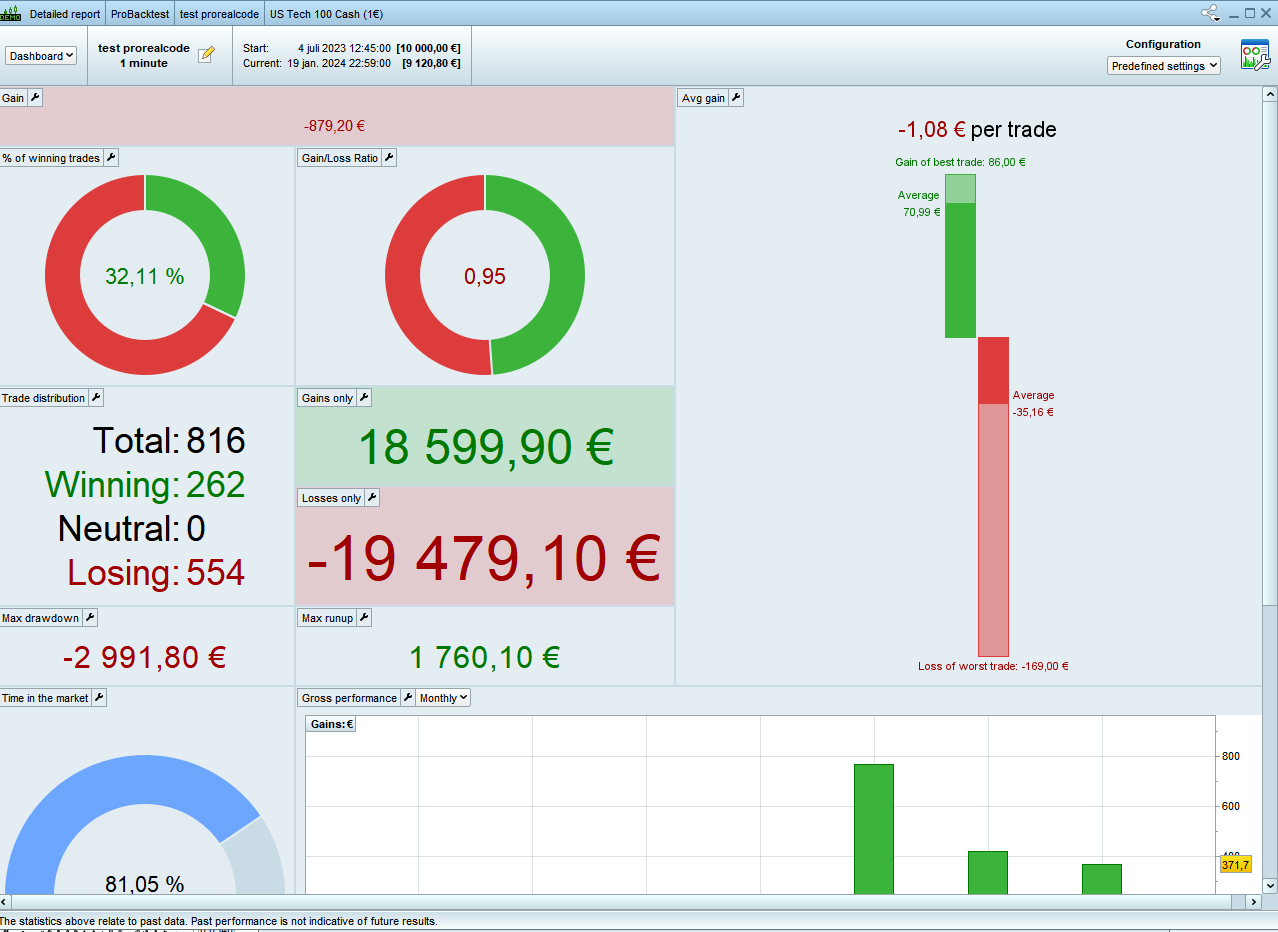
I’m trying to combine a short and a long strategy in the same algo. However, the combined strategy backtest is different, compared to if I backtest the long and short strategies separately. If the long stategy gains 100$ and the short also gains 100$ during the same period, I would expect the combined to give a gain of 200$. This is not the case right now, so I wonder if something is wrong in my code or if I am missing something? Appreciate any help, thanks!
DefParam CumulateOrders = True
defparam preloadbars = 10000
noEntryBeforeTime = 150000
noEntryAfterTime = 220000
// LONG
C1 = Close > Average[210](Close)
C2 = Close < Average[2](Close)
IF Not LongOnMarket and C1 and C2 and time >= noEntryBeforeTime and time <= noEntryAfterTime then
Buy 1 contract at Market
SET STOP %LOSS 0.5
SET TARGET %PROFIT 0.5
EndIf
// SHORT
CS1 = Close < Average[210](Close)
CS2 = Close > Average[2](Close)
CS3 = Close < Average[5000](close)
CS4 = MACD[12,26,9](close) < 20
IF Not ShortOnMarket and CS1 and CS2 and CS3 and CS4 and time >= noEntryBeforeTime and time <= noEntryAfterTime then
Sellshort 1 contract at Market
SET STOP %LOSS 0.5
SET TARGET %PROFIT 0.5
EndIf
Hi,
Without judging your code : this is perfectly normal. This is because if a Long trade is running, it will occupy the “space” for the Short(s). Thus, both can not run at the same time.
It can also easily happen that the Long + Short separately, bring only 80 instead of at least 100 what you might expect (let alone 200).
Of course the code itself is related – e.g. how you optimized it. And although that could have been worked towards the both Long and Short together, nothing would be wrong with doing that.
I hope it is clear a little ?
Regards,
Peter
But also your code is not correct;
You allow for both Long and Short at the same time. This means that a Short will cancel out a Long. This can happen in the one (bar-)call of the code, but also across bars (several bars later).
If you include the condition “If Not OnMarket” for both cases, the problem across bars won’t be there. If you then also put the lot in an If/Else (so it will be *or* buy Long *or* sell short), the in the one (bar-) call cancellation will also not happen and all is good.
The many more trades for both together vs. each on its own, is indicative for “error”.
When you solved this, you will still not end at 200+. 😉
The first thing I would do is change the “True” to “False”… then I would test whether a direct change between long and short helps, often this reduces the drawdown. Regardless, I would prefer bigger winners than losses, definitely in short trades. Depends on the instrument and the time frame.
You can do two algo’s, one long and one short, but it depends on your broker.
Here is a code for the long with 2 in spread
DefParam CumulateOrders = true
defparam preloadbars = 10000
noEntryBeforeTime = 153000
noEntryAfterTime = 220000
// LONG
C1 = Close > Average[210](Close)
C2 = Close < Average[2](Close)
if opentime=220000 then
F=open
endif
IF Not LongOnMarket and C1 and C2 and F>close and high[40]>close and opentime >= noEntryBeforeTime and opentime <= noEntryAfterTime then
Buy 1 contract at Market
SET STOP %LOSS 0.2
SET TARGET %PROFIT 2
EndIf
// SHORT
CS1 = Close < Average[210](Close)
CS2 = Close > Average[2](Close)
CS3 = Close < Average[5000](close)
CS4 = MACD[12,26,9](close) < 20
IF Not ShortOnMarket and CS1 and CS2 and CS3 and CS4 and time >= noEntryBeforeTime and time <= noEntryAfterTime then
//Sellshort 1 contract at Market
//SET STOP %LOSS 0.5
//SET TARGET %PROFIT 0.5
EndIf
JSParticipant
Senior
Hi,
The PRT “back test module” does not accept long and short positions at the same time…
(so, you can’t back test your combined system (properly), hence the differences…)
Thanks so much for all answers! Adding the “If Not OnMarket” instead of “if short onmarket/long onmarket” solved the issue and made the code behave as expected! Thanks!