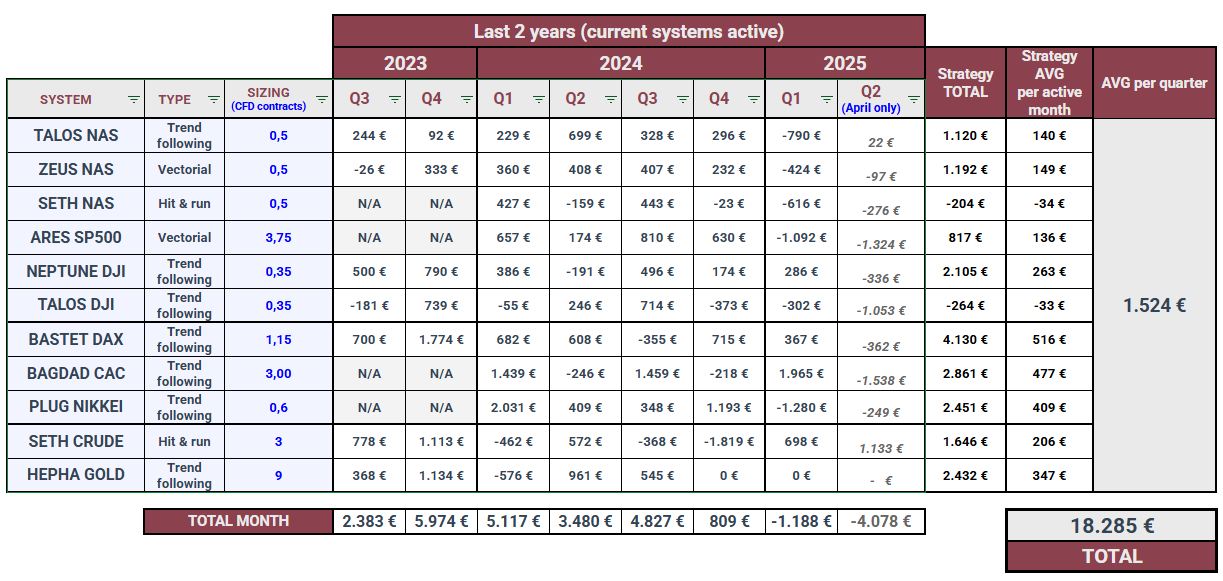
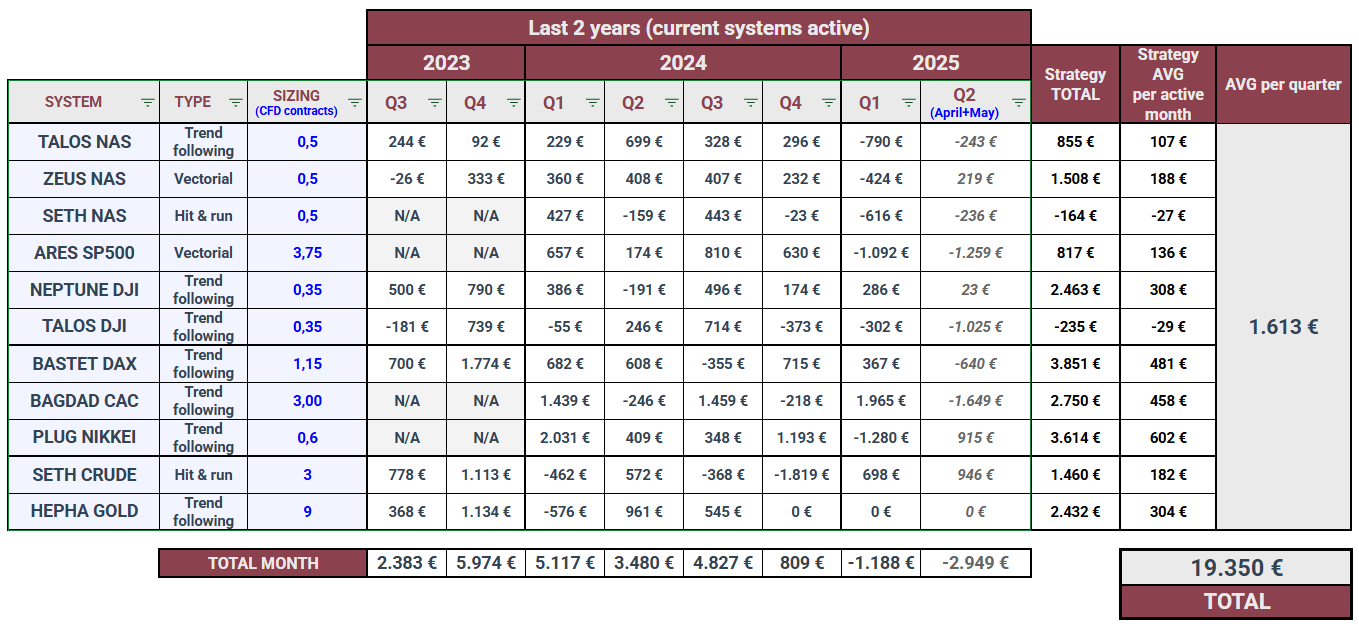
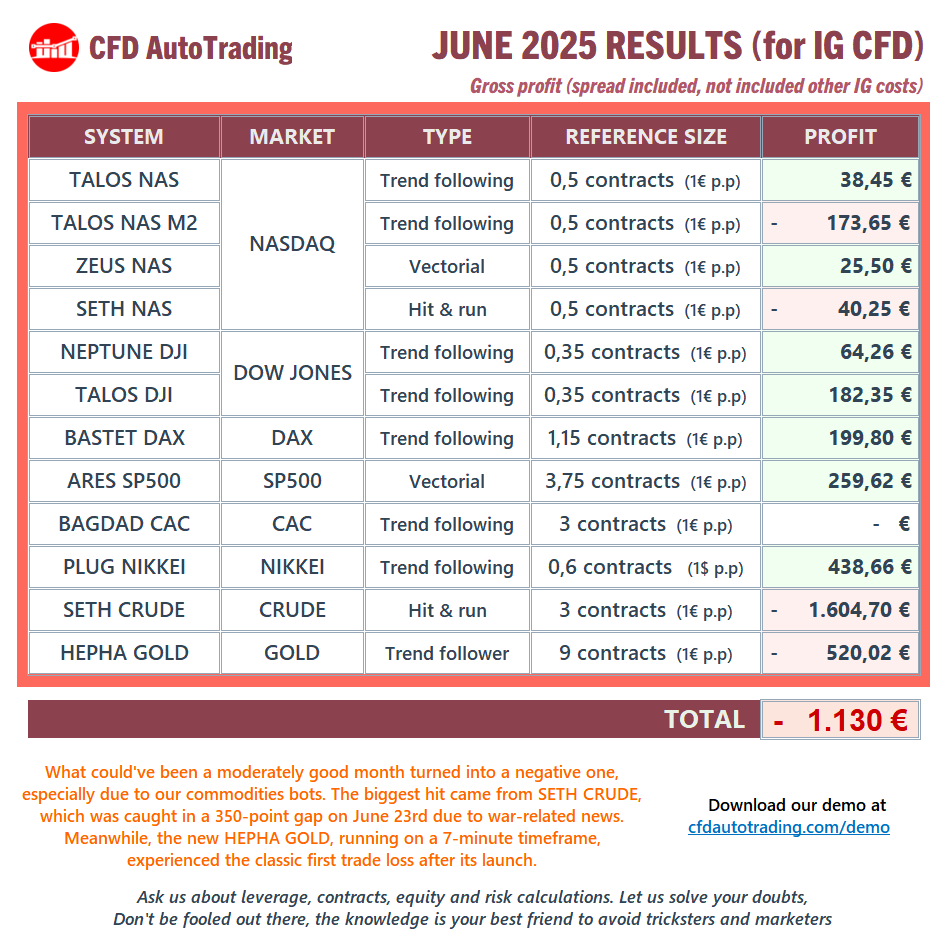
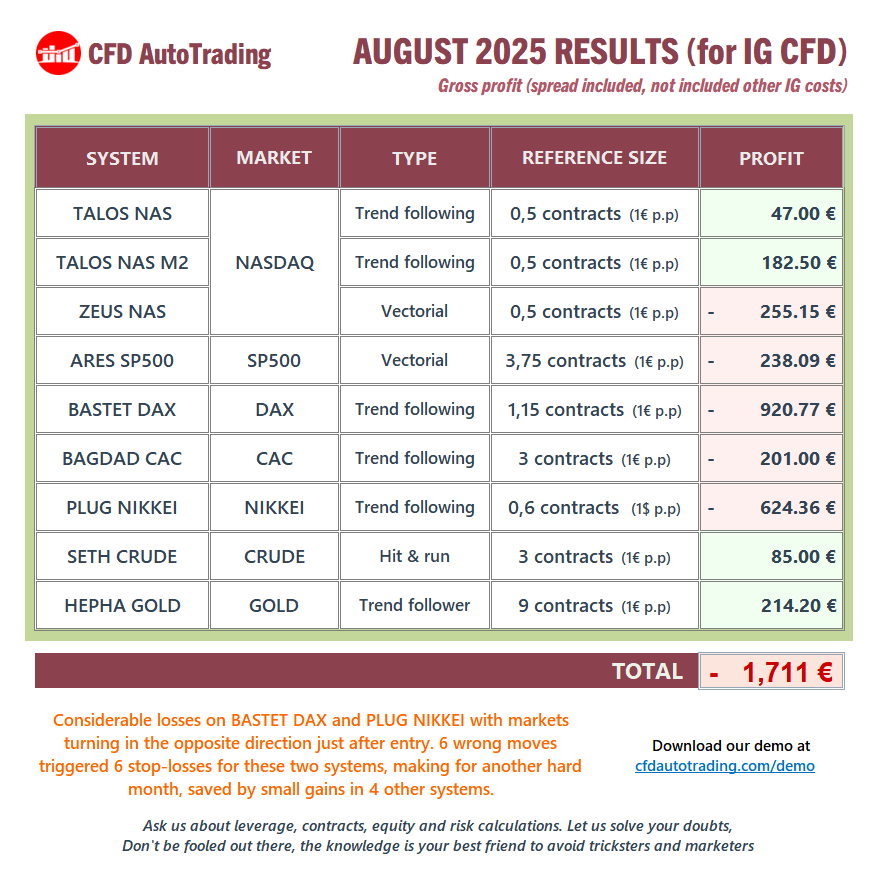
Starting with whether the results are from live trading: no, these are BackTest results in this case, with a brief review to ensure no major differences with demo instances. A few months ago in this post (
https://www.prorealcode.com/topic/cfd-autotrading-marketplace-vendor-questions-announcements-and-updates/page/3/#post-244887) we mentioned that we weren’t running all active systems live for various reasons. Since starting in 2020, we’ve been extracting results only from real instances, but it’s also true that for quite a few months (perhaps a year) we’ve drastically reduced the active instances in use on real accounts. And I say “active” because as I pointed out in that post, or as we openly explain in our groups or to those who ask us, beyond the current portfolio, we need to launch future versions and tests to validate them in real trading. Additionally, this multiplies numerous robots with their variants, using IG CFD, IG FUTURES, standard FUTURES in a few cases (we’re also IBKR AutoTrading)… not to mention a decapitalization I personally made last year, with other ongoing businesses (including robots for another platform which we haven’t wanted to publish/relate). All together we could need a huge amount of money.
And there’s an extra and very simple factor: we know that robots with more losses on the last period aren’t generally used. Added to all the above reason, we don’t always use them either to unnecesarely increase the risk and potential losses. In the end, it’s a combination of many factors; and we also have to consider clients with longer licenses (like 3+ years, or LIFETIME), who for certain cases sometimes only want to know when it’s time to restart a system or not. I mean that we continue using live results when possible, but that’s recently near an exception.
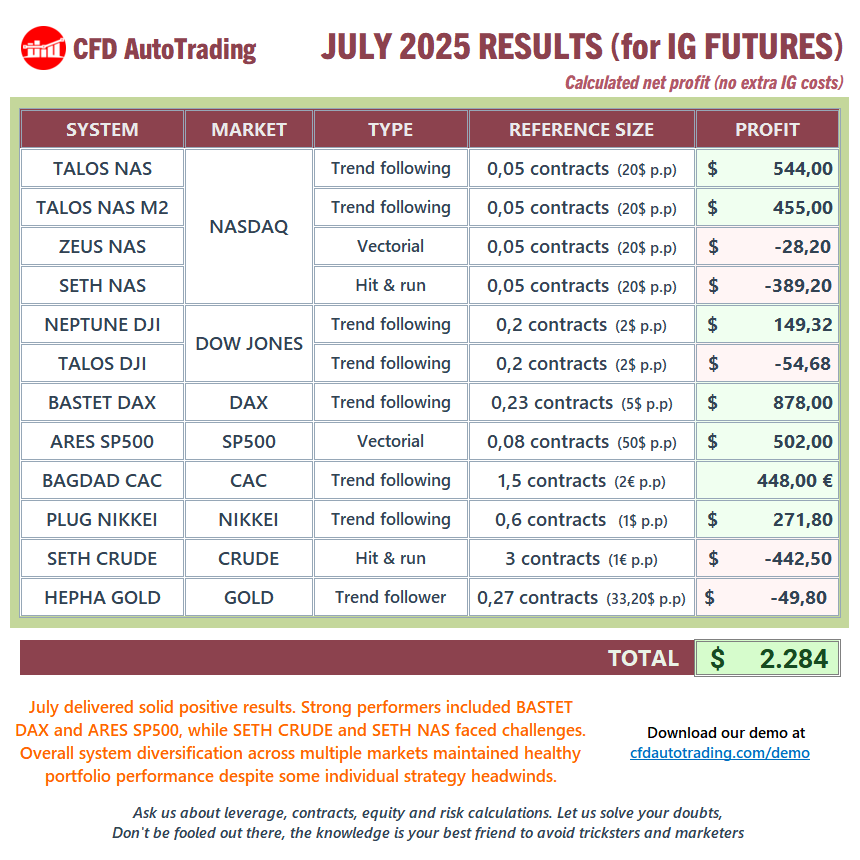
Regarding the results with IG FUTURES (don’t worry, we distinguish them well from standard futures, which is why we always put “IG” in front). This is also one of those complex things we can’t always explain completely because otherwise people don’t read anything, but which we explain in groups, emails, etc. To consider, at least:
– When we made the sizing proposal with FUTURES, we tried to set sizing equivalent to CFD; and anyway we have tables with the “weights” in each case (because not all instruments have equivalent weight). Not to mention the EUR/USD change, which also changes everything (and now more than months ago)
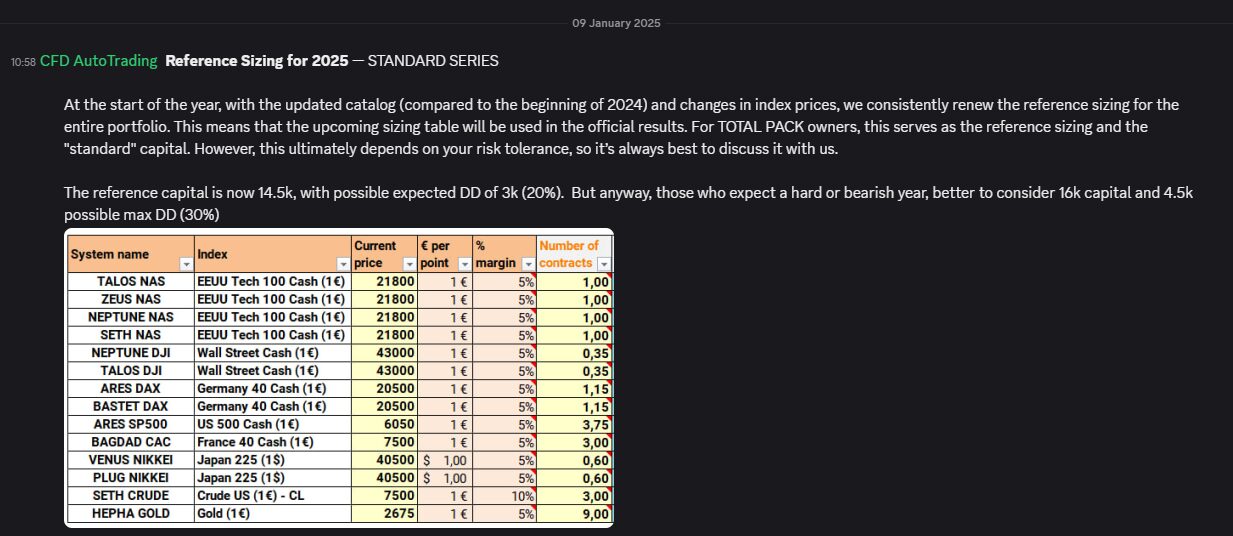
– Anyway, speaking of NASDAQ, where there’s the biggest difference in contract weights: The 0.05 contracts at $20 contemplated for NASDAQ IG FUTURES was what we proposed as equivalent to 1 CFD contract. Later on, we proposed 0.5 contracts in NASDAQ systems by default portfolio sizing, to reduce risk and DDs that those systems had experienced; and so it remained using 0.5 contracts in CFDs… while in IG FUTURES you can’t set less than 0.05 (you can’t make that reduction by half)
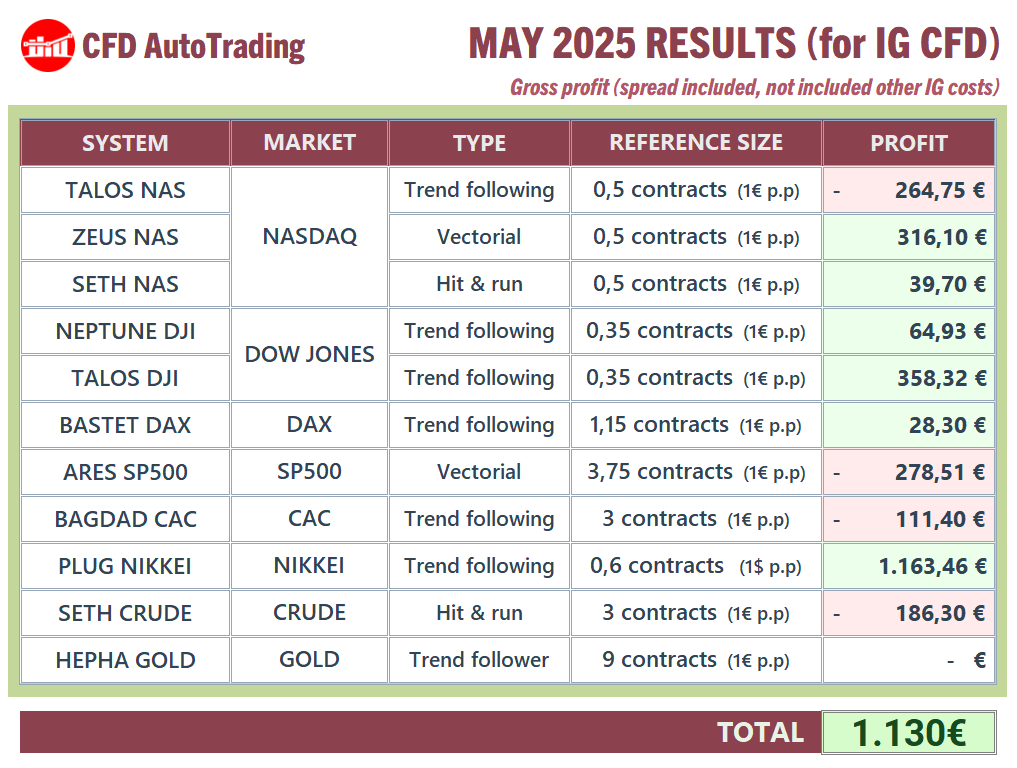
– So… in the IG FUTURES results, barring error and understanding they’re approximate (ignoring currency), the size per system is indeed approximate, except for NASDAQ, which is double. And, coincidentally, this month it’s in NASDAQ where IG FUTURES have performed worse than CFD (less profit even with double weight); but in almost all other systems the gains have been higher. Therefore, IG FUTURES have indeed performed better on July.
– Finally, here’s the link to the guide I mentioned:
https://cfdautotrading.com/en/ig-futures-guide/. Among other things, it explains why results from the same system can vary (and they will at all levels, also in BT-BT, not just in REAL-REAL comparisons) basically because the instruments aren’t the same (the price and its variations can be different at any given moment, yes). The same system launched on NASDAQ IG CFD, NASDAQ IG FUTURES, or standard NASDAQ FUTURE could give different entries and exits, yes. It will always give something “similar”, but the shorter the period, the more differences there can be. If this weren’t the case, we wouldn’t have, for example, a table suggesting the use of our own systems in CFD or IG FUTURES depending on the case.
Sorry I couldn’t find a shorter way to explain both topics. In fact, I tried to shorten it. 😛