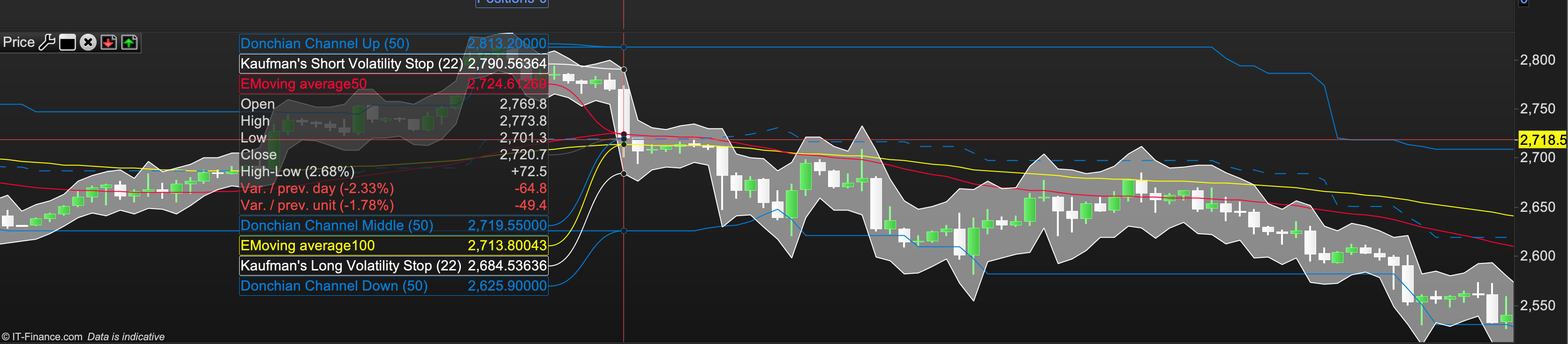
A Better method for Stops?
Thomas Bulkowski writes: “In Kaufman’s technique, compute the average daily high-low price range for the prior month, multiply by 2, and then subtract the result from the current low price. The difference column is the intraday high minus the low. See: http://thepatternsite.com/stops.html The average of the differences for the month is $ 1.15 (each days high – low was calculated and added up and then divided by 20). Multiply this by 2 to get the volatility, or $2.30. Based on the volatility of the stock, you should place your stop no closer than 56.45. That’s $2.30 subtracted from the current low of 58.75 on July 29. If price makes a new high, then recalculate the volatility based on the latest month, multiply it by 2 and subtract it from the current low. This method helps you from being stopped out by normal price volatility.
Recent testing has shown that a multiplier of 2 is best (it used to be 1.5). Also, the look back should be 22 price bars. That is about a month’s worth of price data that you average.
The average high-low volatility measure (HL) performs better than the average true range (ATR, which includes gaps, whereas the HL method does not) and better than standard deviation. Standard deviation performed the worst of the three methods in nearly all of the tests.
For the test, I used about 100 actual trades I made from 1/1/2003 to end of 2005 and compared the performance of the three methods using various parameters to my actual results. I found that when using the HL method (with 2x multiplier and 22 bar look back), the average give back before being stopped out after price peaked is 6.88%, which is less than the 10% maximum I consider acceptable. The HL system made the most money and improved on the profitability of the trades 48% of the time.
Unfortunately, all of the stop methods tended to take you out of the best performing trades prematurely, so you can’t use the method as the ONLY way to exit a trade. Discretionary timing the exit improved performance substantially. That means correctly choosing when to use a volatility stop and when not to is vital.”
=========================================================================================================
I think my code needs amending on the first line to respect Kaufman’s Volatility Stop rules “compute the average daily high-low price range for the prior month” if anybody can show me how to write that?
I also can’t get it to overlay onto a Price chart by adding it to “Price” although it will add to the bottom a price chart?
AveVol = Summation[22](high-low)/22
KaufmansVolStop = (AveVol * 2) - Low[0]
Return KaufmansVolStop as "Kaufman's Volatility Stop"
Cheers,