Indicator: Trend line regression from TradingView to ProRealTime

Viewing 14 posts - 1 through 14 (of 14 total)
  • Author
    Posts
  • #223046 quote
    ashehzi
    Participant
    Average

    Hi PRC team, hope you guys are well. Thanks for whatever you have been doing wrt PRT/PRC. I’ve used Trend Line Regression indicator on TradingView (https://www.tradingview.com/script/tf2TTN6c/) and I think we PRT community will surely benefit from it. I appreciate is someone could convert it. As the source code is open, I am sharing here. It is combo of a shared library and the indicator code using that library.

    // This source code is subject to the terms of the Mozilla Public License 2.0 at https://mozilla.org/MPL/2.0/
    // © dandrideng
    
    //@version=5
    
    // @description least_squares_regression: Least squares regression algorithm
    library("least_squares_regression", overlay=true)
    
    // @function basic_lsr: Basic least squares regression algorithm
    // @param series int[] t: time scale value array corresponding to price
    // @param series float[] p: price scale value array corresponding to time
    // @param series int array_size: the length of regression array
    // @returns reg_slop, reg_intercept, reg_level, reg_stdev
    export basic_lsr(series int[] t, series float[] p, series int array_size) =>
    	p_t = array.new_float(array_size, 0)
    	t_2 = array.new_float(array_size, 0)
    	
    	//init array
    	for i = 0 to array_size - 1
    	    array.set(p_t, i, array.get(p, i) * array.get(t, i))
    	    array.set(t_2, i, array.get(t, i) * array.get(t, i))
    	
    	//get slop and intercept
    	sum_t = array.sum(t)
    	sum_p = array.sum(p)
    	sum_t_2 = array.sum(t_2)
    	sum_p_t = array.sum(p_t)
    	a = (array_size * sum_p_t - sum_p * sum_t) / (array_size * sum_t_2 - math.pow(sum_t, 2))
    	b = (sum_p - a * sum_t) / array_size
        
        //get regression prediction value
        _p = array.new_float(array_size, 0)
        for i = 0 to array_size - 1
            array.set(_p, i, a * array.get(t, i) + b)
        
        //get regression level 
        float r1 = 0
        float r2 = 0
        p_avg = array.avg(p)
        for i = 0 to array_size - 1
            r1 += math.pow(array.get(_p, i) - p_avg, 2)
            r2 += math.pow(array.get(p, i) - p_avg, 2)
        r = -math.log10(1 - r1 / r2)
        
        //get regression standard devition
        _s = array.new_float(array_size, 0)
        for i = 0 to array_size - 1
            array.set(_s, i, array.get(p, i) - array.get(_p, i))
        s = array.stdev(_s)
    	
    	//return results
    	[a, b, r, s]
    
    // @function top_trend_line_lsr: Trend line fitting based on least square algorithm
    // @param series int[] t: time scale value array corresponding to price
    // @param series float[] p: price scale value array corresponding to time
    // @param series int array_size: the length of regression array
    // @param string reg_type: regression type in 'top' and 'bottom'
    // @param series int max_iter: maximum fitting iterations
    // @param series int min_points: the threshold of regression point numbers
    // @returns reg_slop, reg_intercept, reg_level, reg_stdev, reg_point_num
    export trend_line_lsr(series int[] t, series float[] p, series int array_size, string reg_type, series int max_iter, series int min_points) =>
    	[a, b, r, s] = basic_lsr(t, p, array_size)
    	x1 = array.get(t, 0)
    	x2 = array.get(t, array_size - 1)
    	n = array_size //Function arguments cannot be mutable, what the fuck!
    
    	for i = 0 to max_iter - 1
    	    //exit conditions
        	if n < min_points
        	    break
        	   
        	//init new tick and price array
            _t = array.new_int(n, 0)
            _p = array.new_float(n, 0)
            _n = 0
            
            //fine the ground truth values that bigger than predictions
            for j = 0 to n - 1
                if reg_type == 'top'
                    if (a * array.get(t, j) + b) < array.get(p, j)
                        array.set(_t, _n, array.get(t, j))
                        array.set(_p, _n, array.get(p, j))
                        _n += 1
                else if reg_type == 'bottom'
                    if (a * array.get(t, j) + b) > array.get(p, j)
                        array.set(_t, _n, array.get(t, j))
                        array.set(_p, _n, array.get(p, j))
                        _n += 1
                else
                    break
            
            //exit if new array size is less than threshold
            if _n < min_points
                break
            
            //override result if r of new array is bigger than last array
            [_a, _b, _r, _s] = basic_lsr(_t, _p, _n)
            if _r > r
                x1 := array.get(_t, 0)
                x2 := array.get(_t, _n - 1)
                a := _a
                b := _b
                r := _r
                s := _s
                n := _n
        
        //after for loop 
        [x1, x2, a, b, r, s, n]
    

    Now below is indicator, above was using the lib.

    // This source code is subject to the terms of the Mozilla Public License 2.0 at https://mozilla.org/MPL/2.0/
    // © dandrideng
    
    //@version=5
    indicator(title="Trend Line Regression", shorttitle="TLR", overlay=true, max_bars_back=800, max_lines_count=400, max_labels_count=400)
    
    import dandrideng/least_squares_regression/1 as lsr
    
    //trend line regression
    lookback_left = input.int(defval=5, title="Pivot Lookback Left", group="Trend Line Regression")
    lookback_right = input.int(defval=5, title="Pivot Lookback Right", group="Trend Line Regression")
    reg_forward = input.int(defval=20, title="Max Lookback Forward", group="Trend Line Regression")
    min_length = input.int(defval=100, title="Min Regression Length", maxval=500, group="Trend Line Regression")
    max_length = input.int(defval=200, title="Max Regression Length", maxval=500, group="Trend Line Regression")
    length_step = input.int(defval=100, title="Regression Length Steps", group="Trend Line Regression")
    max_iteration = input.int(defval=4, title="Max Iterations of Regression", group="Trend Line Regression")
    max_points = input.int(defval=30, title="Max Point Numbers of Trend Line", group="Trend Line Regression")
    min_points = input.int(defval=3, title="Min Point Numbers of Trend Line", group="Trend Line Regression")
    min_reg_level = input.float(defval=4, title="Min Regression Level of Trend Line", group="Trend Line Regression")
    std_offset = input.float(defval=0.5, title="Multiply Regression Std", group="Trend Line Regression")
    top_line_color = input.color(defval=color.red, title="Color of Top Trend Line", group="Trend Line Regression")
    bottom_line_color = input.color(defval=color.green, title="Color of Bottom Trend Line", group="Trend Line Regression")
    extend_lines = input.bool(defval=true, title="Extend Lines", group="Trend Line Regression") ? extend.right : extend.none
    draw_pivot = input.bool(defval=false, title="Draw Piovt High/Low", group="Trend Line Regression")
    show_labels = input.bool(defval=false, title="Show Labels", group="Trend Line Regression")
    
    pivot_high = ta.pivothigh(high, lookback_left, lookback_right)
    pivot_low = ta.pivotlow(low, lookback_left, lookback_right)
    
    plot(draw_pivot ? pivot_high : na, offset=-lookback_left)
    plot(draw_pivot ? pivot_low : na, offset=-lookback_left)
    
    //check regression (functional)
    check_trend_line(start, end, type, a, b) =>
        res = true
        for i = start + 1 to end - 1
            yi = a * i + b
            yi_1 = a * (i - 1) + b
            if type == "top" and (close[i] > yi and close[i - 1] > yi_1)
                res := false
                break
            else if type == "bottom" and (close[i] < yi and close[i - 1] < yi_1)
                res := false
                break
        
        res
        
    //draw trend line regressions (functional)
    draw_trend_line(forward, length, type) =>
        pivot_src = type == "top" ? pivot_high : pivot_low
    
        tick = array.new_int(max_points, 0)
        price = array.new_float(max_points, 0)
        num = 0
    
        for i = 0 to length - 1
            if not na(pivot_src[i + forward]) and num < max_points
                array.set(tick, num, i + lookback_left + forward)
                array.set(price, num, pivot_src[i + forward])
                num := num + 1
            
        if num > 0
            [x2, x1, a, b, r, s, n] = lsr.trend_line_lsr(tick, price, num, type, max_iteration, min_points)
            y1 = x1 * a + b
            y2 = x2 * a + b
            o = s * std_offset
            
            if n > min_points and r > min_reg_level and check_trend_line(x1, x2, type, a, b)
                var line mid_line = na
                mid_line := line.new(x1=bar_index-x1, y1=y1, x2=bar_index-x2, y2=y2)
                line.set_width(mid_line, 1)
                line.set_color(mid_line, color.new(type == "top" ? top_line_color : bottom_line_color, 25))
                line.set_extend(mid_line, extend_lines)
                line.set_style(mid_line, line.style_dashed)
            
                var line top_line = na
                top_line := line.new(x1=bar_index-x1, y1=y1+o, x2=bar_index-x2, y2=y2+o)
                line.set_width(top_line, 1)
                line.set_color(top_line, color.new(type == "top" ? top_line_color : bottom_line_color, 25))
                line.set_extend(top_line, extend_lines)
                
                var line bottom_line = na
                bottom_line := line.new(x1=bar_index-x1, y1=y1-o, x2=bar_index-x2, y2=y2-o)
                line.set_width(bottom_line, 1)
                line.set_color(bottom_line, color.new(type == "top" ? top_line_color : bottom_line_color, 25))
                line.set_extend(bottom_line, extend_lines)
                
                linefill.new(mid_line, top_line, color=color.new(type == "top" ? top_line_color : bottom_line_color, 90))
                linefill.new(mid_line, bottom_line, color=color.new(type == "top" ? top_line_color : bottom_line_color, 90))
                
                if show_labels
                    var label reg_label = na
                    reg_label := label.new(x=bar_index-x2, y=type == "top" ? y2+o : y2-o, textcolor=color.white)
                    label.set_color(reg_label, color.new(type == "top" ? top_line_color : bottom_line_color, 30))
                    label.set_text(reg_label, "Level: " + str.tostring(r, "#.###") + "\nPoints: " + str.tostring(n, "#"))
                    label.set_style(reg_label, type == "top" ? label.style_label_down : label.style_label_up)
    
    //delete all lines
    all_lines = line.all
    if array.size(all_lines) > 0
    	for i = 0 to array.size(all_lines) - 1
    		line.delete(array.get(all_lines, i))
    		
    //delete all labels
    all_labels = label.all
    if array.size(all_labels) > 0
    	for i = 0 to array.size(all_labels) - 1
    		label.delete(array.get(all_labels, i))
    
    //trend line
    for l = min_length to max_length by length_step
        draw_trend_line(reg_forward, l, "top")
        draw_trend_line(reg_forward, l, "bottom")
            
    //end of file

    
    #223047 quote
    JC_Bywan
    Moderator
    Master
    Hi, I’ve added it to the list of conversions to assess. If someone “speaks” the TV language and wants to attempt the conversion before Nicolas is back, please feel free to proceed, thanks. (Edit: I didn’t phrase this very well, any translation contribution is welcome at any time, whether he’s here or not)
    #226740 quote
    ashehzi
    Participant
    Average
    I feel it can be a good trading strat if  converted to PRT.
    #226820 quote
    LucasBest
    Participant
    Average
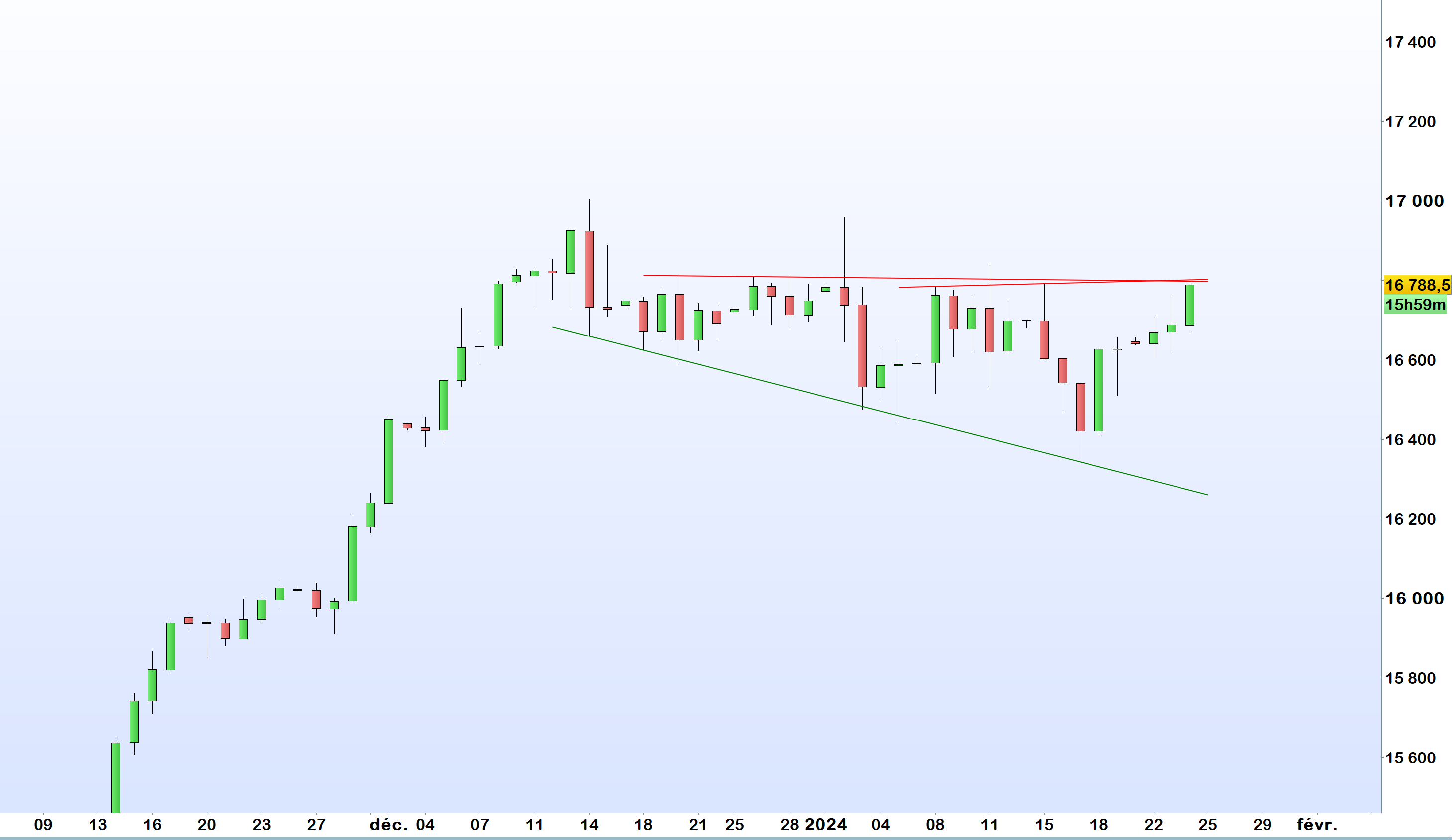
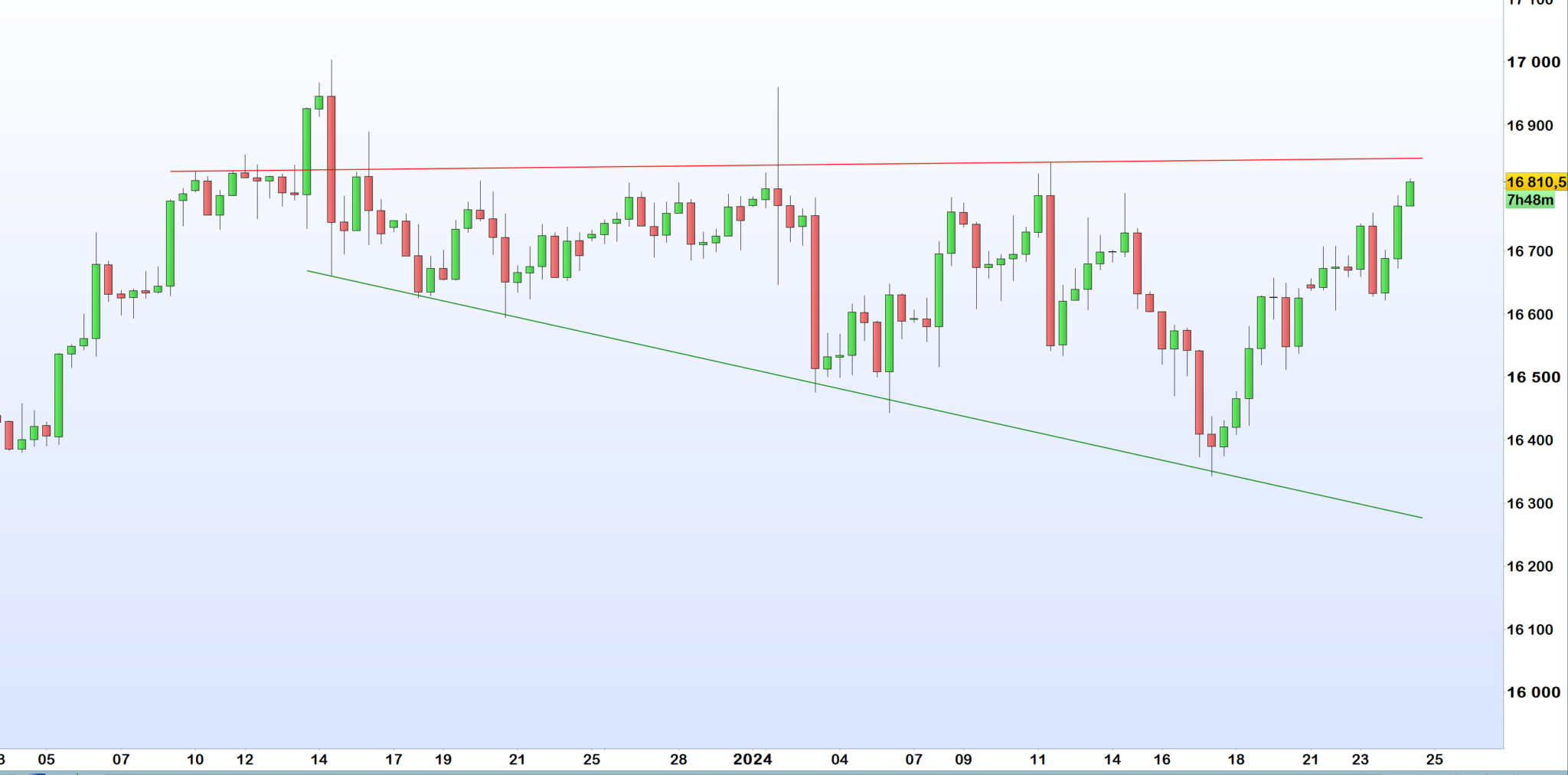
    As this indicator use a lot of functions, it would be more easy to understand its spirit (how it works to determine supports and resistance) and then code it in PRT language than trying to convert it like it have been coded in Tradingview language. Also note that the use of linear regression is not mandatory here. I have done alsmost the same without using it.
    Capture-decran-2024-01-24-090042.png Capture-decran-2024-01-24-090042.png Capture-decran-2024-01-24-091131.png Capture-decran-2024-01-24-091131.png
    #246925 quote
    ashehzi
    Participant
    Average
    Hi Lucas, What is the indicator used to caputre-decran pictures? Is it available on PRT? Thanks Ash
    #246945 quote
    LucasBest
    Participant
    Average
    Hi, it is an old version of a custom indicator of mine. You can find snapshots for simple trendline in prorealcode. Lucas
    ashehzi thanked this post
    #247341 quote
    ashehzi
    Participant
    Average
    Hi Lucas, If you don’t mind, would it possible to get this custom indicator? Thanks. Regards, Ash
    #258632 quote
    Iván González
    Moderator
    Master

    Here is a possible translation:

    // -------------------------------------
    // PRC_Trend Line Regression
    // version = 0
    // 03.03.2026
    // Iván González @ www.prorealcode.com
    // Sharing ProRealTime knowledge
    // -------------------------------------
    defparam drawonlastbaronly = true
    // -------------------------------------
    // === PARAMETERS ===
    // -------------------------------------
    prdR = 5           // Pivot Lookback Right
    prdL = prdR           // Pivot Lookback Left
    forward = 20       // Max Lookback Forward / Extension
    minRegLen = 100    // Min Regression Length
    maxRegLen = 200    // Max Regression Length
    regSteps = 100     // Regression Length Steps
    maxIter = 4        // Max Iterations of Regression
    maxPts = 30        // Max Point Numbers of Trend Line
    minPts = 3         // Min Point Numbers of Trend Line
    minLevel = 1       // Min Regression Level (original=4)
    stdMult = 0.5      // Multiply Regression Std
    // -------------------------------------
    // === STEP 1: DETECT PIVOTS ===
    // -------------------------------------
    once phCnt = 0
    once plCnt = 0
    
    if barindex >= prdL + prdR then
       isPH = 1
       for k = 0 to prdL + prdR do
          if k <> prdL then
             if high[prdR] < high[prdR - prdL + k] then
                isPH = 0
             endif
          endif
       next
       if isPH then
          $phP[phCnt] = high[prdR]
          $phB[phCnt] = barindex - prdR
          phCnt = phCnt + 1
       endif
       
       isPL = 1
       for k = 0 to prdL + prdR do
          if k <> prdL then
             if low[prdR] > low[prdR - prdL + k] then
                isPL = 0
             endif
          endif
       next
       if isPL then
          $plP[plCnt] = low[prdR]
          $plB[plCnt] = barindex - prdR
          plCnt = plCnt + 1
       endif
    endif
    // --------------------------------------------------
    // === STEP 2: CALCULATE + DRAW (last bar only) ===
    // --------------------------------------------------
    if islastbarupdate then
       
       numSteps = round((maxRegLen - minRegLen) / max(1, regSteps))
       
       for stepIdx = 0 to numSteps do
          tryLen = minRegLen + stepIdx * regSteps
          
          // ============================================
          // TOP TREND LINE (pivot highs)
          // ============================================
          nTop = 0
          for i = 0 to phCnt - 1 do
             detOff = barindex - ($phB[i] + prdR)
             if detOff >= forward and detOff <= forward + tryLen - 1 and nTop < maxPts then
                $tW[nTop] = detOff + prdL
                $pW[nTop] = $phP[i]
                nTop = nTop + 1
             endif
          next
          
          if nTop > minPts then
             sT = 0
             sP = 0
             sT2 = 0
             sPT = 0
             for i = 0 to nTop - 1 do
                sT = sT + $tW[i]
                sP = sP + $pW[i]
                sT2 = sT2 + $tW[i] * $tW[i]
                sPT = sPT + $pW[i] * $tW[i]
             next
             
             dd = nTop * sT2 - sT * sT
             if dd <> 0 then
                tSlp = (nTop * sPT - sP * sT) / dd
                tInt = (sP - tSlp * sT) / nTop
                
                pAv = sP / nTop
                s1 = 0
                s2v = 0
                sDf = 0
                for i = 0 to nTop - 1 do
                   pp = tSlp * $tW[i] + tInt
                   s1 = s1 + SQUARE(pp - pAv)
                   s2v = s2v + SQUARE($pW[i] - pAv)
                   sDf = sDf + SQUARE($pW[i] - pp)
                next
                
                tStd = SQRT(sDf / max(1, nTop))
                itr = 0
                if s2v > 0 then
                   rr = s1 / s2v
                   if rr > 0 and rr < 1 then
                      itr = -LOG(1 - rr) / LOG(10)
                   elsif rr >= 1 then
                      itr = 999
                   endif
                endif
                
                // Iterative TOP fitting
                for i = 0 to nTop - 1 do
                   $tI[i] = $tW[i]
                   $pI[i] = $pW[i]
                next
                nI = nTop
                cSlp = tSlp
                cInt = tInt
                cR = itr
                
                for iter = 0 to maxIter - 1 do
                   if nI <= minPts then
                      break
                   endif
                   
                   nF = 0
                   for j = 0 to nI - 1 do
                      pp = cSlp * $tI[j] + cInt
                      if $pI[j] > pp then
                         $tF[nF] = $tI[j]
                         $pF[nF] = $pI[j]
                         nF = nF + 1
                      endif
                   next
                   
                   if nF <= minPts then
                      break
                   endif
                   
                   sT = 0
                   sP = 0
                   sT2 = 0
                   sPT = 0
                   for i = 0 to nF - 1 do
                      sT = sT + $tF[i]
                      sP = sP + $pF[i]
                      sT2 = sT2 + $tF[i] * $tF[i]
                      sPT = sPT + $pF[i] * $tF[i]
                   next
                   
                   dd = nF * sT2 - sT * sT
                   if dd = 0 then
                      break
                   endif
                   
                   nSlp = (nF * sPT - sP * sT) / dd
                   nInt = (sP - nSlp * sT) / nF
                   
                   pAv = sP / nF
                   s1 = 0
                   s2v = 0
                   sDf = 0
                   for i = 0 to nF - 1 do
                      pp = nSlp * $tF[i] + nInt
                      s1 = s1 + SQUARE(pp - pAv)
                      s2v = s2v + SQUARE($pF[i] - pAv)
                      sDf = sDf + SQUARE($pF[i] - pp)
                   next
                   
                   nR = 0
                   if s2v > 0 then
                      rr = s1 / s2v
                      if rr > 0 and rr < 1 then
                         nR = -LOG(1 - rr) / LOG(10)
                      elsif rr >= 1 then
                         nR = 999
                      endif
                   endif
                   
                   if nR > cR then
                      tSlp = nSlp
                      tInt = nInt
                      itr = nR
                      tStd = SQRT(sDf / max(1, nF))
                      cSlp = nSlp
                      cInt = nInt
                      cR = nR
                      nI = nF
                      for k = 0 to nF - 1 do
                         $tI[k] = $tF[k]
                         $pI[k] = $pF[k]
                      next
                   else
                      break
                   endif
                next
                
                // DRAW TOP if valid
                if nI > minPts and itr > minLevel then
                   txLeft = $tI[0]
                   oSt = tStd * stdMult
                   yL = tSlp * txLeft + tInt
                   yExt = tSlp * (-forward) + tInt
                   
                   drawsegment(barindex - txLeft, yL, barindex + forward, yExt) coloured(220, 60, 60) style(dottedline, 1)
                   drawsegment(barindex - txLeft, yL + oSt, barindex + forward, yExt + oSt) coloured(220, 60, 60) style(line, 1)
                   drawsegment(barindex - txLeft, yL - oSt, barindex + forward, yExt - oSt) coloured(220, 60, 60) style(line, 1)
                endif
             endif
          endif
          
          // ============================================
          // BOTTOM TREND LINE (pivot lows)
          // ============================================
          nBot = 0
          for i = 0 to plCnt - 1 do
             detOff = barindex - ($plB[i] + prdR)
             if detOff >= forward and detOff <= forward + tryLen - 1 and nBot < maxPts then
                $tW[nBot] = detOff + prdL
                $pW[nBot] = $plP[i]
                nBot = nBot + 1
             endif
          next
          
          if nBot > minPts then
             sT = 0
             sP = 0
             sT2 = 0
             sPT = 0
             for i = 0 to nBot - 1 do
                sT = sT + $tW[i]
                sP = sP + $pW[i]
                sT2 = sT2 + $tW[i] * $tW[i]
                sPT = sPT + $pW[i] * $tW[i]
             next
             
             dd = nBot * sT2 - sT * sT
             if dd <> 0 then
                bSlp = (nBot * sPT - sP * sT) / dd
                bInt = (sP - bSlp * sT) / nBot
                
                pAv = sP / nBot
                s1 = 0
                s2v = 0
                sDf = 0
                for i = 0 to nBot - 1 do
                   pp = bSlp * $tW[i] + bInt
                   s1 = s1 + SQUARE(pp - pAv)
                   s2v = s2v + SQUARE($pW[i] - pAv)
                   sDf = sDf + SQUARE($pW[i] - pp)
                next
                
                bStd = SQRT(sDf / max(1, nBot))
                bR = 0
                if s2v > 0 then
                   rr = s1 / s2v
                   if rr > 0 and rr < 1 then
                      bR = -LOG(1 - rr) / LOG(10)
                   elsif rr >= 1 then
                      bR = 999
                   endif
                endif
                
                // Iterative BOTTOM fitting
                for i = 0 to nBot - 1 do
                   $tI[i] = $tW[i]
                   $pI[i] = $pW[i]
                next
                nI = nBot
                cSlp = bSlp
                cInt = bInt
                cR = bR
                
                for iter = 0 to maxIter - 1 do
                   if nI <= minPts then
                      break
                   endif
                   
                   nF = 0
                   for j = 0 to nI - 1 do
                      pp = cSlp * $tI[j] + cInt
                      if $pI[j] < pp then
                         $tF[nF] = $tI[j]
                         $pF[nF] = $pI[j]
                         nF = nF + 1
                      endif
                   next
                   
                   if nF <= minPts then
                      break
                   endif
                   
                   sT = 0
                   sP = 0
                   sT2 = 0
                   sPT = 0
                   for i = 0 to nF - 1 do
                      sT = sT + $tF[i]
                      sP = sP + $pF[i]
                      sT2 = sT2 + $tF[i] * $tF[i]
                      sPT = sPT + $pF[i] * $tF[i]
                   next
                   
                   dd = nF * sT2 - sT * sT
                   if dd = 0 then
                      break
                   endif
                   
                   nSlp = (nF * sPT - sP * sT) / dd
                   nInt = (sP - nSlp * sT) / nF
                   
                   pAv = sP / nF
                   s1 = 0
                   s2v = 0
                   sDf = 0
                   for i = 0 to nF - 1 do
                      pp = nSlp * $tF[i] + nInt
                      s1 = s1 + SQUARE(pp - pAv)
                      s2v = s2v + SQUARE($pF[i] - pAv)
                      sDf = sDf + SQUARE($pF[i] - pp)
                   next
                   
                   nR = 0
                   if s2v > 0 then
                      rr = s1 / s2v
                      if rr > 0 and rr < 1 then
                         nR = -LOG(1 - rr) / LOG(10)
                      elsif rr >= 1 then
                         nR = 999
                      endif
                   endif
                   
                   if nR > cR then
                      bSlp = nSlp
                      bInt = nInt
                      bR = nR
                      bStd = SQRT(sDf / max(1, nF))
                      cSlp = nSlp
                      cInt = nInt
                      cR = nR
                      nI = nF
                      for k = 0 to nF - 1 do
                         $tI[k] = $tF[k]
                         $pI[k] = $pF[k]
                      next
                   else
                      break
                   endif
                next
                
                // DRAW BOTTOM if valid
                if nI > minPts and bR > minLevel then
                   bxLeft = $tI[0]
                   oSt = bStd * stdMult
                   yL = bSlp * bxLeft + bInt
                   yExt = bSlp * (-forward) + bInt
                   
                   drawsegment(barindex - bxLeft, yL, barindex + forward, yExt) coloured(46, 180, 80) style(dottedline, 1)
                   drawsegment(barindex - bxLeft, yL + oSt, barindex + forward, yExt + oSt) coloured(46, 180, 80) style(line, 1)
                   drawsegment(barindex - bxLeft, yL - oSt, barindex + forward, yExt - oSt) coloured(46, 180, 80) style(line, 1)
                endif
             endif
          endif
          
       next // stepIdx
       
    endif
    
    return


    Nicolas thanked this post
    #258647 quote
    GraHal
    Participant
    Master

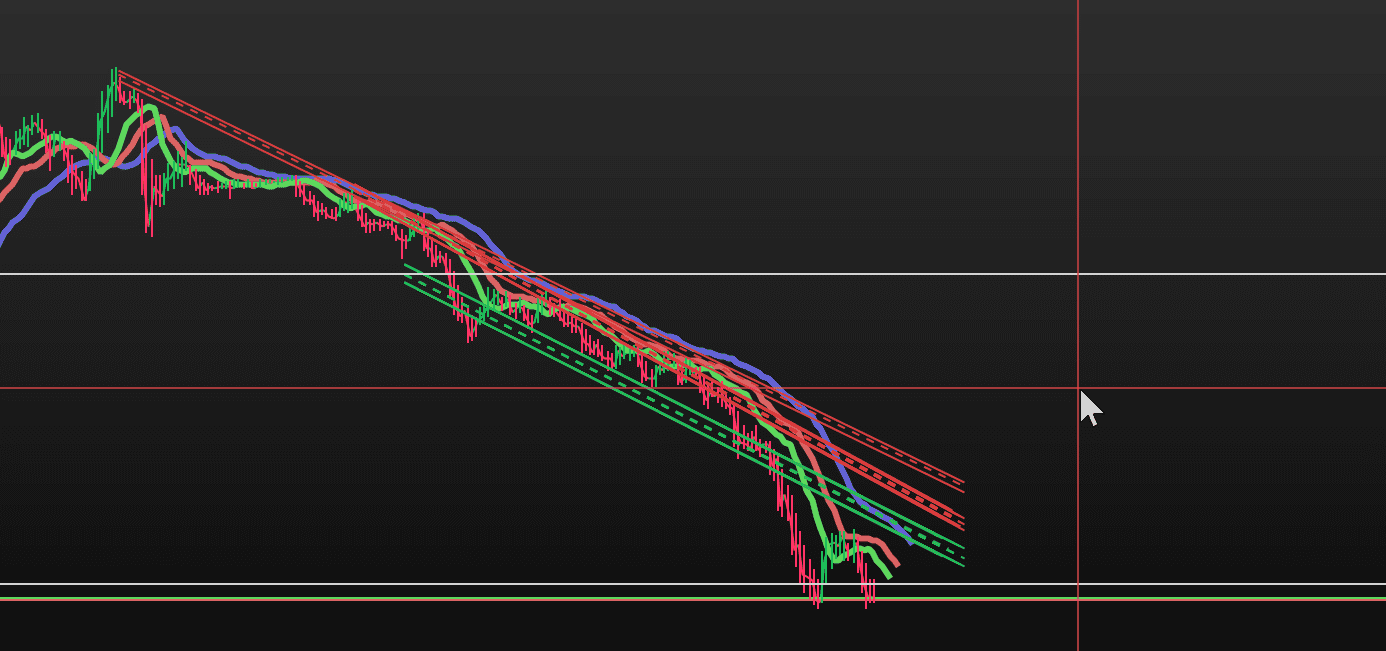
    I see attached, green and red trendlines both under and over the same bars … is this how the Indicator is supposed to look or do I need more coffee!!?? 😀

    SOK6Pzj74F.png SOK6Pzj74F.png
    #258651 quote
    GraHal
    Participant
    Master

    Re my post above (now after caffeine-fix!) I guess the red and green show support and resistance channel / trendlines.

    #258653 quote
    GraHal
    Participant
    Master

    Another oddity 🙂 … each time a new bar forms, an audible Alert is triggered, but an Alert is not listed under ‘Alert Status’.

    Is the Alert embedded in the code somehow??

    Anybody know how to stop the Alert … it’s getting on my nerves! 🙂


    #258654 quote
    GraHal
    Participant
    Master

    Aha, it’s not when used as an Indicator.

    It’s when the code is on backtest as an Auto-Algo that an Alert sounds! Well weird, I’ve never had this before!

    #258674 quote
    GraHal
    Participant
    Master

    For info:

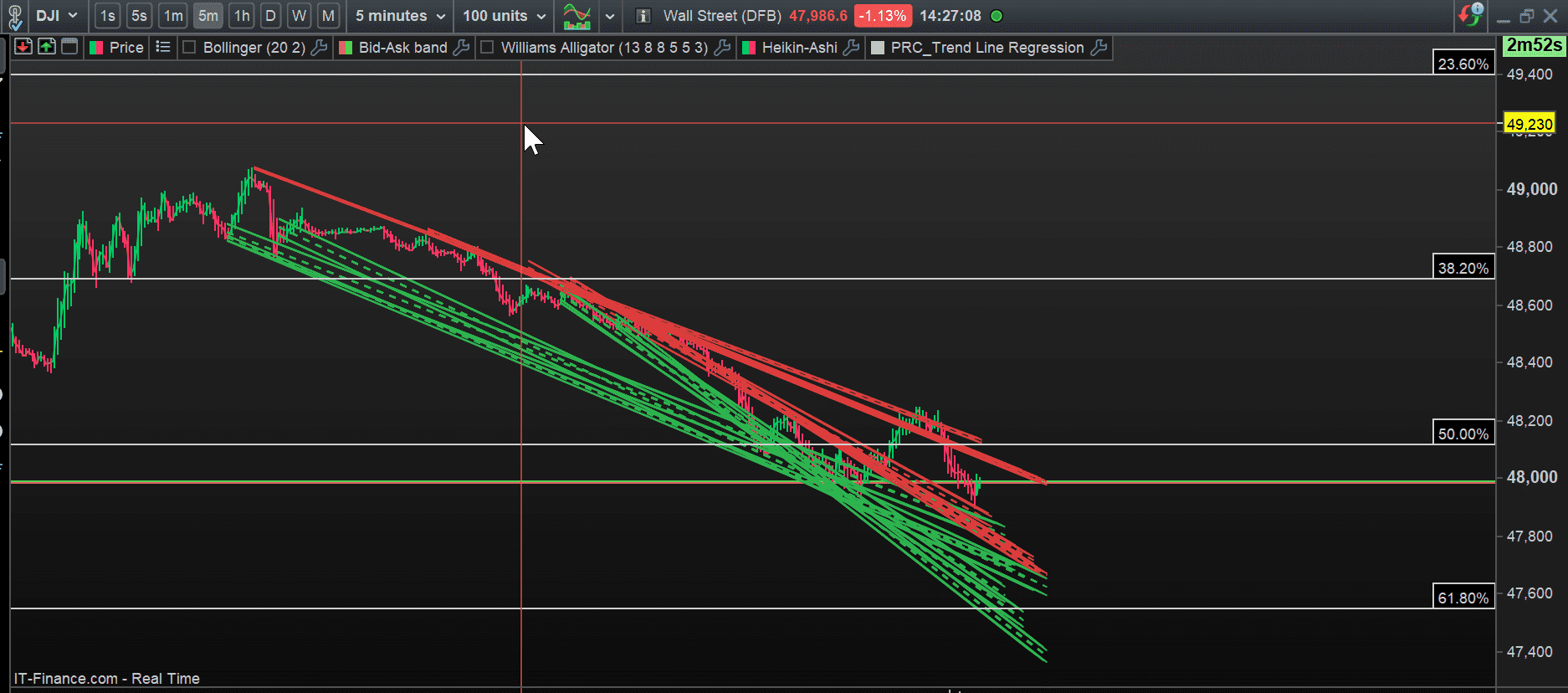
    I can now see multiple red and green trendlines / channels all overlapping etc as per attached.


    0YDwdXYrno.png 0YDwdXYrno.png
    #258678 quote
    Iván González
    Moderator
    Master

    Thanks for the feedback GraHal. The key parameter here is minLevel .It controls the minimum R² level required to accept a trend line. With 1 it is too permissive and you get many overlapping lines. The original value in TradingView is 4, but in PRT it can be too restrictive and may not draw anything on many charts. I recommend trying values between 2 and 4 depending on your preference. The higher the value, the fewer lines but more significant. 

    GraHal thanked this post
Viewing 14 posts - 1 through 14 (of 14 total)
  • You must be logged in to reply to this topic.

TradingView to ProRealTime Translation Center

New Reply
Author
author-avatar
ashehzi @ashehzi Participant
Summary

This topic contains 13 replies,
has 2 voices, and was last updated by Iván González
24 minutes ago.

Topic Details
Forum: TradingView to ProRealTime Translation Center Forum
Started: 10/30/2023
Status: Active
Attachments: 4 files
Logo Logo
Loading...