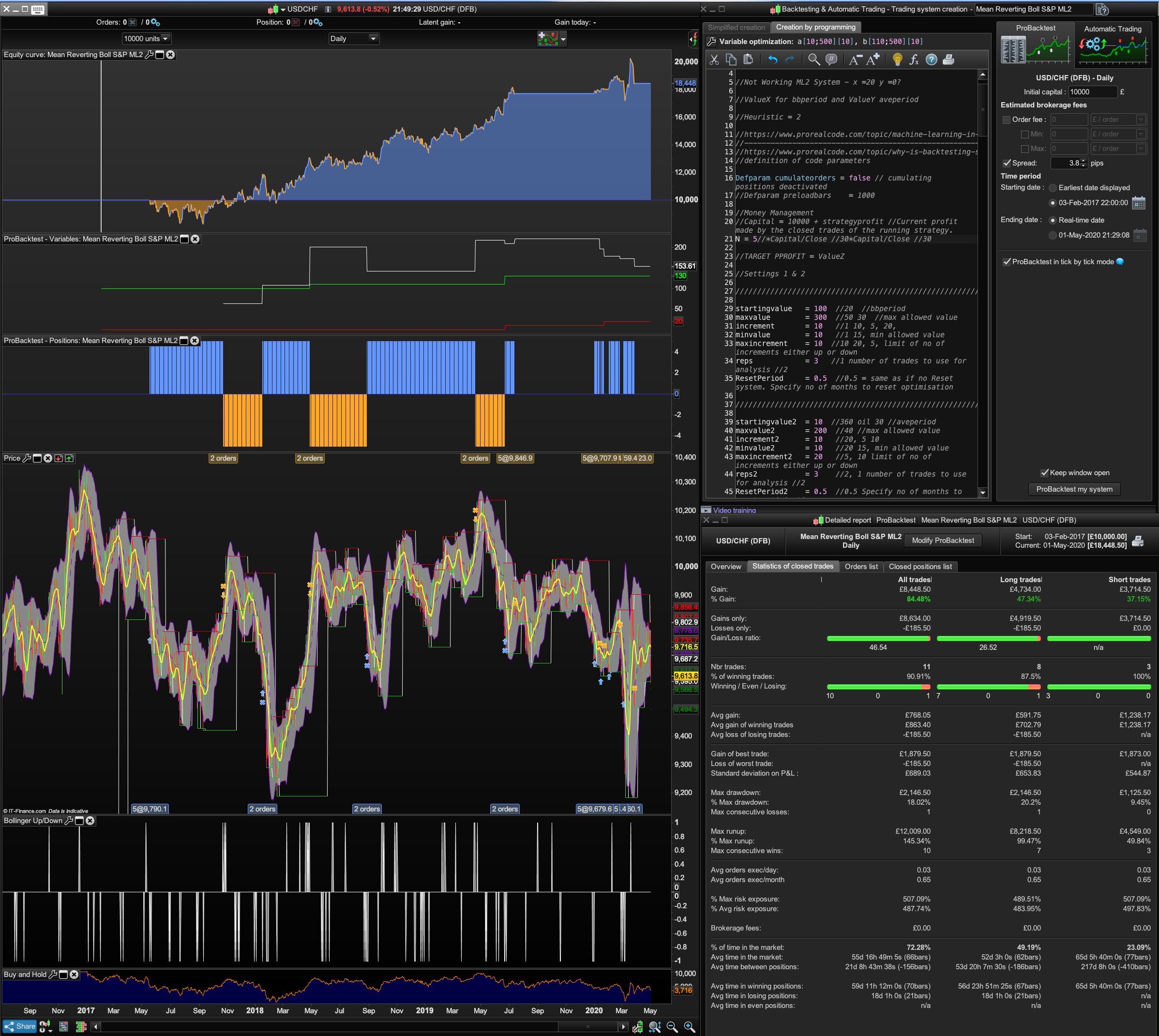
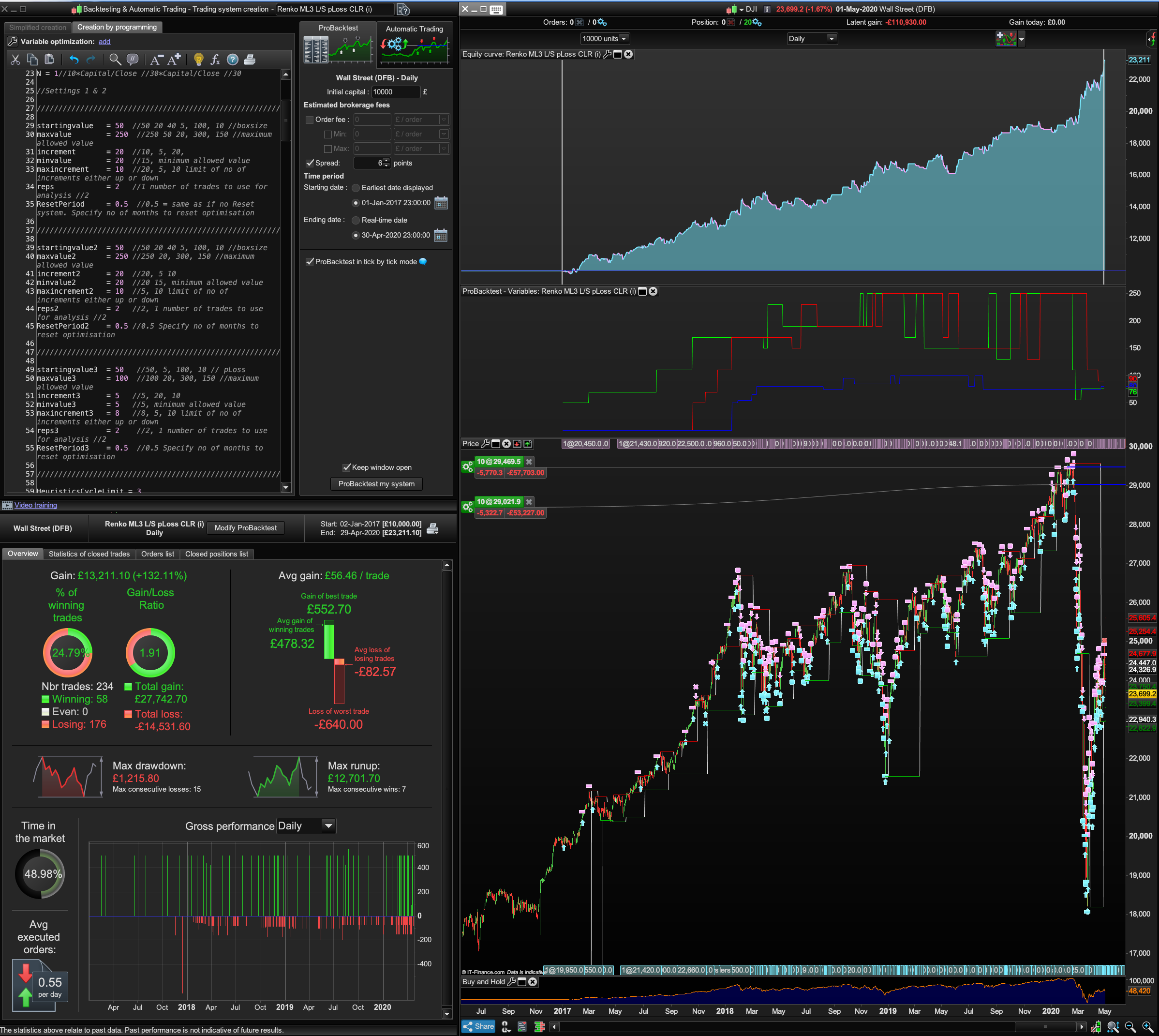
With VRT off all the results were identical and with it on they were all different.
Hi Vonasi, I was just looking up my failed VRT test experiments. Failed because with VRT on I get twice or even 5x’s the profits compared to a non VRT system. That is a failure right because I was re-reading all your posts about this and one of your posts said the results will be different. By “different” do you mean double the profits compared to a non VRT system, because I can get results that are 5x bigger?
Not being a coder I’m not sure what qty and random really mean? 10 run throughs with “5 random: whats?
Or how the two flag codes even make a system jumble up it’s trade order?
Or what the “mod” means or does?
if barindex mod qty = 0 or barindex mod qty = j then
tradeon = 1
or why a test with settings:
“I tested with settings of 10/5 and 20/5 for QTY and RANDOM. So that is 45 random samples and 95 random samples.”
produces 45 or 95 random tests? Okay: 10 tests and 5 “randoms” (whatever that means), so 50 tests less “5 randoms”? (whatever that means) = 45? I actually don’t get what is happening here?
I also am not able to turn VRT off without having to // out all the VRT code out whether I set your orig code
tradeon = 0
if opendate >= startdate then...
to:
tradeon = 1 if opendate >= startdate then...
or add a Robustness switch at the very top of the VRT code above StartDate
RobustnessTest = 0
and
if not RobustnessTest then
tradeon = 1
endif
as the very last line of instruction in the VRT code.
Sorry for all the questions, I just don’t get this one and I really want to see the VRT results of my systems! (Subject to then wrestling with Excel where VRT results I copy and pasted over sometimes sync nicely with the template and other times don’t, (I’ve used Excel extensively for copy and pasting PRT optimised results and charting the results without issue). Cheers, Bard.