




Modified SHARPE index
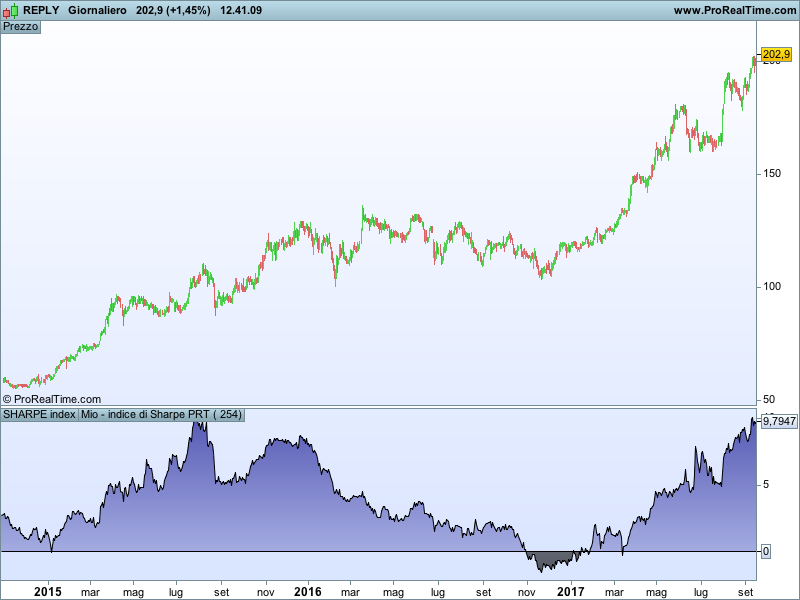
This modified SHARPE index indicator will be the base for a strategy I will publish after. The SHARPE index is simply a way to relate profits with volatility that was created in 1966. The higher the number the more “efficient” the title is. In my indicator, instead of using the simple volatility at the denominator (standard deviation) I used the volatility squared to give a slight better ramp to the curve and a better and more precise entry.
The Sharpe Ratio is a measure for calculating risk-adjusted return, and this ratio has become the industry standard for such calculations. It was developed by Nobel laureate William F. Sharpe. The Sharpe ratio is the average return earned in excess of the risk-free rate per unit of volatility or total risk. Subtracting the risk-free rate from the mean return, the performance associated with risk-taking activities can be isolated. One intuition of this calculation is that a portfolio engaging in “zero risk” investment, such as the purchase of U.S. Treasury bills (for which the expected return is the risk-free rate), has a Sharpe ratio of exactly zero. Generally, the greater the value of the Sharpe ratio, the more attractive the risk-adjusted return.
Read more: Sharpe Ratio http://www.investopedia.com/terms/s/sharperatio.asp#ixzz4t6Rh7t00
Blue skies!!
//calcolo ritorni e volatilita' su base annuale
RitMensNoRiskTitle=0
a=log(close/close[1])
b=summation[periodo](a)
s=sqrt(254)*std[periodo](a)

//calcolo indice di sharpe
sharpe=(b-RitMensNoRiskTitle/100)/(s*s)


return  sharpe as "SHARPE index",0
