Lowest from Y1 to Y2

Viewing 15 posts - 1 through 15 (of 23 total)
  • Author
    Posts
  • #189750 quote
    ZeroCafeineZeroCafeine
    Participant
    Senior

    Hi all,

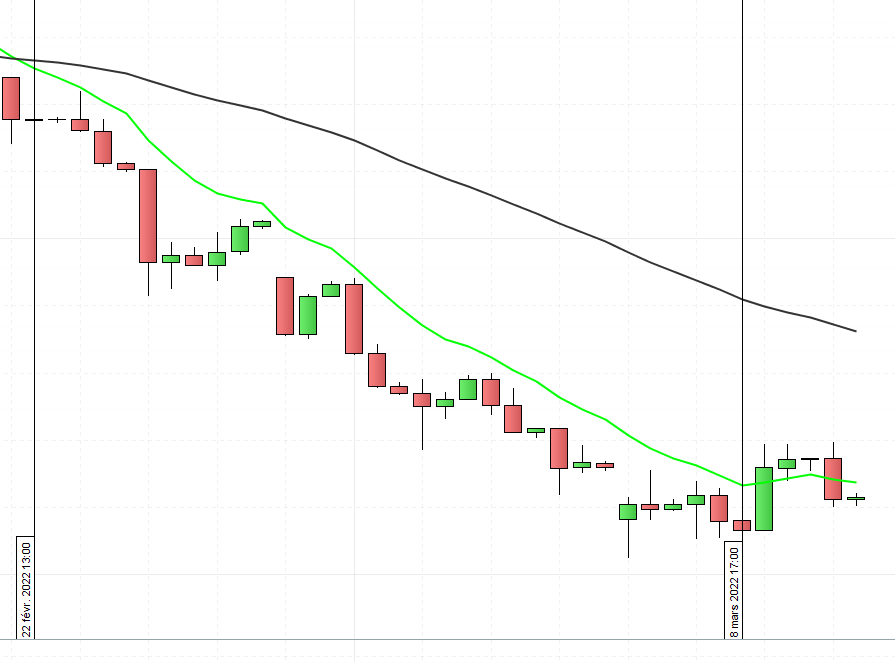
    I saw the Lowest fonction can find a lowest of a variable on the last X periodes for exemple, but how to find a lowest between 2 barindex for exemple between Y1 and Y2 ?
    for exemple on this photo how to find the lowest Low between Candle[5] and Candle[36] ( Y2=36 / Y1=5) ?


    entre ces 2 valeurs

    Lowest-Y1-Y2.png Lowest-Y1-Y2.png
    #189752 quote
    JC_BywanJC_Bywan
    Moderator
    Master

    From 5 to 36, there are 36-5+1 = 32 candles, we simply ask what was 5 candles ago the lowest among 32:

    a=lowest[32](low)
    b=a[5]
    
    return b
    ZeroCafeine thanked this post
    #189753 quote
    JC_BywanJC_Bywan
    Moderator
    Master

    or if you want to easily change Y1 and Y2 (with Y2>Y1 implied, haven’t added an IF statement to protect against the opposite):

    Y1=5
    Y2=36
    a=lowest[Y2-Y1+1](low)
    b=a[Y1]
    
    return b
    ZeroCafeine thanked this post
    #189767 quote
    JSJS
    Participant
    Master

    Lowest Low between candle[5] and candle[36]:

    a = Lowest[36](Low[5])

    ZeroCafeine thanked this post
    #189798 quote
    ZeroCafeineZeroCafeine
    Participant
    Senior

    tks to all for your answers,

    and how to get the barindex number of this lowest candle ?

    I saw some solution like doing a For y = 0 to 38 for exemple and compare the Lowest we get before with your solution with the Low[y] of each candle for get the barindex, but maybe they have other short soluttion ?

    #189801 quote
    robertogozzirobertogozzi
    Moderator
    Legend

    There you go:

    x = LowestBars[36](low[5])   //HighestBars for the highest
    ZeroCafeine thanked this post
    #189803 quote
    ZeroCafeineZeroCafeine
    Participant
    Senior

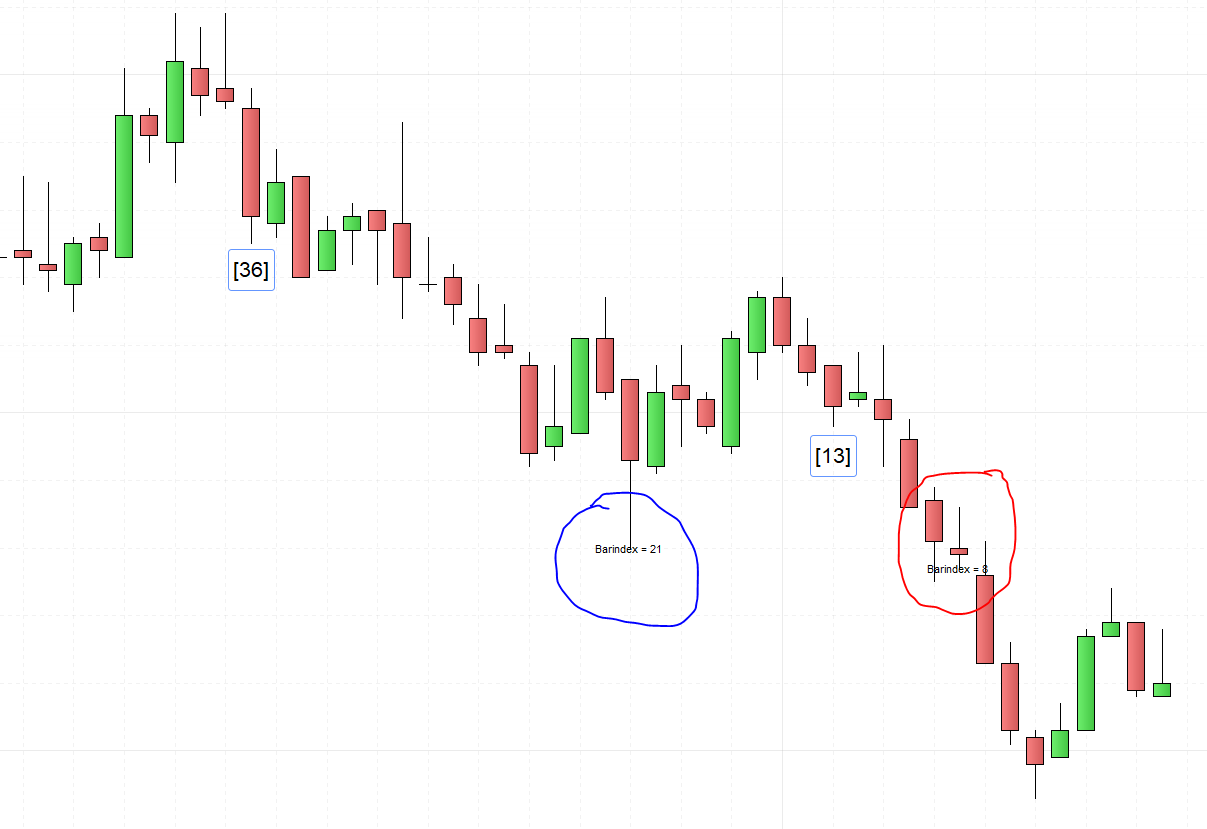
    tks for your answer but I’m totaly confused, I don’t understand why it’s not working or mabt I don’t know how to use it, with my result I find the barindex 21 the blue cyrcle but with yous I find barindex = 8 the red cyrcle, where I’m wrong ? I want the fast solution for using less of computer ic

    Defparam drawonlastbaronly = true
    
    a = Lowest[36](Low[13])
    
    // Roberto Solution 
    x = LowestBars[36](low[13])
    
    For i = 0 to 36 Do
    IF Low[i] = a Then
    X1 = i
    drawtext("Barindex = #i#",barindex[i],Low[i])
    // Roberto Barindex
    drawtext("Barindex = #x#",barindex[x],Low[x])
    break
    ENDIF
    Next
    
    Return
    

    Best Reguards

    roberto-barindex.png roberto-barindex.png
    #189805 quote
    ZeroCafeineZeroCafeine
    Participant
    Senior

    This is my Elder Triple screen now and headache, I’m sure your solution will be on 2 or 3 lines 🤣🤣🤣

    Screenshot_20220311-133347.jpg Screenshot_20220311-133347.jpg
    #189807 quote
    robertogozzirobertogozzi
    Moderator
    Legend

    Use

    IF Low[i+13]
    ZeroCafeine thanked this post
    #189809 quote
    ZeroCafeineZeroCafeine
    Participant
    Senior

    I don’t know why I don’t know to use you solution, but I found this one :

    Defparam drawonlastbaronly = true
    
    a = Lowest[36](Low[13])
    // Roberto Solution 
    x = LowestBars[36](low[13])
    
    Roberto = 13 + x
    
    IF X Then
    drawtext("RobertoIndex = #Roberto#",barindex[Roberto],Low[Roberto])
    ENDIF
    
    Return

    if I  the drawtext fonction with out IF condition, I get error because the LowestBars fonction can get -1 as a result

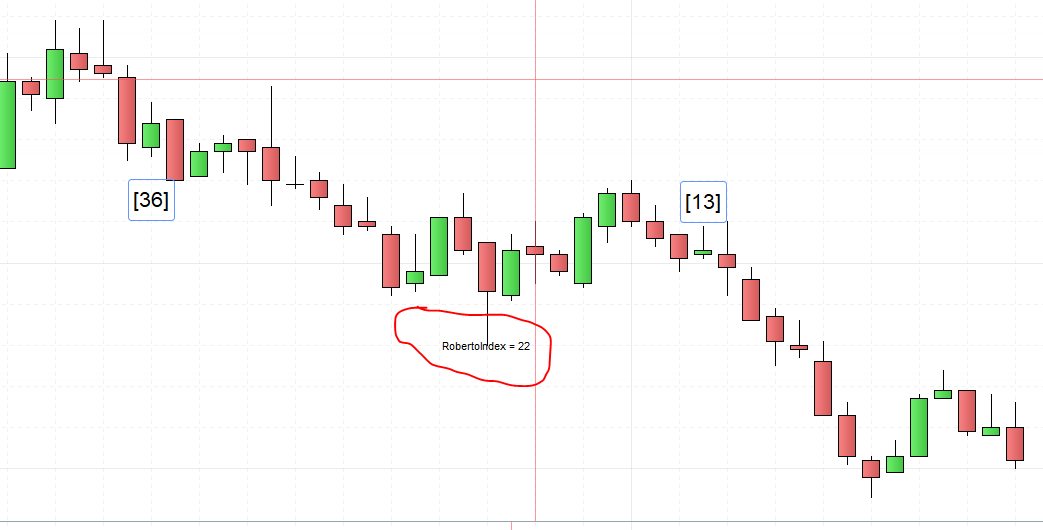
    now the good barindex is 22 instead 21 because I got one candle more in H4 TF

    roberto-barindex-2.png roberto-barindex-2.png
    #189813 quote
    robertogozzirobertogozzi
    Moderator
    Legend

    Because the 13th bar is bar 12 (0 to 12 is 13 bars), so you will have to adjust your calculations.

    ZeroCafeine thanked this post
    #189814 quote
    JSJS
    Participant
    Master

    From 0 to 13 is 14 bars so use:

    Roberto = 14 + x

    #189842 quote
    JC_BywanJC_Bywan
    Moderator
    Master

    It is of course possible I misunderstood the initial query, or even if I hadn’t I would easily concede perhaps I made the explanation too short alongside my proposal. But I would have to respectfully disagree with the other proposal.

    If you write:  a = Lowest[36](Low[5]) , it doesn’t give you the lowest low between candle[5] and candle[36], it would give the lowest low below candle[5] and candle[41], because at candle[36] what was lowest[5] at that time is a lowest[41] seen from now. So on one hand yes it would easily get rid of unwanted candles[0] through [4] in the search, but on the other hand it adds unwanted extra 5 candles [37] through [41] beyond [36].

    Which is why I suggested: to first assess the span of the search (Y2Y1+1 = 36-5+1 = 32 candles wide), to search that span for lowest low (that’s “a”), and from there to offset it by Y1=5 (that’s “b”), with:

    Y1=5
    Y2=36
    a=lowest[Y2-Y1+1](low)
    b=a[Y1]
    as a way of eliminating candles [0] through [4] and simultaneously avoiding addition of unwanted extra candles beyond Y2 at the other end of the spectrum in the search interval.
    ZeroCafeine thanked this post
    #189848 quote
    JSJS
    Participant
    Master

    Hi @JC_Bywan,

    You are right about adding 5 extra candles…

    The starting point is low[5] and from there your look back period is [36] = 5 + 36

    So this must also give the right answer: a = Lowest[Y2-Y1+1](Low[Y1])

    ZeroCafeine thanked this post
    #189887 quote
    JSJS
    Participant
    Master

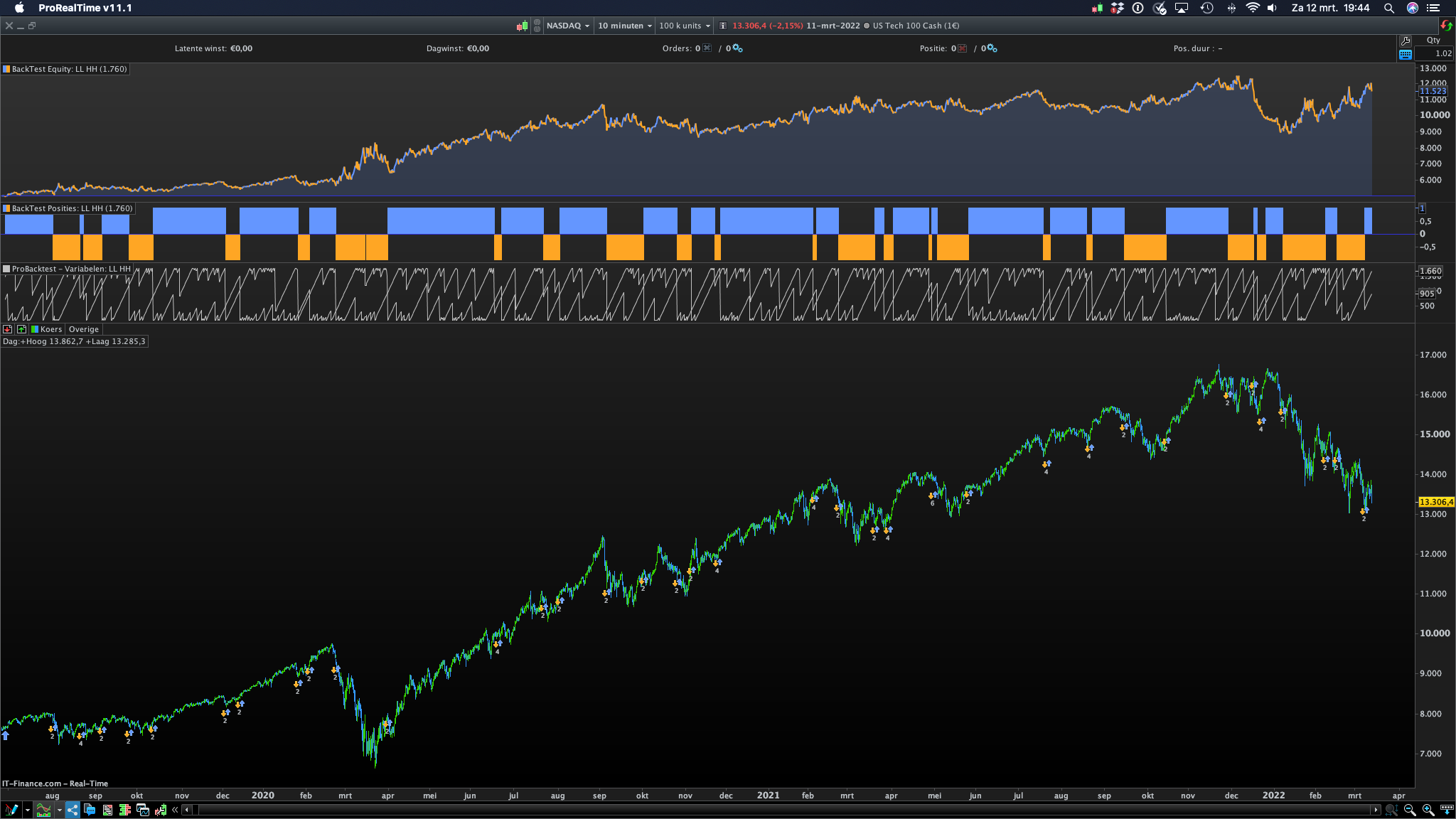
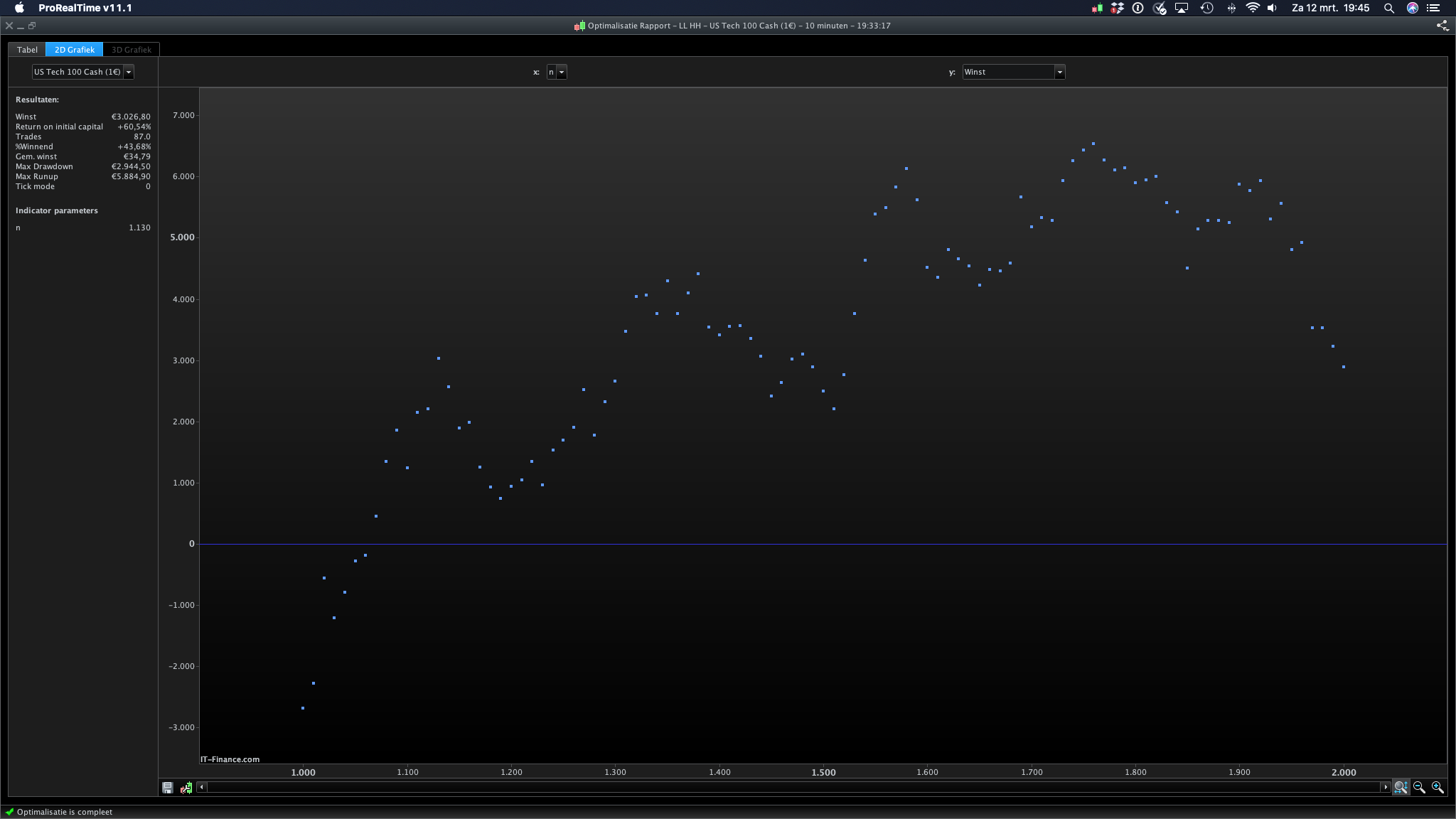
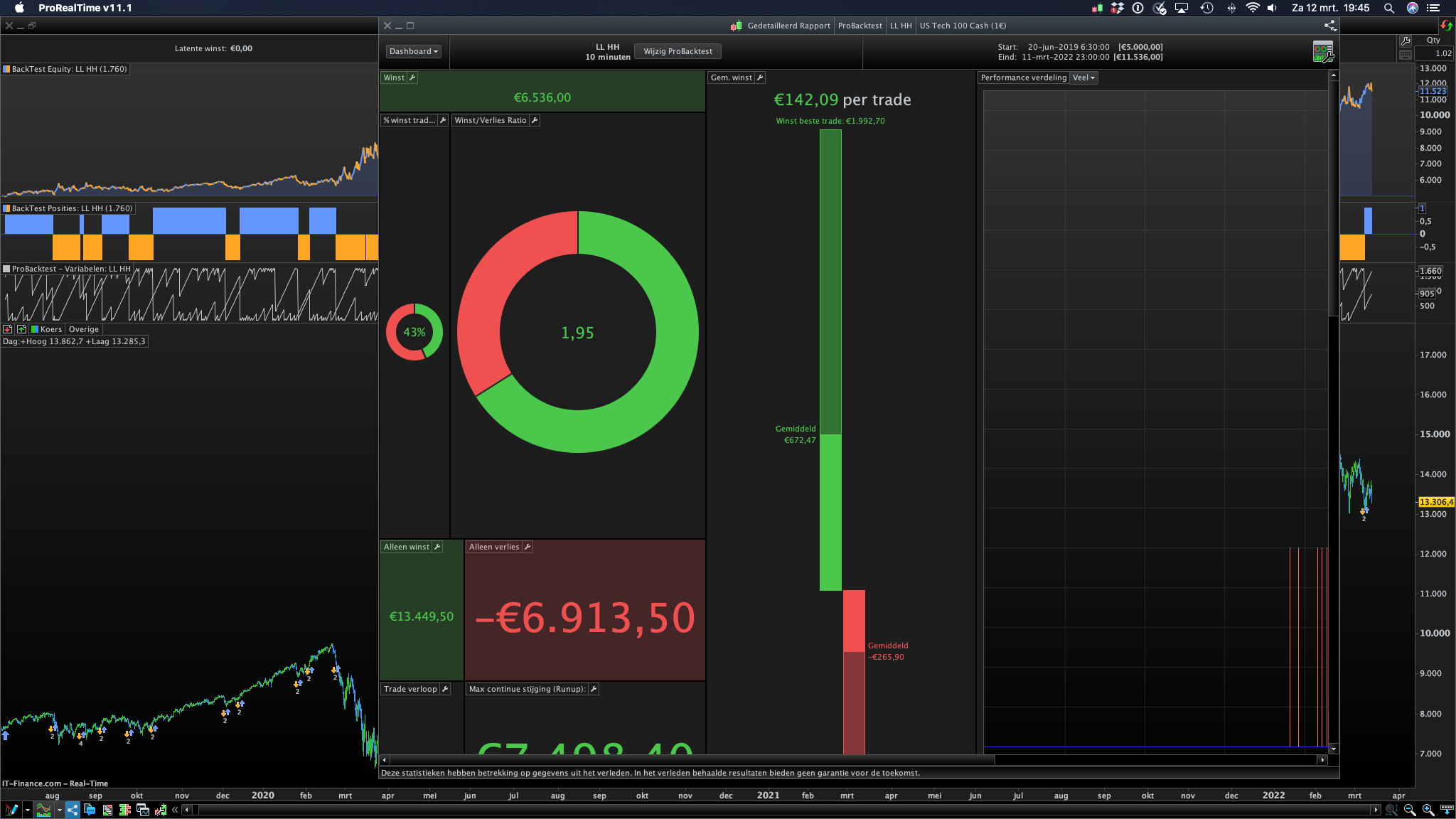
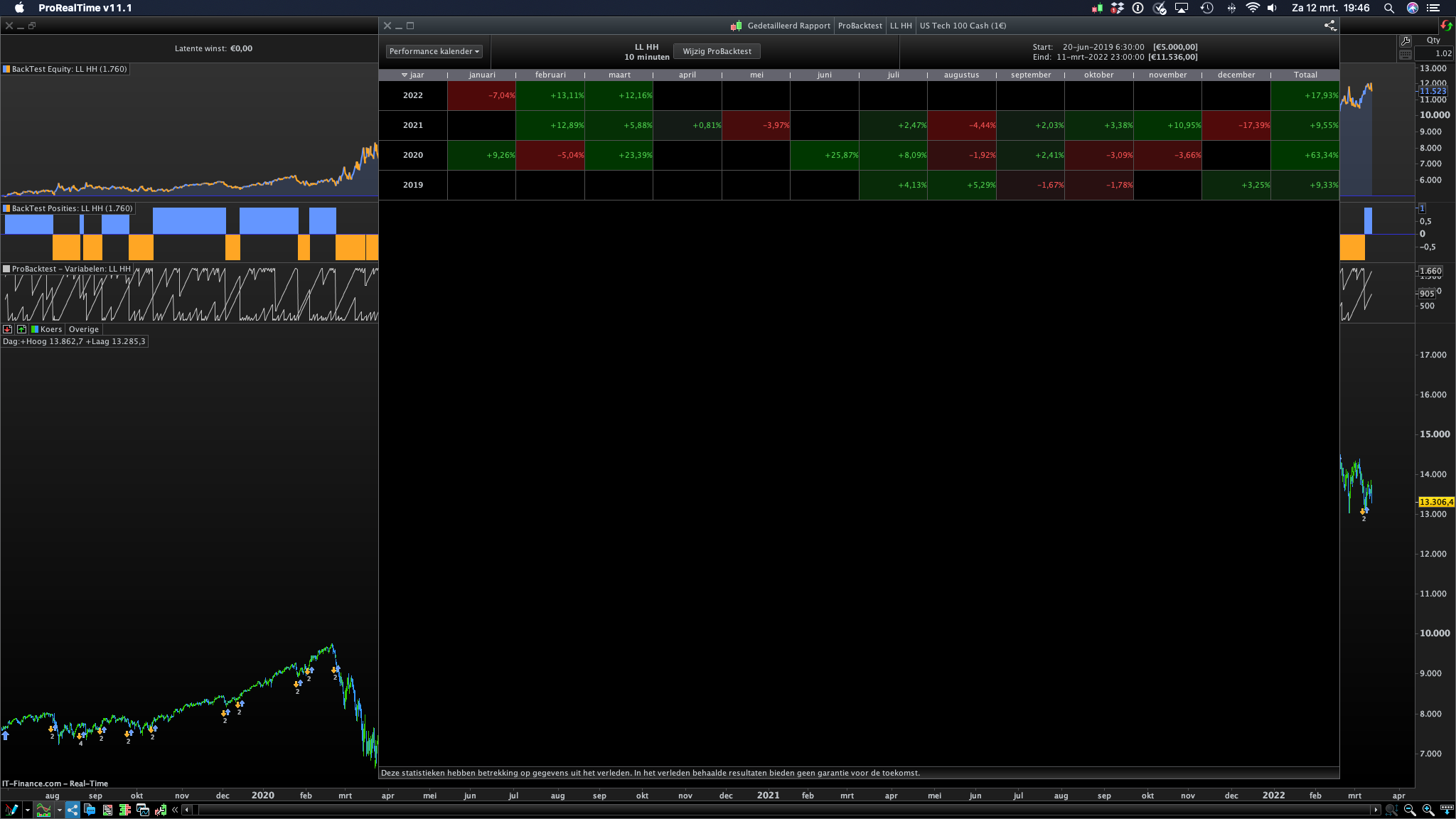
    Perhaps a system can be made of this?

    When you know where the Lowest Low (LL) and the Highest High (HH) occur, you can say in the simplest form;

    When the HH occurs after the LL then you are in an ascending phase and vice versa when the LL occurs after the HH then you are in a downward phase.

    With the formulas:

    LLBar = LowestBars[n](Low) you determine the bar where the LL occurs

    HHBar = HighestBars[n](High) you determine the bar where the HH occurs

    When LLBar > HHBar (Bullish)

    When LLBar < HHBar (Bearish)

    Of course, this is the simplest form but maybe with MTF, SL, TP, etc. we can improve this system.

    DefParam CumulateOrders = False
    
    LLBar = LowestBars[n](Low)
    HHBar = HighestBars[n](High)
    
    If LLBar > HHBar then
    Buy 1 Contracts at Market
    ElsIf LlBar < HHBar then
    SellShort 1 Contracts at Market
    EndIf
    
    Graph LLBar as "LowestBar"
    Graph HHBar as "HighestBar"
    
    ZeroCafeine thanked this post
    Schermafbeelding-2022-03-12-om-19.44.47.png Schermafbeelding-2022-03-12-om-19.44.47.png Schermafbeelding-2022-03-12-om-19.45.01.png Schermafbeelding-2022-03-12-om-19.45.01.png Schermafbeelding-2022-03-12-om-19.45.40.png Schermafbeelding-2022-03-12-om-19.45.40.png Schermafbeelding-2022-03-12-om-19.46.01.png Schermafbeelding-2022-03-12-om-19.46.01.png
Viewing 15 posts - 1 through 15 (of 23 total)
  • You must be logged in to reply to this topic.

ProRealAI ProRealAI New

Stuck on this ProBuilder code?

Describe what this topic is trying to build, in plain English, and ProRealAI writes the ProRealTime™ indicator, screener or system for you.

Available in 7 languages
Try ProRealAI

Lowest from Y1 to Y2


ProBuilder: Indicators & Custom Tools

New Reply
Author
Summary

This topic contains 22 replies,
has 5 voices, and was last updated by ZeroCafeineZeroCafeine
4 years, 6 months ago.

Topic Details
Forum: ProBuilder: Indicators & Custom Tools
Language: English
Started: 03/10/2022
Status: Active
Attachments: 10 files
ProRealCode ProRealCode
Loading...